

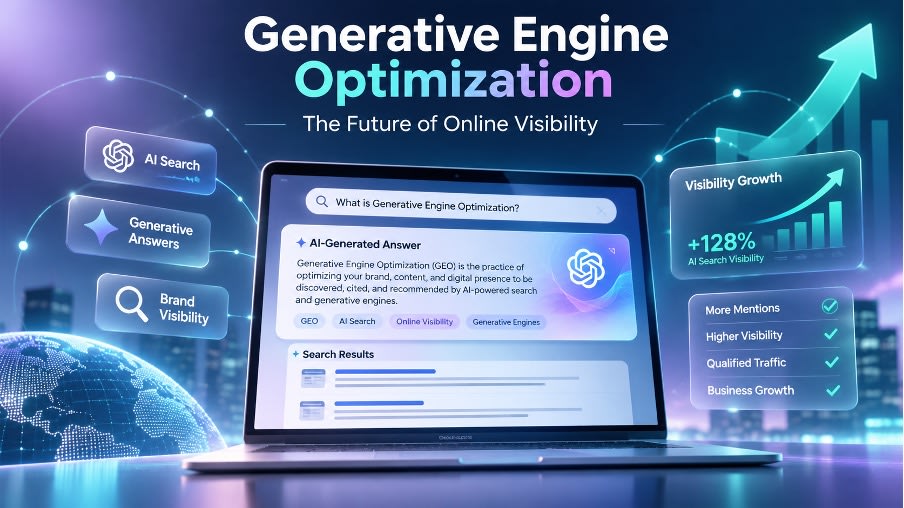
Why Generative Engine Optimization Is the Future of Online Visibility
The way people search for information online is changing. For years, businesses have focused on ranking high on Google, attracting organic traffic, and converting website visitors into customers. While these goals remain important, artificial intelligence is introducing a new layer to online discovery. Instead of scrolling through search results, users can now receive detailed answers, personalized recommendations, and product comparisons directly from AI-powered platforms.
This shift has given rise to Generative Engine Optimization (GEO), an emerging approach to digital marketing that helps businesses improve their visibility within AI-generated answers. Rather than focusing exclusively on traditional search rankings, GEO encourages brands to create authoritative, trustworthy, and relevant content that AI systems can understand, reference, and recommend.
For businesses of all sizes, this represents a significant opportunity. Companies that adapt their content strategies early may build stronger digital visibility, while those relying entirely on traditional search methods risk missing new opportunities to connect with potential customers.
As artificial intelligence becomes more integrated into everyday search experiences, GEO is becoming an important part of the conversation about the future of digital marketing.
What Is Generative Engine Optimization?
Generative Engine Optimization is the process of improving digital content so that it can be discovered, understood, and referenced by AI-powered search engines and conversational platforms. These include Google AI Overviews, ChatGPT, Perplexity, and other systems that generate answers using information from multiple sources.
Traditional search engines generally present users with a list of relevant websites. Generative engines take a different approach by gathering information and producing a direct response to the user's question.
For example, someone searching for digital marketing services might previously have typed "best digital marketing agencies" into Google and visited several websites. Today, that same person could ask an AI assistant to recommend agencies specializing in SEO, website development, and lead generation for small businesses.
The AI may provide a shortlist, explain the differences between providers, and reference relevant sources. Businesses that appear in these answers gain an opportunity to influence purchasing decisions before a potential customer even visits their website.
How GEO Differs From Traditional SEO
Search Engine Optimization and Generative Engine Optimization share the same broad objective: helping businesses become more visible online. However, they approach that objective from different perspectives.
Traditional SEO focuses on improving website rankings through keyword research, technical optimization, quality content, internal linking, and backlinks. GEO places additional emphasis on becoming a useful and credible source within AI-generated responses.
Traditional SEO | Generative Engine Optimization |
Focuses on search rankings | Focuses on visibility in AI answers |
Targets relevant keywords | Addresses questions and conversational queries |
Measures rankings and organic traffic | Measures mentions, citations, referrals, and conversions |
Builds authority through quality content and backlinks | Emphasizes reliable information, expertise, and independent recognition |
Encourages users to visit websites | Can influence users before they visit a website |
However, businesses should not view GEO as a replacement for SEO. Google's official guidance confirms that established SEO practices remain relevant to its generative AI search features.
A strong technical foundation, useful content, and genuine authority continue to matter. GEO simply expands how businesses think about discovery and customer engagement.
Why Generative Engine Optimization Matters for Businesses
1. Search Is Becoming More Conversational
People increasingly use natural language when searching for information. Instead of typing short keywords, they ask detailed questions and expect answers tailored to their circumstances.
A business owner might ask, "What is the most affordable way to improve my website's visibility without spending thousands on advertising?"
This question contains more context than a traditional keyword such as "affordable SEO." It gives AI systems information about the user's goals, budget, and challenges.
Businesses that publish content addressing these specific concerns create more opportunities to become relevant sources. This requires understanding customer intent rather than simply targeting popular search terms.
2. Brand Discovery Is Moving Beyond Website Clicks
One of the most important developments in AI search is that customers can discover brands without immediately visiting their websites.
An AI-generated response might mention a company while explaining an industry trend, comparing services, or recommending solutions. Even without a direct click, this exposure can introduce potential customers to a business.
"Online visibility is no longer just about getting someone to click on your website. It's about being present when they are forming an opinion or deciding which business to trust. A brand that consistently provides useful answers has a better chance of becoming part of that decision," says Sharon Amos, Director at Air Ambulance 1.
For businesses, this means that measuring success solely through website traffic may overlook other important outcomes. Brand awareness, qualified inquiries, and recognition across digital channels also deserve attention.
3. Trust Is Becoming a Competitive Advantage
AI-generated answers can draw on information from business websites, industry publications, research papers, customer reviews, and other online sources.
A company with a clear digital identity and credible independent coverage may have more opportunities to be discovered than one with a limited or inconsistent online presence.
For example, a company that publishes helpful research, contributes expert insights to reputable publications, and maintains accurate business information creates multiple ways for audiences to learn about its expertise.
This makes reputation management and digital PR increasingly relevant to long-term visibility. Businesses cannot rely on publishing promotional content alone. They also need external evidence that supports their claims.
The Role of Digital PR in Generative Engine Optimization
Digital PR has traditionally helped businesses earn media coverage, build backlinks, and establish industry authority. In the age of generative search, it can serve another purpose by creating credible third-party references that reinforce a brand's expertise.
When a business is mentioned in relevant publications, industry blogs, or professional resources, it expands the information available about its services and reputation.
These mentions may help people and AI systems understand what the company does, who it serves, and why its expertise matters. However, not every mention has equal value. Relevance, editorial quality, and authenticity are more meaningful than simply accumulating placements.
"A backlink used to be viewed mainly as a way to improve search rankings. With AI search, the bigger opportunity is what the surrounding article tells people about your business. A genuine expert contribution in a relevant publication can communicate what you know, who you help, and why your perspective deserves attention. That context is becoming increasingly valuable for online visibility," says Ibad H., CEO of Outrankr.io
Businesses should therefore focus on earning meaningful editorial coverage rather than chasing large numbers of unrelated links.
A detailed expert contribution in a respected industry publication can provide more useful context about a company than dozens of mentions across unrelated websites. This is particularly important for businesses operating in competitive industries where customers actively research providers before making decisions.
How Businesses Can Optimize Their Content for Generative Search
Create Content That Answers Real Questions
One of the most effective starting points is understanding what potential customers want to know.
Businesses should identify common questions from sales conversations, customer support requests, online discussions, and search data. These questions can form the foundation of helpful articles, guides, and service pages.
For instance, a digital agency could publish content explaining how much website development costs, how long SEO takes to generate results, or how businesses can choose between paid advertising and organic marketing.
These topics address genuine customer concerns while demonstrating expertise.
Prioritize Original Insights and Firsthand Experience
The internet already contains millions of articles explaining similar topics. Simply repeating existing information makes it difficult for a business to stand out.
Original content can include research findings, practical examples, customer case studies, expert commentary, and lessons learned from real projects.
For example, instead of publishing another generic article about website speed, an agency could explain how it identified performance issues on a client's website, what changes it implemented, and what results followed.
Where measurable results are available, including them alongside the relevant context makes the information more useful and credible.
Improve Content Structure and Readability
Well-organized content benefits both readers and search systems. Clear headings, descriptive subheadings, concise explanations, and logical sections make information easier to navigate.
Businesses should introduce important concepts clearly, support claims with evidence, and avoid burying useful information beneath unnecessary introductions or repetitive paragraphs.
This does not mean every article needs to be reduced to short answers. Complex topics often require detailed explanations. The goal is to make information accessible without sacrificing depth or accuracy.
Build Consistent Brand Authority
Businesses should maintain accurate information across their websites, professional profiles, business directories, and relevant publications.
For example, if a company specializes in digital marketing, its website, leadership biographies, and external coverage should consistently communicate that expertise.
Inconsistent descriptions or outdated company information can create confusion. A clearly defined brand identity helps customers understand what the business offers and makes its expertise easier to recognize.
Maintain Strong Technical SEO
Even the best content cannot deliver its full potential if search systems cannot access it.
Businesses should ensure their websites are mobile-friendly, pages load efficiently, navigation is straightforward, and important content is accessible to search engine crawlers.
Google states that websites do not need special AI-specific markup or new machine-readable files to appear in its generative search features. Established technical and content practices remain the foundation.
How to Measure the Success of GEO
Measuring generative search performance requires businesses to look beyond traditional rankings.
A practical GEO strategy should consider several indicators:
- AI brand mentions: How frequently a company appears in responses to relevant questions.
- Source citations: Whether AI-powered platforms reference the company's website or its published content.
- Referral traffic: Visitors arriving from AI search and conversational platforms.
- Branded search demand: Changes in how often people search for the business by name.
- Conversions: Whether AI-driven discovery contributes to inquiries, sales, or other meaningful actions.
Businesses can regularly test relevant customer questions across different AI platforms to identify where they appear and which competitors receive mentions.
However, AI responses can change depending on the platform, location, wording, and timing of a query. A single mention should not be treated as a permanent ranking position. Tracking patterns over time provides a more useful picture of performance.
The Future of Generative Engine Optimization
As AI search evolves, the distinction between finding information and receiving recommendations will continue to narrow.
Customers may increasingly use AI to compare products, evaluate service providers, plan purchases, and make business decisions. Companies will need to consider how their content supports these experiences, rather than focusing only on attracting website visits.
At the same time, businesses should avoid treating GEO as a shortcut to visibility. There is no guaranteed formula for securing AI citations or recommendations.
The strongest approach remains building a credible digital presence through useful content, genuine expertise, effective SEO, and trustworthy external recognition.
Companies that invest in these foundations will be better positioned to adapt as search technology develops.
Conclusion
Generative Engine Optimization represents an important evolution in how businesses approach online visibility. As AI-powered search becomes more widely used, companies must think beyond traditional rankings and consider how their expertise appears within generated answers.
The future of online visibility will depend on more than publishing articles or targeting keywords. Businesses need to provide meaningful information, build credible reputations, demonstrate real experience, and make their content accessible across digital platforms.
By combining GEO with traditional SEO, digital PR, and a customer-focused content strategy, businesses can create more opportunities to be discovered, trusted, and considered by potential customers.
Ultimately, the businesses that succeed in the next generation of search will not necessarily be those publishing the most content. They will be those providing information worth finding, referencing, and recommending.
Want to publish a guest post on aamax.co?
Place an order for a guest post or link insertion today.
Place an Order