

Full-Stack Web Development Services
Defining Full-Stack Web Development Services
Full-stack web development services cover every layer of a modern web application, including the user interface, business logic, databases, APIs, and the infrastructure that runs everything. When you engage a full-stack provider, you receive a complete solution rather than fragments that need to be glued together. This approach is increasingly the standard for serious web projects because today's applications require deep coordination between many moving parts.
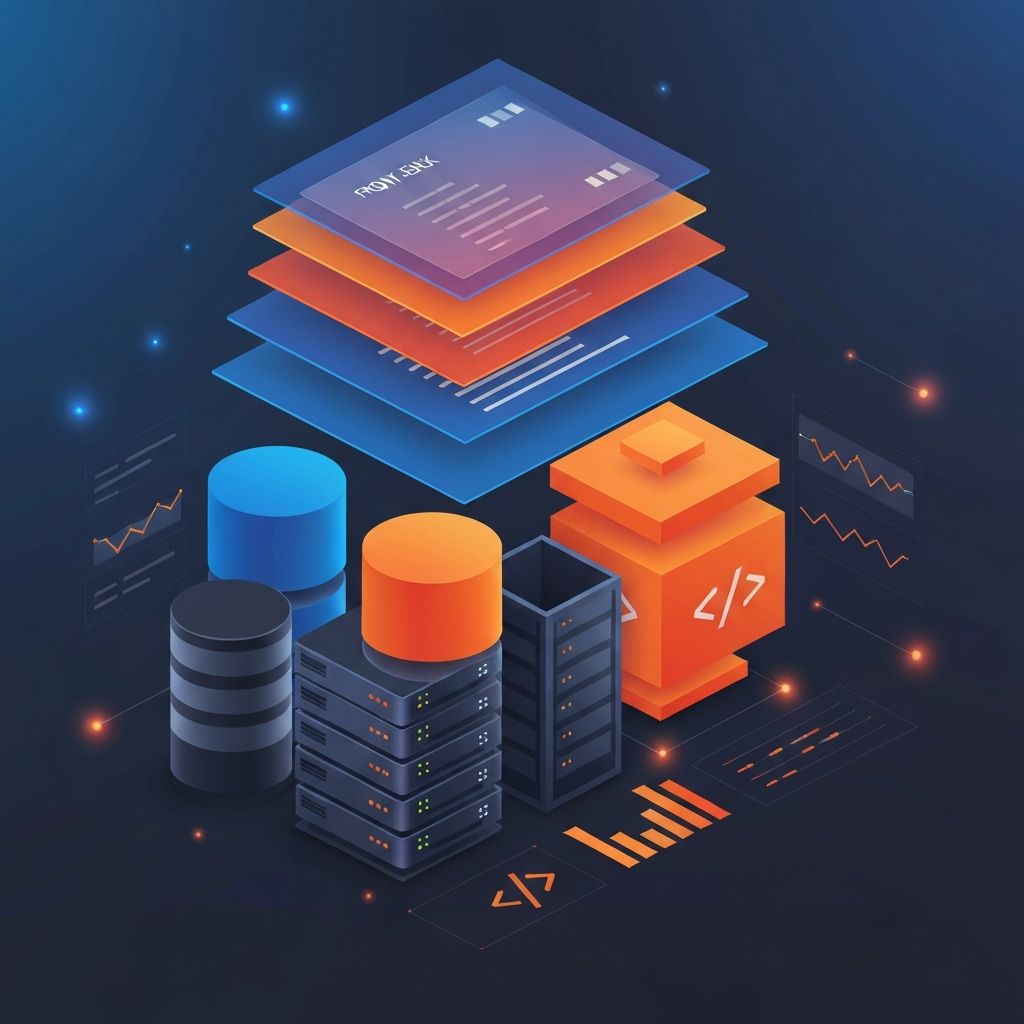
The phrase full-stack reflects a layered architecture. The presentation layer, often called the front-end, is what users see and interact with. The application layer, also known as the back-end, runs the business rules, processes data, and exposes APIs. The data layer stores information in databases or other persistent storage. Underneath everything, the infrastructure layer handles hosting, networking, scaling, and reliability. A true full-stack service brings expertise to all of these layers.
The Front-End Layer
The front-end is where design meets engineering. Modern front-end work uses frameworks like React and Next.js to build fast, interactive interfaces. These frameworks support component driven development, server side rendering, static generation, and rich client side experiences. Combined with TypeScript for type safety and Tailwind CSS for utility based styling, they produce maintainable codebases that scale across teams.
Our ReactJs Web Development services help businesses build modern single page apps, dashboards, and interactive product experiences. For projects that need search engine friendly rendering and outstanding performance, our Next.js Web Development services deliver hybrid static and dynamic apps with excellent Core Web Vitals out of the box.
The Back-End Layer
While the front-end shapes the user experience, the back-end powers the logic that keeps the application running. This includes user authentication, business rules, payment processing, file handling, third party integrations, and complex data workflows. Back-end engineers choose languages and frameworks based on the project's needs, whether that is Node.js for JavaScript everywhere, Python for data heavy use cases, PHP for content management, or other stacks.
Our Back-end Web Development team designs robust APIs, optimizes database queries, secures sensitive endpoints, and integrates with external services. We focus on patterns that age well, such as separation of concerns, dependency injection, and well documented contracts between services.
The Data Layer
Data is the heart of most applications. The data layer is where customer records, orders, content, and analytics live. Choosing the right database is a strategic decision. Relational databases like PostgreSQL and MySQL excel at structured data and complex queries. NoSQL options like MongoDB or DynamoDB are great for flexible schemas and horizontal scaling. Many modern systems combine both, using each where it shines.
Beyond the database itself, full-stack services design data models that prevent bottlenecks, set up indexes for fast queries, and implement caching strategies for expensive operations. They also plan for growth, designing schemas that can evolve without painful migrations.
The Infrastructure Layer
Infrastructure is the foundation that keeps everything running. This includes hosting, networking, security groups, load balancers, content delivery networks, and monitoring. Modern infrastructure is typically defined as code, allowing engineers to spin up identical environments in development, staging, and production. Cloud providers like AWS, Google Cloud, and Vercel offer powerful primitives that full-stack teams use to build reliable systems.
Reliability is a discipline of its own. Full-stack services should set up backups, automated failover, log aggregation, error tracking, and uptime monitoring. They should run regular drills to make sure recovery procedures actually work, not just exist on paper.
Why Companies Prefer Bundled Full-Stack Services
Bundling all of this expertise into one engagement has clear advantages. There is a single point of accountability, which speeds up decision making and reduces finger pointing when issues arise. Teams that work together regularly build shared knowledge of your codebase and goals, leading to faster turnaround on new features. The architecture is consistent across layers, avoiding the integration headaches that come from stitching together multiple vendors.
You also save money in the long run. While bundled services may not be the cheapest option upfront, they prevent the expensive rework that often happens when separate vendors deliver incompatible pieces. The shared context also speeds up onboarding new features and reduces the need for handoff documentation between teams.
Quality, Security, and Performance
A good full-stack service treats quality, security, and performance as first class concerns. Quality means automated tests at unit, integration, and end to end levels, along with manual QA for usability. Security means following industry best practices, using secure coding patterns, and staying current with patches and dependencies. Performance means measuring real user metrics, optimizing critical render paths, and tuning server response times.
These concerns should not be afterthoughts. They should be embedded in the development process from day one, with code reviews, automated checks, and clear standards that every engineer follows. The result is software that is dependable, fast, and trustworthy for both users and stakeholders.
Maintenance, Iteration, and Growth
Full-stack services do not end at launch. Real applications evolve constantly as users provide feedback, business needs change, and technologies advance. A great full-stack partner stays engaged after launch, releasing improvements, fixing bugs, and adding new capabilities based on data. They also keep dependencies up to date, monitor performance trends, and proactively recommend optimizations.
This long-term partnership model is far more valuable than transactional engagements where the vendor disappears after delivery. It treats software as a living product rather than a one off project, and it ensures that your investment continues to pay off over years rather than months.
Why Choose AAMAX.CO for Full-Stack Web Development
At AAMAX.CO, we are a full service digital marketing company offering Web Development, Digital Marketing, and SEO services. Our full-stack team handles everything from React and Next.js front-ends to scalable APIs, secure databases, and resilient cloud infrastructure. We combine technical depth with strategic insight, so the systems we build serve real business goals rather than just technical requirements.
Whether you are launching a SaaS product, modernizing a legacy app, or building an internal tool that powers your operations, we can deliver a complete solution that scales with your growth. Hire AAMAX.CO for Web Design and Development services and gain a full-stack partner committed to engineering excellence, ongoing support, and measurable results.
Want to publish a guest post on aamax.co?
Place an order for a guest post or link insertion today.
Place an Order