

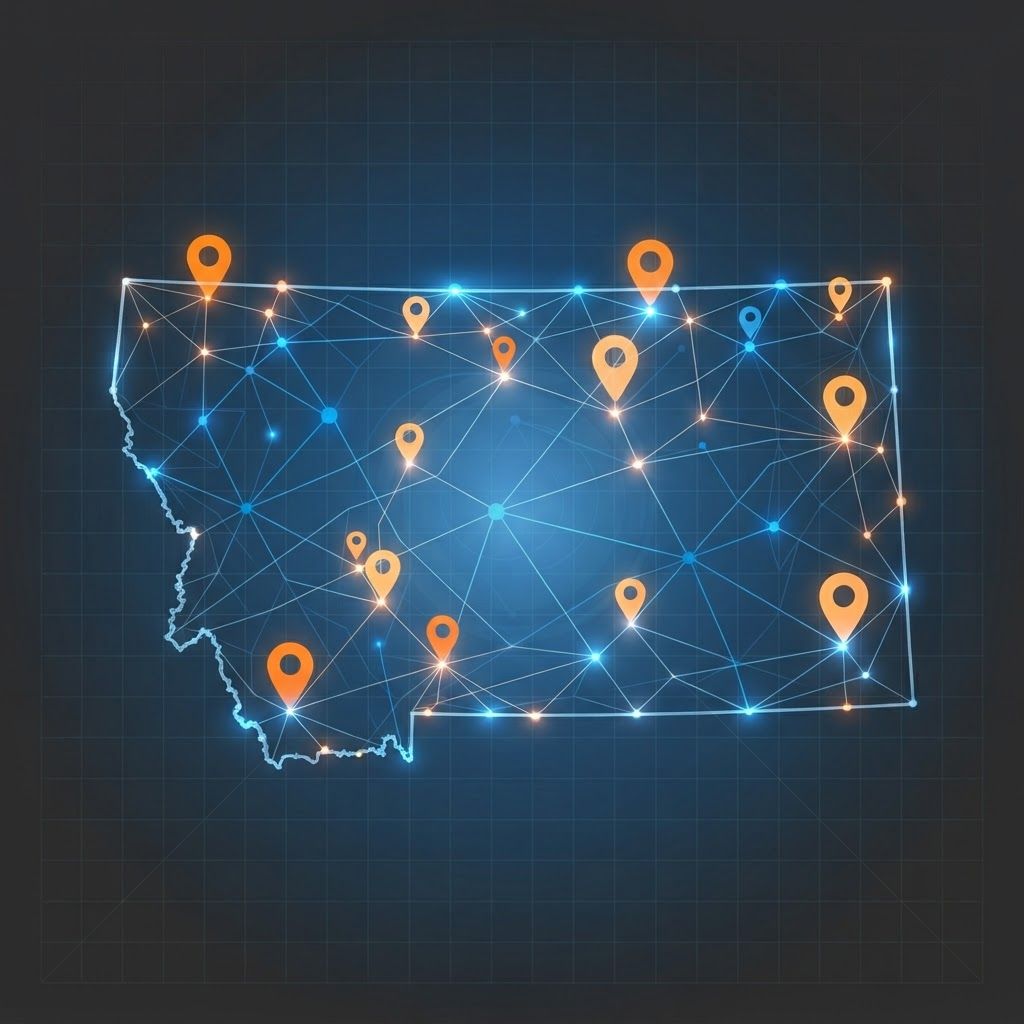
How to Do Local SEO for an Entire State
Why Statewide Local SEO Is a Different Game
Most local SEO advice is written for a single storefront serving a single town. Ranking across an entire state is a fundamentally different challenge. You are not competing in one local pack, you are competing in dozens or even hundreds of them simultaneously, each with its own set of entrenched competitors, its own search volume, and its own proximity dynamics. Google's local algorithm weighs relevance, prominence, and distance, and distance is the one factor you cannot buy your way around. That means a statewide strategy is really an exercise in architecture, prioritization, and sustained authority building rather than a single burst of optimization.
Before writing a word of content, define what statewide coverage actually means for your business. A plumbing franchise with 14 physical branches has a very different path than a law firm with one office that serves clients across the state. The first can pursue genuine local pack rankings in each city. The second must focus on organic statewide rankings, service area pages, and regional topical authority, because Google will not show a local pack listing for a city where you have no verified presence.
How AAMAX.CO Can Help You Win Statewide Local Search
At AAMAX.CO, we are a full service digital marketing company delivering web development, digital marketing, and SEO for clients worldwide, and statewide local campaigns are one of our specialties. We map every city and county worth targeting, build a location architecture that scales without triggering doorway page problems, and manage the citation, review, and link acquisition work that makes regional prominence possible. Our SEO services combine technical execution with local market research, so you are not guessing which metro areas deserve investment first. If you want statewide visibility without hiring an in house team, hire us and we will build the entire system for you.
Step One: Build a Priority Map of Cities and Counties
Start with a spreadsheet listing every incorporated city, major suburb, and county in your state. For each one, record population, estimated search volume for your primary service term plus the city name, the number of competitors already in the local pack, and whether you have a physical address, a service technician, or nothing at all in that area. Sort by opportunity, which is usually search volume divided by competitive difficulty rather than population alone.
You will almost always find that a handful of mid sized cities offer better returns than the largest metro. Big cities have national brands, aggregator directories, and dozens of established local competitors. Secondary markets frequently have thin, outdated competitor websites that a well built page can outrank within months. Sequence your rollout so early wins fund the harder markets later.
Step Two: Design a Location Architecture That Scales
The most common statewide SEO failure is publishing 200 near identical city pages with the city name swapped in. Google recognizes this pattern immediately and either ignores the pages or applies a quality penalty across the section. A durable architecture usually looks like a three tier structure: a statewide service hub, regional or metro pages, and individual city or location pages beneath them.
Each city page must earn its existence with genuinely unique information. That means local project photos, named neighborhoods and landmarks you actually serve, city specific pricing or permitting notes, a real testimonial from a customer in that area, driving directions, and details about local regulations or conditions. If you cannot write at least 400 words of substantively unique content about a city, do not create the page yet. Cover it inside a regional page and expand later when you have real material.
Step Three: Google Business Profiles and Service Areas
Every physical location needs its own fully optimized Google Business Profile with a consistent name, a local phone number, accurate categories, service lists, hours, and a steady stream of photos and posts. Link each profile to its matching city page rather than the homepage, which strengthens the relevance signal for that specific area.
For service area businesses without storefronts, define service areas honestly. Google allows up to 20 areas per profile, and stuffing that list with the entire state dilutes relevance rather than expanding reach. Instead, cluster your service areas around each real operating base and let organic city pages carry the markets you cannot legitimately claim in the map pack.
Step Four: Citations, Reviews, and Regional Prominence
Consistent citations remain the foundation of local trust signals. Build out the major aggregators first, then pursue state level and county level directories, regional chambers of commerce, industry associations with state chapters, and local news business listings. These regional citations do double duty because they carry both a local signal and a link.
Reviews are where statewide campaigns are won or lost. Aim for a steady, natural flow of reviews at every location, and encourage customers to mention the city and the specific service in their own words. Ten reviews spread across a year outperform forty acquired in a single week. Always respond to reviews, including negative ones, because response rate and recency both correlate with local ranking strength.
Step Five: Content That Establishes Regional Authority
Statewide rankings require topical depth that local pack tactics alone cannot deliver. Publish content that only a company operating in your state could credibly write: guides to state licensing requirements, seasonal considerations by climate zone, comparisons of county level regulations, cost breakdowns by metro area, and case studies from real projects. This kind of content earns links from local publishers, gets cited by regional forums, and signals to search engines that your domain is the authoritative source for your industry within that geography.
Pair this with a broader digital marketing program so your organic content is amplified through email, paid social, and local media relationships. Statewide authority compounds much faster when your content is actually being seen and shared by people in those markets.
Step Six: Technical Foundations and Internal Linking
Implement LocalBusiness structured data on every location page with the correct address, geo coordinates, opening hours, and area served. Use a clean, crawlable URL pattern such as /service/city, keep your XML sitemap segmented by location so you can monitor indexation by region, and make sure page speed holds up on mobile since the majority of local searches happen on phones.
Internal linking is your most underused lever. Link regional hubs down to city pages, link city pages laterally to nearby cities, and link related blog content into the relevant geographic cluster. This distributes authority intelligently and helps Google understand your geographic footprint as a coherent structure rather than a pile of disconnected pages.
Step Seven: Measure by Geography, Not Averages
Statewide reporting that shows a single average ranking position is useless. Track rankings by grid points around each target city, monitor Google Business Profile impressions and direction requests per location, and segment organic traffic and conversions by landing page and city. You are looking for which markets are gaining traction, which are stalled, and which need additional content or link investment. Review this monthly and reallocate effort accordingly.
Final Thoughts
Statewide local SEO rewards patience and systems thinking. Prioritize markets by real opportunity, build location pages that deserve to rank, earn genuine regional prominence through citations and reviews, and publish content only a local operator could write. As AI driven search results reshape discovery, it is also worth investing in GEO services so your brand is surfaced inside generative answers alongside traditional listings. Do the work market by market and within a year you can hold visibility across an entire state.
Want to publish a guest post on aamax.co?
Place an order for a guest post or link insertion today.
Place an Order