

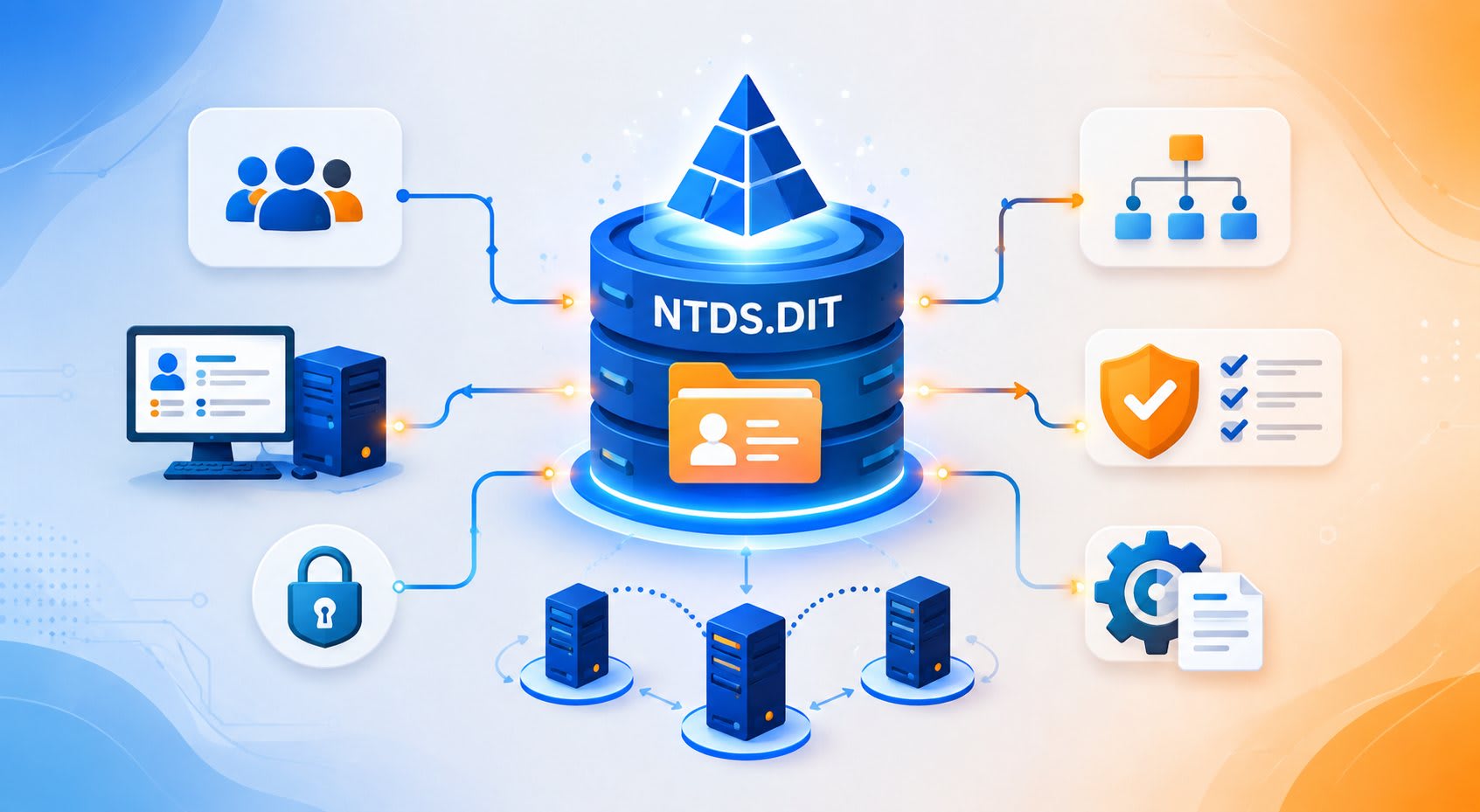
How NTDS.DIT Powers Active Directory Operations
Active Directory is the backbone of identity and access management in many Windows-based enterprise environments. It enables organizations to manage users, computers, groups, permissions, and authentication from a centralized platform. At the heart of this infrastructure lies a critical database file known as NTDS.DIT. Without it, Active Directory would not be able to store, organize, or process the information required to support day-to-day operations.
For IT administrators, cybersecurity professionals, and system architects, understanding how the NTDS.DIT database functions is essential. It provides insight into how directory services operate, how authentication occurs, and why protecting this database is a top security priority. This article explores the role of NTDS Active Directory architecture and explains how NTDS.DIT powers the core functions of Active Directory.
What NTDS.DIT Is and Why It Matters
NTDS.DIT is the primary database file used by Microsoft Active Directory Domain Services (AD DS). The file is typically stored on domain controllers and contains the directory information necessary for managing network resources and identities.
The database uses Microsoft's Extensible Storage Engine (ESE), also known as JET Blue, which is designed to handle large amounts of directory data efficiently. Every object within Active Directory—including users, computers, groups, organizational units, and security policies—is stored within this database.
Because NTDS.DIT serves as the central repository for directory information, its availability and integrity are critical. If the database becomes corrupted or inaccessible, organizations may experience authentication failures, management issues, and disruptions across the network.
The Relationship Between NTDS.DIT and Active Directory
To understand how Active Directory functions, it is important to recognize the role of the database behind it. The ntds active directory framework relies on NTDS.DIT to maintain structured information about every object within the domain.
When administrators create a user account, join a computer to a domain, modify group memberships, or assign permissions, those changes are recorded in NTDS.DIT. The database acts as the authoritative source for directory information and ensures that requests can be processed accurately.
Active Directory services constantly interact with NTDS.DIT to retrieve and update data. Whether a user logs in, accesses a shared resource, or requests directory information, the database plays a direct role in fulfilling those operations.
What Information Is Stored in NTDS.DIT
The NTDS.DIT database contains a wide range of information that supports identity management and directory services. Some of the most important data categories include:
- User account information
- Computer account records
- Security group memberships
- Organizational units (OUs)
- Domain configuration settings
- Trust relationships
- Group Policy references
- Authentication-related attributes
The database also stores password-related data in a secured format. Although passwords are not stored as plain text, password hashes are maintained for authentication purposes. This is one reason why NTDS.DIT is considered a highly sensitive asset within enterprise environments.
As organizations grow, the database expands to accommodate new users, devices, and directory objects while maintaining efficient search and retrieval capabilities.
How NTDS.DIT Supports Authentication and Identity Management
Authentication is one of the most important functions of Active Directory. Whenever a user enters credentials to access a domain-joined system, Active Directory verifies those credentials against information stored within NTDS.DIT.
The ntds active directory database helps support authentication through several key processes:
- Validating user credentials
- Managing account status
- Verifying group memberships
- Enforcing security policies
- Supporting Kerberos and NTLM authentication protocols
For example, when an employee signs in to a workstation, the domain controller consults information stored in NTDS.DIT to determine whether the account exists, whether it is active, and what permissions are associated with it.
This process happens quickly and seamlessly, allowing organizations to provide secure access while maintaining centralized control over user identities.
Replication and Directory Consistency Across Domain Controllers
Most enterprise environments deploy multiple domain controllers to improve availability and resilience. Each domain controller maintains a copy of the Active Directory database, ensuring that directory services remain available even if one server experiences issues.
Replication is the process that keeps these databases synchronized. When a change occurs on one domain controller, Active Directory replicates the update to other controllers throughout the environment.
The ntds active directory infrastructure relies heavily on replication to ensure consistency. Without effective replication, different domain controllers could contain conflicting information, leading to authentication problems and administrative confusion.
Replication also improves fault tolerance by ensuring that no single server becomes a point of failure. This distributed architecture is one of the reasons Active Directory remains widely used in enterprise networks.
Security Considerations for NTDS.DIT
Because NTDS.DIT contains highly valuable identity information, it is a frequent target for attackers. Unauthorized access to the database can potentially expose password hashes, account information, and sensitive directory data.
Common security concerns include:
- Credential theft
- Privilege escalation
- Domain controller compromise
- Unauthorized database extraction
- Insider threats
Organizations should implement multiple layers of protection to safeguard domain controllers and their databases. Recommended practices include limiting administrative privileges, applying security updates, monitoring suspicious activity, and enforcing strong access controls.
The security of ntds active directory environments often depends on protecting the domain controllers where NTDS.DIT resides. A compromised domain controller can significantly increase organizational risk.
Backup, Recovery, and Maintenance Best Practices
Maintaining reliable backups is essential for protecting Active Directory services. Hardware failures, accidental deletions, cyberattacks, or database corruption can disrupt directory operations if recovery mechanisms are not available.
Administrators should establish routine backup procedures that include system state backups. These backups capture critical Active Directory components, including NTDS.DIT.
Effective maintenance practices include:
- Performing regular backups
- Monitoring database health
- Verifying replication status
- Testing disaster recovery procedures
- Applying operating system updates
- Reviewing domain controller performance
Periodic maintenance helps ensure long-term stability and reduces the likelihood of service disruptions.
Common Administrative Challenges and Solutions
Managing Active Directory databases can present several challenges, particularly in large or complex environments.
One common issue involves replication delays. If replication is interrupted, administrators may encounter inconsistent directory information across domain controllers. Monitoring replication health and addressing network issues can help minimize these problems.
Database growth is another concern. As organizations add users, devices, and applications, NTDS.DIT continues to expand. Proper capacity planning and infrastructure monitoring can help maintain performance.
Security monitoring also remains a critical responsibility. Administrators should regularly audit privileged accounts, review domain controller activity, and investigate unusual behavior that may indicate compromise attempts.
By proactively addressing these challenges, organizations can maintain a healthy and secure Active Directory environment.
Key Takeaways
- NTDS.DIT is the core database that powers Active Directory operations.
- It stores user accounts, computer objects, groups, policies, and other directory information.
- Authentication and authorization processes depend heavily on data stored within the database.
- Replication ensures consistency across multiple domain controllers.
- Protecting NTDS.DIT is essential because it contains sensitive identity-related information.
- Regular backups, monitoring, and maintenance contribute to long-term reliability and security.
Conclusion
NTDS.DIT serves as the foundation of Active Directory, enabling organizations to manage identities, authenticate users, and control access to network resources. Every major Active Directory function—from account management and authentication to replication and policy enforcement—depends on the information stored within this critical database.
A solid understanding of NTDS.DIT helps administrators make informed decisions about security, maintenance, and disaster recovery. As enterprise environments continue to evolve, protecting and properly managing this database remains essential for maintaining a secure, reliable, and efficient Active Directory infrastructure.
Want to publish a guest post on aamax.co?
Place an order for a guest post or link insertion today.
Place an Order