

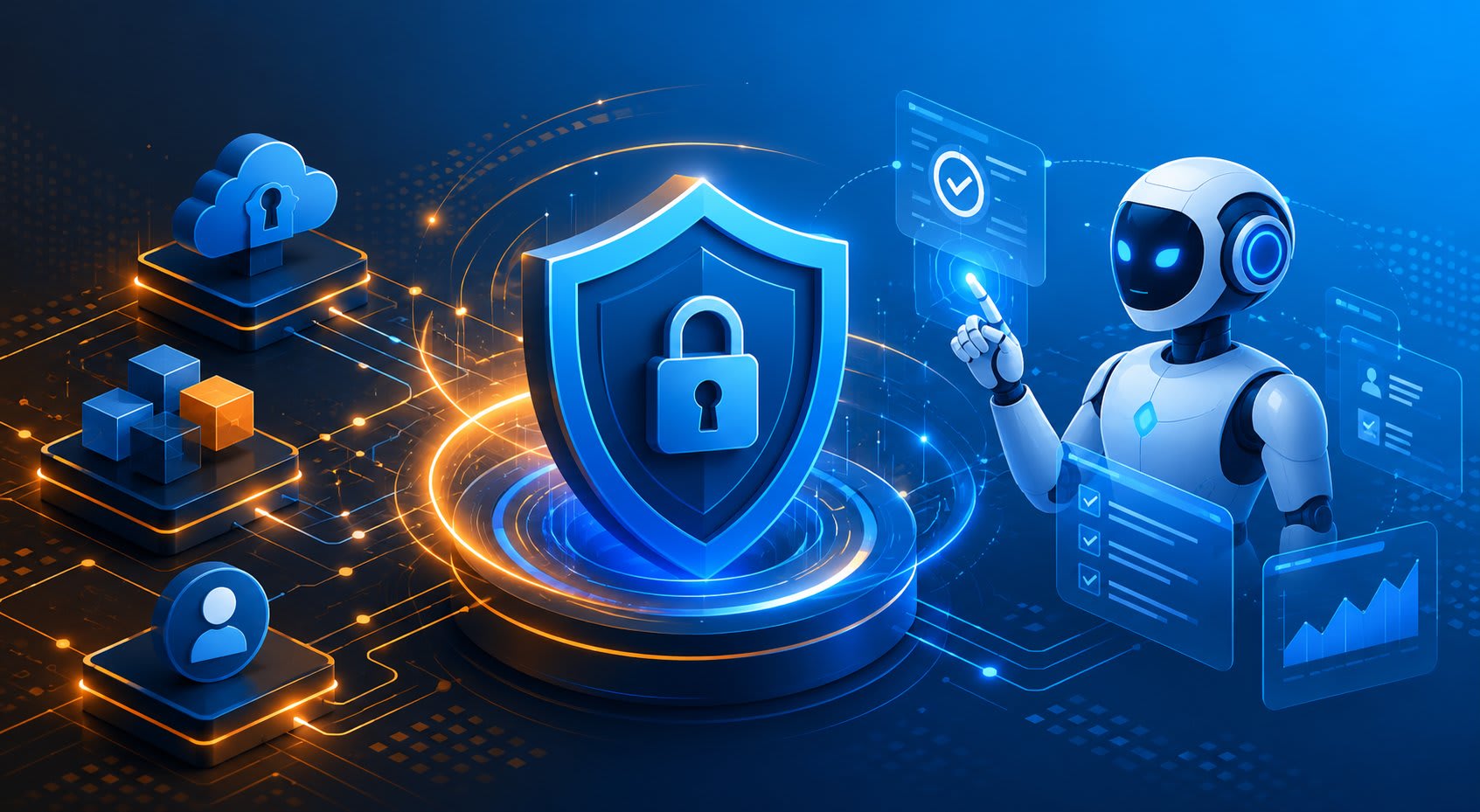
Redefining Cybersecurity for the Rise of Agentic AI
Artificial intelligence is entering a new phase. Instead of simply responding to prompts, modern AI systems are increasingly capable of taking actions, making decisions, and completing tasks with limited human intervention. These systems, often referred to as agentic AI, are changing how organizations automate workflows, manage information, and support business operations. While the benefits are significant, the emergence of agentic AI also introduces new cybersecurity challenges that traditional security frameworks were not designed to address.
As organizations integrate autonomous AI agents into daily operations, cybersecurity strategies must evolve accordingly. The risks associated with these systems extend beyond conventional malware, phishing attacks, and network intrusions. Agentic AI can access sensitive information, interact with multiple applications, and execute actions across digital environments. If compromised, manipulated, or misconfigured, these systems can create security risks on a scale that many organizations have not previously encountered.
Why Agentic AI Changes the Security Landscape
Traditional software follows predefined instructions and generally operates within fixed boundaries. Agentic AI systems are different because they can adapt to changing circumstances, interpret information, and make decisions based on goals rather than explicit step-by-step instructions.
This increased autonomy creates a broader attack surface. An AI agent may interact with cloud platforms, databases, communication systems, customer records, and external applications. Each connection represents a potential point of vulnerability. Cybercriminals are already exploring ways to exploit these new pathways through prompt injection attacks, credential theft, data manipulation, and unauthorized access.
Security professionals are beginning to recognize that protecting AI-powered systems requires a different mindset. Instead of focusing solely on perimeter defenses, organizations must evaluate how autonomous agents make decisions, access resources, and interact with users.
The Expanding Threat Environment
One of the primary concerns surrounding agentic AI is the possibility of unintended actions. An AI agent may receive instructions that appear legitimate but contain hidden malicious intent. Through carefully crafted prompts or manipulated data, attackers may influence the behavior of autonomous systems.
For example, an AI-powered customer service agent connected to internal databases could potentially expose sensitive information if it processes deceptive instructions. Similarly, an AI assistant with access to financial systems could be manipulated into performing unauthorized transactions if sufficient safeguards are not in place.
Organizations are increasingly studying cybersecurity frameworks and expert guidance from providers such as Mimecast to understand how communication security, threat intelligence, and risk management practices can support emerging AI environments. As AI-driven workflows become more common, established cybersecurity principles remain valuable foundations for protection.
Another challenge involves supply chain security. Many AI agents rely on third-party models, APIs, plugins, and external data sources. A compromise in any connected component can affect the integrity and security of the entire system. This interconnected ecosystem makes comprehensive risk assessment more important than ever.
Identity and Access Management Must Evolve
Identity remains at the center of cybersecurity. However, the rise of autonomous AI introduces a new category of digital actors that require unique governance and oversight.
Organizations must determine what permissions AI agents need, how those permissions are granted, and how activity is monitored. Excessive privileges can significantly increase risk. If an AI agent gains access to systems beyond its intended scope, attackers may exploit that access to move laterally through an organization.
Modern identity management frameworks should apply the principle of least privilege to AI agents just as they do to human users. Every autonomous system should receive only the permissions necessary to perform its assigned tasks.
Many security teams are exploring best practices inspired by solutions such as Mimecast when developing layered defenses that combine authentication controls, monitoring capabilities, and threat detection mechanisms. These approaches help reduce opportunities for unauthorized access while maintaining operational efficiency.
Securing Data in an AI-Driven Environment
Data serves as the foundation for agentic AI. The quality, security, and integrity of data directly influence the behavior and effectiveness of autonomous systems.
Sensitive information may flow through AI agents as they perform tasks, generate reports, or interact with customers. Without proper controls, confidential data could be exposed, stored improperly, or transmitted to unauthorized locations.
Organizations should implement data classification policies, encryption standards, and strict access controls to protect valuable information. Continuous monitoring can help identify unusual activity patterns that may indicate compromise or misuse.
The challenge extends beyond data protection. Organizations must also defend against data poisoning attacks, in which adversaries intentionally manipulate training or operational data to influence AI behavior. Such attacks can undermine trust in AI-generated outputs and create significant operational risks.
Continuous Monitoring Becomes Essential
Cybersecurity has traditionally relied on periodic assessments and scheduled reviews. Agentic AI operates continuously, making real-time visibility increasingly important.
Security teams need the ability to monitor AI activity, track decisions, and detect anomalies as they occur. Logging systems should capture interactions, actions, permissions used, and system responses. This information can support investigations and improve accountability.
Continuous monitoring also enables organizations to identify emerging threats before they escalate. If an AI agent begins accessing unusual resources or behaving unexpectedly, security teams can intervene quickly.
Industry discussions involving AI governance often reference tools and strategies associated with platforms like Mimecast as examples of how monitoring, threat intelligence, and communication security contribute to broader cyber resilience. While technologies differ, the underlying principle remains consistent: visibility is essential for effective security.
Building AI Governance into Cybersecurity Strategy
Effective cybersecurity for agentic AI requires strong governance. Organizations should establish clear policies defining how AI systems are developed, deployed, monitored, and maintained.
Governance frameworks should address issues such as accountability, transparency, risk assessment, compliance requirements, and incident response procedures. Security considerations must be integrated throughout the AI lifecycle rather than added after deployment.
Cross-functional collaboration is particularly important. Cybersecurity professionals, data scientists, legal teams, compliance specialists, and business leaders should work together to identify risks and establish appropriate controls.
Regular audits and testing can help organizations evaluate whether AI systems are operating as intended. Penetration testing, red teaming exercises, and adversarial simulations can reveal weaknesses before attackers discover them.
Preparing for the Future of Autonomous Systems
The adoption of agentic AI is expected to accelerate across industries. From healthcare and finance to manufacturing and customer service, organizations are increasingly exploring autonomous systems capable of handling complex responsibilities.
This evolution presents opportunities for efficiency, innovation, and productivity. However, it also demands a new approach to cybersecurity. Traditional defenses alone will not be sufficient to address the unique risks associated with autonomous decision-making systems.
Organizations that proactively strengthen identity management, data protection, governance frameworks, and monitoring capabilities will be better positioned to navigate this transition.
Concepts reflected in cybersecurity ecosystems such as Mimecast demonstrate the ongoing importance of layered security, visibility, and risk management in a rapidly changing threat landscape.
Conclusion
Agentic AI represents a significant technological advancement, but it also introduces complex cybersecurity challenges that require careful attention. Autonomous systems operate differently from traditional software, creating new opportunities for attackers and new responsibilities for defenders.
To protect modern digital environments, organizations must rethink how security is designed, implemented, and maintained. By focusing on governance, identity controls, data protection, continuous monitoring, and responsible deployment practices, businesses can safely embrace the benefits of agentic AI while reducing exposure to emerging threats.
The future of cybersecurity will increasingly depend on the ability to secure intelligent, autonomous systems. Organizations that adapt early will be better prepared to manage risks, maintain trust, and unlock the full potential of AI-driven innovation.
Want to publish a guest post on aamax.co?
Place an order for a guest post or link insertion today.
Place an Order