

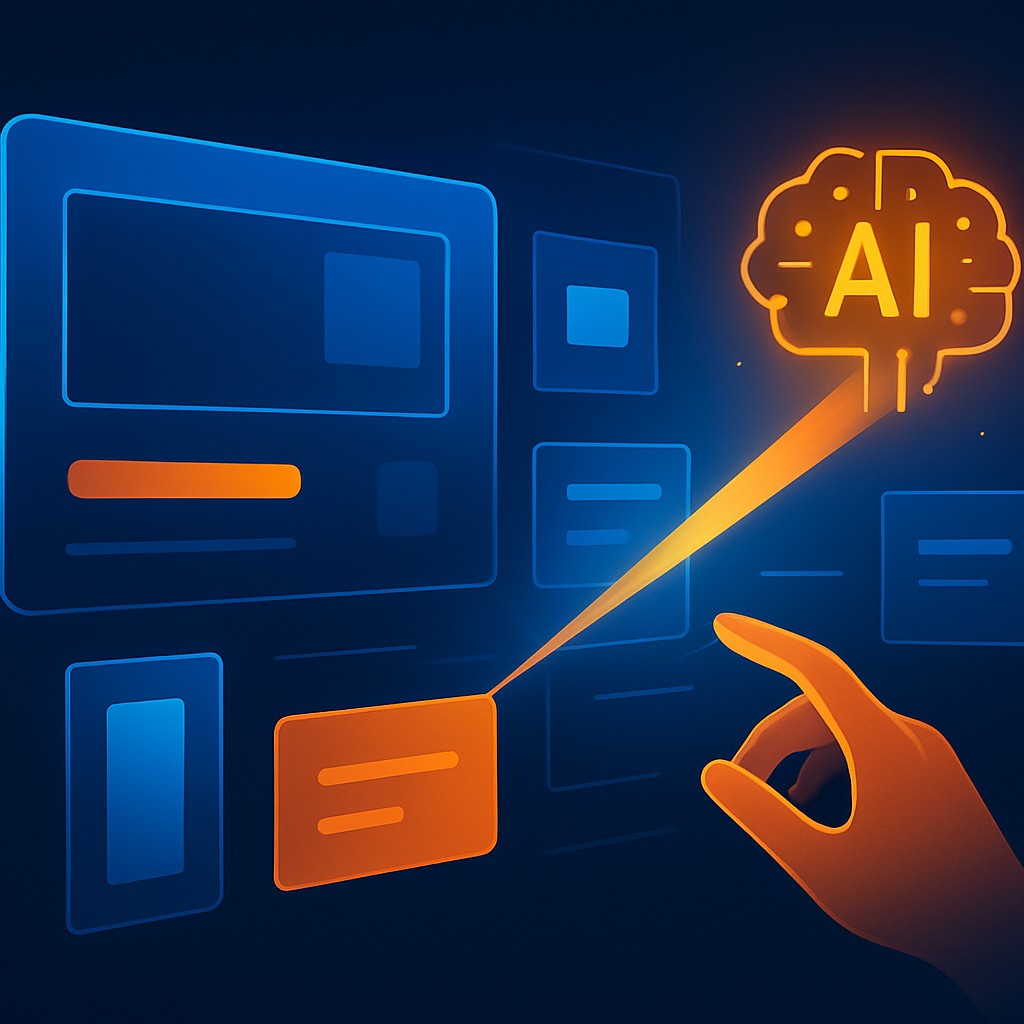
Will AI Replace Web Designers
AI tools can now generate website layouts, write code, and even produce complete designs from a simple prompt. Naturally, this has web designers wondering whether their profession is at risk. Will AI replace web designers? The short answer is no, but it will significantly change how they work. Understanding what AI can and cannot do reveals why human designers remain essential in the age of automation.
How We Can Help at AAMAX.CO
At AAMAX.CO, we blend AI efficiency with expert human design to build websites that look great and perform even better. As a full-service digital marketing company serving clients worldwide, our website development services use AI to accelerate the process while skilled designers ensure every site reflects your brand, serves your users, and drives results. You get speed without sacrificing quality.
What AI Design Tools Can Do
Modern AI tools are genuinely impressive. They can generate layout options, suggest color schemes, produce placeholder content, and even write functional code. For simple websites and rapid prototyping, they dramatically speed up the early stages of design. This makes AI a valuable tool for getting ideas onto the screen quickly and exploring directions before committing to a final design.
The Limits of AI-Generated Design
Despite the hype, AI-generated designs have clear limitations. They tend to produce generic, templated results that lack originality and brand personality. They struggle with the nuanced understanding of a specific business, its audience, and its goals. AI does not grasp the emotional impact of design choices or the strategic thinking behind a truly effective website. The output often looks fine but rarely feels distinctive or purposeful.
Design Is About Problem-Solving
Great web design is not just about making things look attractive; it is about solving problems. Designers consider user behavior, business objectives, accessibility, conversion goals, and brand strategy. They make countless judgment calls about hierarchy, flow, and experience that require human understanding and empathy. AI can assist with these tasks, but it cannot replace the strategic thinking that distinguishes good design from great design.
The Importance of User Experience
Effective websites guide users smoothly toward their goals, and this requires deep understanding of human behavior and psychology. Designers anticipate how real people will interact with a site, where they might get confused, and what will motivate them to act. This empathy-driven, human-centered approach to user experience is something AI cannot authentically replicate, no matter how advanced it becomes.
How AI Changes the Designer's Role
Rather than replacing designers, AI is becoming a powerful tool within their workflow. It handles repetitive tasks, generates starting points, and speeds up production, freeing designers to focus on creativity, strategy, and refinement. The designer's role shifts toward directing AI, curating its output, and applying the human judgment that elevates a design from acceptable to exceptional.
Why Human Designers Remain Essential
Businesses that rely solely on AI-generated websites often end up looking like everyone else, undermining the very purpose of having a unique online presence. Human designers create distinctive, on-brand, user-focused experiences that stand out. As AI makes generic design ubiquitous, the value of thoughtful, custom human design actually increases. Standing out requires a human touch.
Adapting to the New Landscape
Web designers who embrace AI tools will outpace those who resist them. By using AI to handle tedious work and focusing their energy on strategy, creativity, and user experience, designers become more productive and valuable. The future belongs to designers who treat AI as a collaborator that amplifies their craft.
How Designers Can Use AI to Their Advantage
Smart web designers are already turning AI into a competitive advantage. They use it to generate initial concepts quickly, explore multiple directions, and handle repetitive production tasks like resizing assets or writing boilerplate code. This frees them to spend more time on the creative and strategic work that clients truly value. AI can also assist with research, accessibility checks, and content suggestions, helping designers deliver more complete solutions. By treating AI as a collaborator that accelerates their workflow, designers produce better work faster and take on more projects, increasing both their output and their value to clients.
The Future of Web Design
The web design profession is evolving rather than disappearing. As AI handles more routine production, the role increasingly emphasizes strategy, user experience, brand thinking, and creative vision. Designers will likely spend less time on pixel-level execution and more on solving business problems and crafting distinctive experiences. Demand for thoughtful, custom design will remain strong precisely because AI makes generic design so common. The designers who thrive will be those who combine timeless design fundamentals with fluency in AI tools, positioning themselves as strategic creative partners rather than mere producers of layouts. The future is bright for those willing to adapt.
Conclusion
AI will not replace web designers, but it will transform how they work. It accelerates production and handles routine tasks, while human designers provide the creativity, strategy, and user understanding that make websites truly effective. The best results come from combining both. If you want a website that pairs AI efficiency with expert human design, our team at AAMAX.CO is ready to build it for you.
Want to publish a guest post on aamax.co?
Place an order for a guest post or link insertion today.
Place an Order