

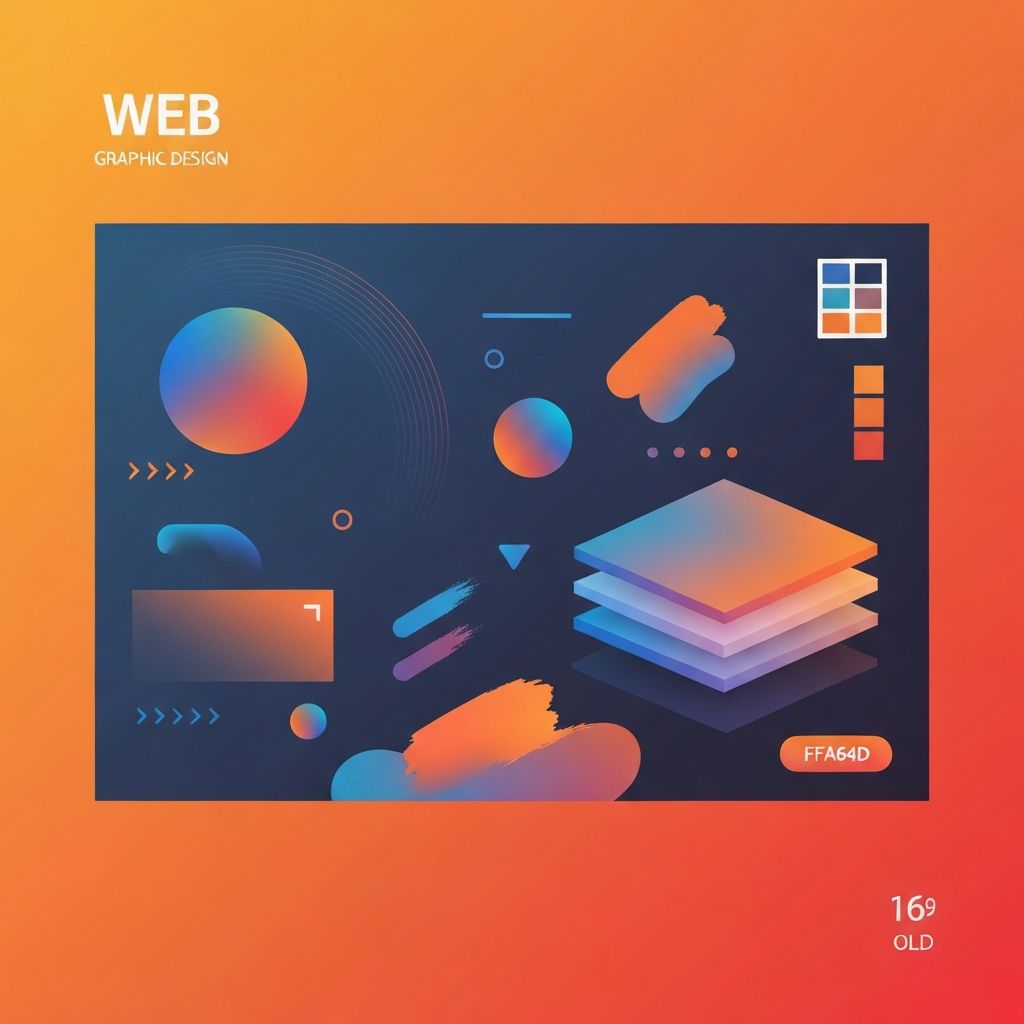
Web Graphic Designing
The Craft of Web Graphic Designing
Web graphic designing is the art of creating visual elements specifically optimized for the web—illustrations, icons, infographics, hero compositions, banners, social previews, and brand assets that make a website feel alive. It sits at the crossroads of traditional graphic design and modern interface design, borrowing from both while solving problems unique to digital. Done well, web graphic designing turns ordinary pages into experiences that audiences remember, share, and return to.
At AAMAX.CO, our designers blend graphic-design fundamentals with deep technical fluency. The result is visual work that not only looks beautiful but ships smoothly, performs well, and serves the broader business strategy of every site we build.
How Web Graphic Designing Differs from Traditional Graphic Design
Traditional graphic design lives largely in fixed formats: print layouts, posters, packaging, and brand books. Web graphic designing must thrive in fluid, interactive contexts. Compositions need to flex across screen sizes, respond to user actions, and load quickly on any network. Colors must consider screen variance and accessibility. Typography must read well across pixel densities. Files must be optimized for web delivery, not press output.
This means web graphic designers need to understand vectors versus raster, when to choose SVG over PNG or AVIF, how CSS interacts with their assets, and how motion can reinforce or undermine visual storytelling. Bridging these worlds is what separates a print designer dabbling in web work from a true web graphic designer.
Visual Storytelling on the Modern Web
Every successful website tells a story. Web graphic designing supplies the visual chapters of that story. Hero illustrations introduce the brand’s personality. Section dividers create rhythm. Iconography clarifies features. Infographics distill complex data. Custom imagery replaces generic stock and gives the site a sense of place and authorship.
Story-driven graphics also reinforce SEO and shareability. Custom Open Graph images, branded social previews, and well-designed featured images dramatically improve click-through rates from search and social platforms. Combined with strong content strategy and our website design craft, these visuals become a quiet but powerful growth engine.
Typography as a Graphic Element
Typography is one of the most powerful graphic tools on the web. Oversized display headlines, mixed weights, kinetic type animations, and thoughtful pairing of serif and sans-serif fonts can carry an entire visual identity. Variable fonts allow designers to tune weight, width, and slant precisely, opening expressive possibilities while keeping file sizes manageable.
Web graphic designers must also respect readability. Decorative type that looks stunning at hero scale becomes unreadable in long-form content. A disciplined type system that defines display, heading, body, and supporting styles ensures the website remains both beautiful and usable.
Color Systems That Work on Screen
Color on the web behaves differently than color on paper. Designers must consider sRGB and wider gamuts, dark mode, accessibility contrast ratios, and color blindness. A successful palette balances brand expression with functional clarity. Primary brand colors, neutrals, semantic colors for success, warning, and error states, and accent colors for emphasis form a system that scales across pages.
Modern CSS variables and design tokens make these systems easier to maintain. When paired with disciplined front-end web development, a single token change can update an entire site’s palette without breaking layouts.
Iconography, Illustration, and Custom Imagery
Generic stock photography is the visual equivalent of corporate jargon: it says everything and nothing. Custom iconography and illustration give a website its fingerprint. A coherent icon set, drawn with consistent stroke weight, corner radius, and visual mass, makes interfaces feel intentional. Custom illustrations communicate concepts that photos cannot, such as abstract product capabilities, technical processes, or emotional states.
3D and isometric illustration have moved firmly into the mainstream. Tools like Spline make 3D accessible to design teams, while libraries like Lottie keep animated illustrations lightweight on the web. The right balance of these elements gives sites depth without sacrificing performance.
Motion Graphics and Micro-Animation
Motion turns static pages into living experiences. Subtle micro-animations on hover, scroll, and click signal interactivity and reward attention. Larger motion sequences can introduce a product, narrate a story, or guide the user through complex onboarding. The key principle is purposefulness: every animation should clarify, delight, or guide. Motion for its own sake quickly becomes noise.
Performance is non-negotiable. Designers should prefer CSS animations and transforms where possible, use Lottie or SVG for complex sequences, and lazy-load heavier assets. Our ReactJs web development teams collaborate closely with designers to make sure motion designs are technically achievable without sacrificing Core Web Vitals.
Designing for Performance and Delivery
Every graphic asset has a cost. Large hero images, uncompressed PNGs, oversized videos, and heavy 3D scenes can crater performance. Web graphic designers must think like performance engineers, choosing the smallest acceptable format, exporting at appropriate resolutions, and providing responsive variants. Modern formats such as AVIF, WebP, and SVG, combined with proper compression and CDN delivery, allow rich visuals without punishing load times.
Brand Consistency Across Touchpoints
A website is only one surface in a brand’s ecosystem. Web graphic designing must align with social media, email, advertising, packaging, and product UI. Shared design systems, asset libraries, and brand guidelines ensure that customers experience a coherent identity wherever they encounter the brand. Inconsistency is one of the fastest ways to erode brand equity, especially for growing companies.
Hire AAMAX.CO for Web Graphic Designing That Performs
Web graphic designing is far more than decoration. It is a strategic discipline that shapes how customers feel about a brand and how successfully a website achieves its goals. Our designers bring the visual craft, technical fluency, and strategic mindset needed to deliver graphic work that elevates every page. Hire AAMAX.CO and let our team build a visual system that brings your brand to life on the web. Explore our website development services to see how we combine graphics, code, and strategy into experiences that perform.
Want to publish a guest post on aamax.co?
Place an order for a guest post or link insertion today.
Place an Order