

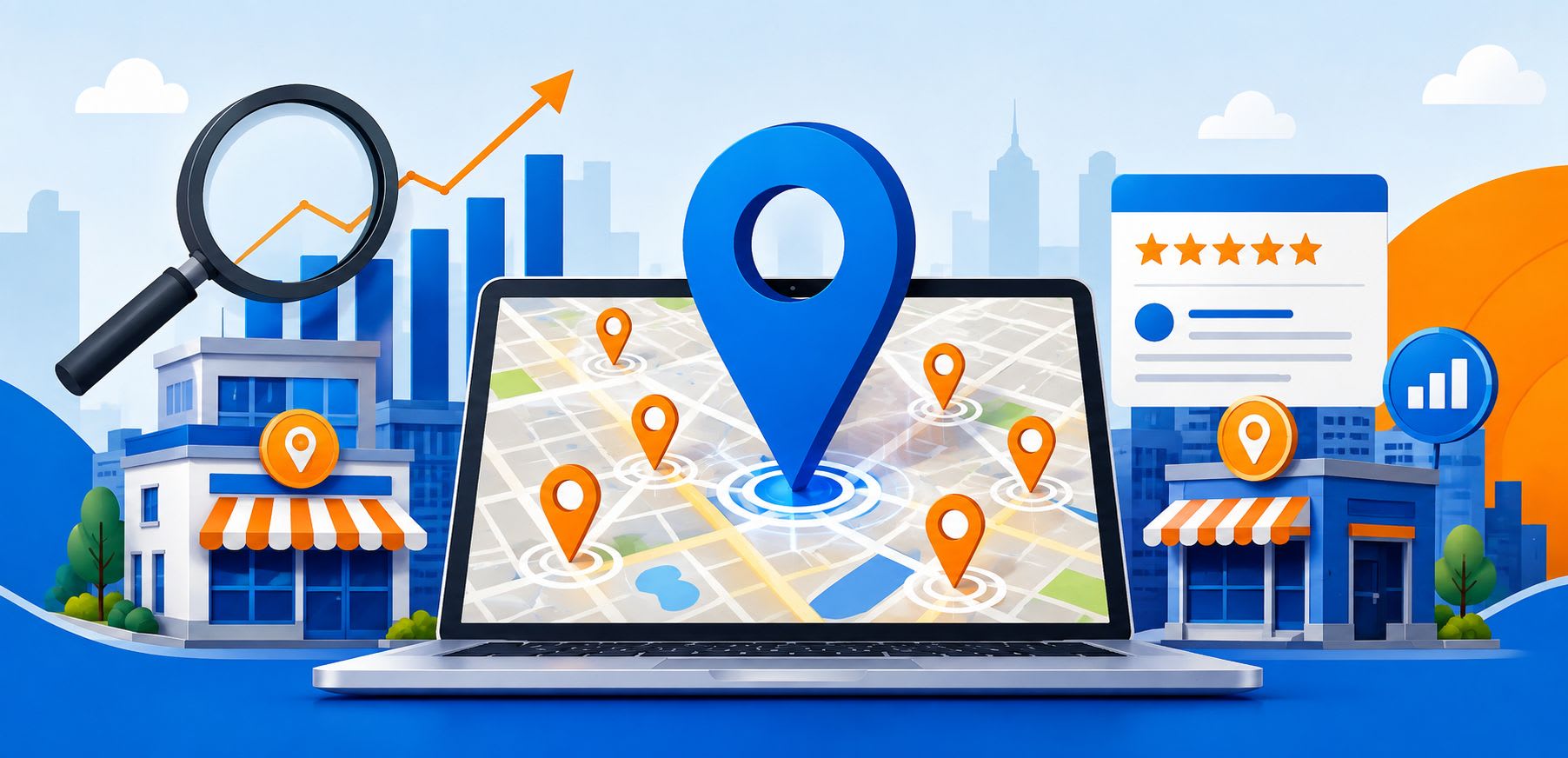
Multilocation SEO Guide: Rank Every Location in Local Search
A multi-location brand doesn't compete in one search market. It competes in as many markets as it has locations, each with its own map results, competitors, and customers. Success depends less on clever keywords than on reliable systems: a site structure that scales, accurate business profiles, and review practices that follow platform rules.
This guide covers site architecture, Google Business Profile management, citations, reviews, AI-assisted search surfaces, and measurement. Results vary by category and region, so adapt the approach to each market.
Key takeaways
- Fewer, stronger location pages beat mass-produced city pages. Google may treat thin, near-duplicate pages created only to capture local queries as doorway spam.
- Accurate profile data has a major effect on visibility. Categories, hours, store codes, and eligibility matter more than minor copy changes.
- Review policies require careful attention. Google prohibits incentives, while Yelp asks businesses not to solicit reviews.

What multi-location SEO is and isn't
The goal is straightforward: help every branch compete in its own market without competing against other locations in the same organization. Two search surfaces carry much of the weight. The first is the local pack and Google Maps, which rely heavily on Google Business Profile data. The second is localized organic search, which depends on pages hosted on your website.
Multi-location SEO isn't simply a keyword exercise repeated for every city. At scale, data accuracy and policy compliance matter as much as on-page content. An incorrect category or an ineligible address can cost a location more visibility than a rewritten headline can recover.
Get the rules right first
Google's Business Profile guidelines set firm limits. Each listed address must be staffed and able to serve customers during its published hours. This generally rules out virtual offices and unstaffed coworking spaces. Google also permits only one profile per business at a physical location, with limited exceptions for individual practitioners and distinct departments.
The other important boundary is Google's doorway-page policy. Pages created mainly to capture city searches, without offering meaningful local information, may be treated as spam and lose visibility.
Policy watch: Google's content policies prohibit incentivized reviews, including those exchanged for payments, discounts, or free products. Violations can lead to profile restrictions. Yelp goes further by asking businesses not to request reviews. Solicitation may result in review suppression or a consumer alert. Review gating, in which only satisfied customers receive a public review request, also creates policy risks.
Design a scalable site architecture
Start with one store locator that links to every location page. Use a predictable URL pattern, such as /locations/city/store-name/. Keep the structure shallow so customers and search engines can reach any branch within a click or two. BreadcrumbList structured data can also help search engines understand the hierarchy.
Build only as many pages as you can support with useful local information. Each location page should include an embedded map; consistent name, address, and phone details; services available at that branch; regular and holiday hours; access or parking notes; local photos; and links to nearby locations. LocalBusiness structured data can reinforce details such as the address, phone number, hours, geographic coordinates, and relevant departments. Simply changing the city name in otherwise identical copy increases the risk of creating doorway pages.
A multilocation SEO guide should connect location pages with Business Profile management, citations, reviews, and reporting rather than treating each task as a separate campaign.
Optimize Google Business Profiles at scale
Treat each profile as a structured business record. Check the primary category, relevant secondary categories, attributes, standard hours, holiday hours, services or products, current photos and videos, and links to the location's social profiles where appropriate.
For 10 or more locations, consider bulk management. Eligible brands can request bulk verification through Business Profile Manager. Bulk management also requires a unique store code for each location. Treat store codes as permanent identifiers because changing them on existing listings can create duplicates that take time to resolve.
Google's Performance reports allow owners to download data for multiple profiles. This makes it easier to compare locations without assembling every report manually.
Some profiles can add WhatsApp or SMS chat links, although availability varies by country and profile. Confirm which features are available before building customer support procedures around them.
Manage citations and maps beyond Google
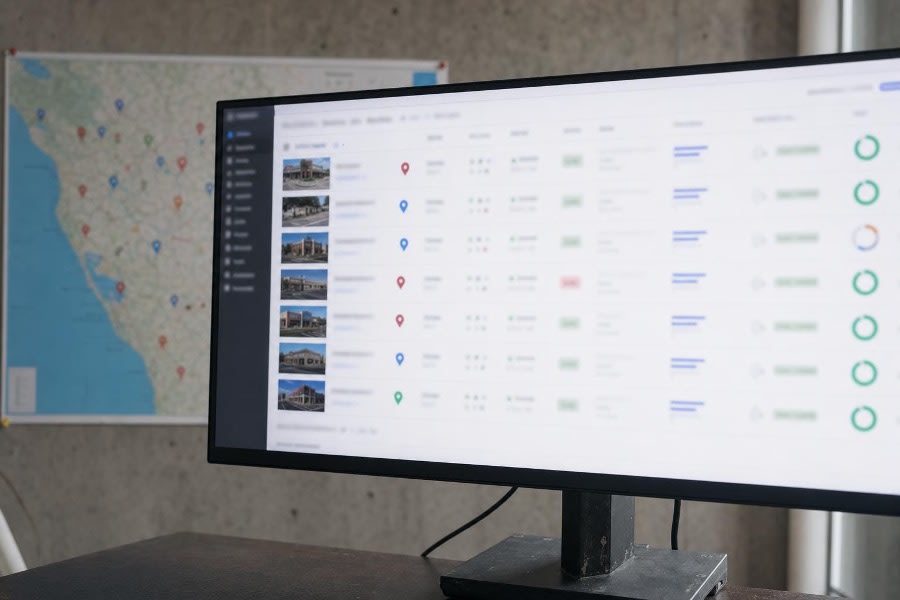
Google isn't the only mapping platform customers use. Apple Business Connect allows chains and other brands to manage location information across Apple Maps and related services. Bing Places also supports bulk uploads for multi-location businesses. Yelp influences local discovery in several US categories, but its policy asks businesses not to solicit reviews.
Data aggregators such as Data Axle, Localeze, and Foursquare distribute business information to directories and apps. These services can improve consistency across many listings, but updates may take time to appear. Account for that delay when a location opens, closes, or moves.
Build reviews and reputation without unnecessary risk
Where a platform permits review requests, keep them direct and offer them to all customers rather than selecting only those who seem satisfied. A brief request after service, a receipt link, or a counter card can work, provided no reward is offered. Respond to positive and critical reviews in a voice appropriate to the location.
Specific reviews are often more useful than vague praise. Details about a service, staff interaction, or amenity help prospective customers understand the experience. Maintain a presence on relevant third-party sites, such as healthcare directories or reservation platforms, when they matter to the business. Train local teams on platform-specific rules so they don't distribute prohibited requests, including blanket requests for Yelp reviews.

Support AI-assisted local search
AI Overviews, AI Mode, and place-related features in Maps can assemble answers from business profiles, reviews, posts, menus, and company websites. Availability differs by category and region, so support these surfaces without depending on them as primary channels.
The required work is largely familiar: complete profile attributes, structured service or menu information, current photos, clear answers to common questions on location pages, and consistent updates. Traditional profile questions and answers have been retired from many listings, so customer questions may increasingly be answered with information from other sources you control.
Measure performance by location
Add UTM parameters to the website link on each profile so profile-driven visits can be separated in analytics. Review Performance metrics for each location, including views, search terms, calls, direction requests, and bookings where available. In GA4, segment traffic by location page path to compare organic search activity with Business Profile traffic.
Check map visibility on a grid around each branch instead of relying on one citywide ranking. Proximity can change results from one neighborhood or block to another. Review suggested profile edits regularly because public changes to hours or categories can quietly introduce errors.
Governance ties these activities together. Maintain one source of truth containing the approved name, address, phone number, categories, store code, page URL, and profile owner for every location. A practical multilocation SEO workflow can help teams document those connected tasks. Search signals change over time, and industry research such as Whitespark's Local Search Ranking Factors report can provide context, but clean internal data should remain the foundation.
Common pitfalls
- Creating near-duplicate city pages with only the place name changed.
- Publishing inconsistent name, address, or phone data across platforms.
- Applying the same broad primary category to every branch without checking local services.
- Using ineligible addresses, including virtual offices.
- Forgetting holiday hours or leaving outdated photos in place.
- Using review requests that conflict with platform policies.
- Optimizing only for Google and measuring results only at the brand level.
Build the system, then improve it
A durable sequence starts with compliant foundations, followed by focused site architecture, consistent profile management, accurate citations, honest reviews, useful local content, and location-level measurement. No process guarantees a particular map position, and priorities will differ by category and region. A well-managed system does, however, reduce the quiet errors that limit local search performance and make expansion harder to manage.
Want to publish a guest post on aamax.co?
Place an order for a guest post or link insertion today.
Place an Order