

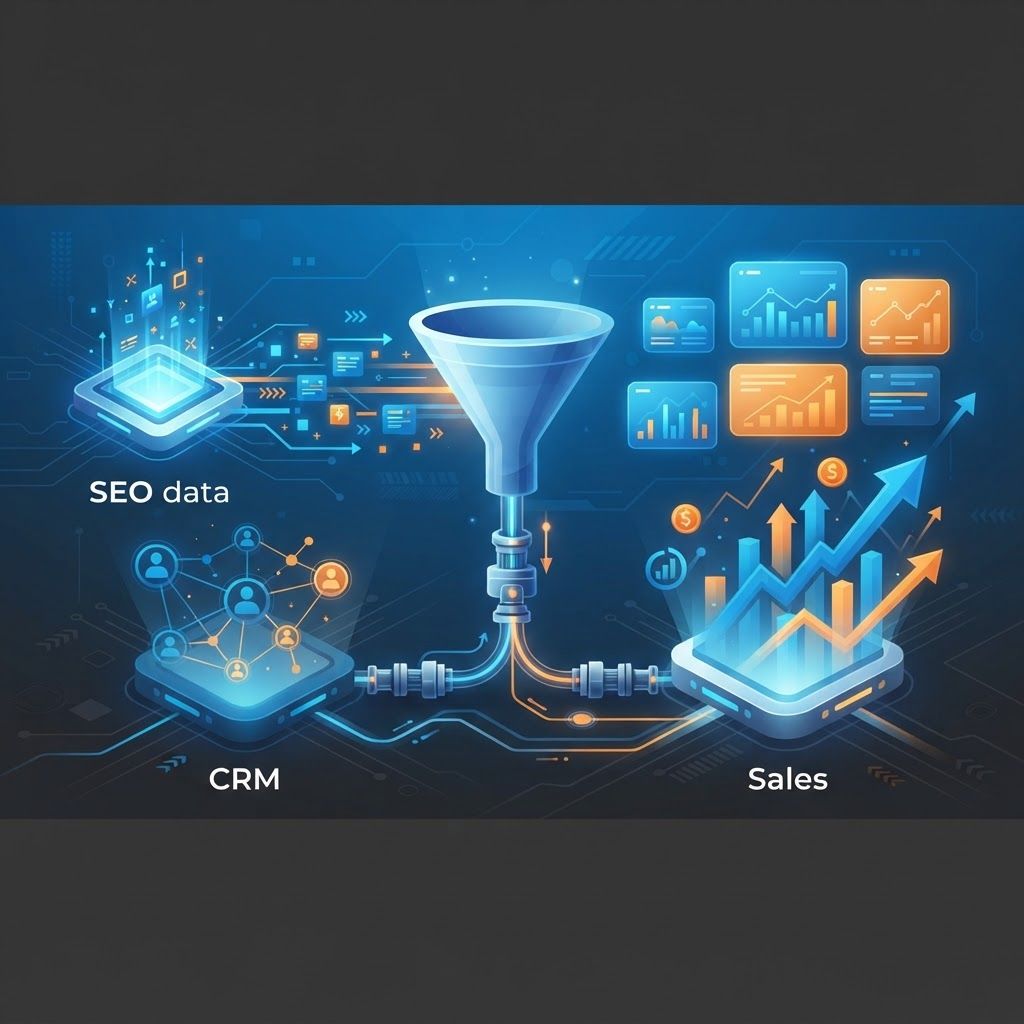
How to Integrate SEO Data With CRM and Sales Platforms
For too many organizations, SEO lives in one world and sales lives in another. Marketers celebrate rankings and traffic, while sales teams track deals and revenue, and the two rarely reconcile. Integrating SEO data with your CRM and sales platforms closes that gap. It lets you trace an organic search all the way to a closed deal, revealing which keywords and pages actually generate revenue rather than just clicks. This guide explains how to connect the data and turn organic performance into a genuine business metric.
How AAMAX.CO Bridges SEO and Revenue
At AAMAX.CO, we design SEO services around revenue, not vanity metrics. Our team helps you connect organic data to your CRM so you can see exactly how search contributes to pipeline and closed business. As a full-service digital marketing company, we bring together the technical, analytical, and strategic pieces required to make SEO accountable to sales outcomes, so every optimization decision is backed by evidence of real impact.
Define the Questions You Want Answered
Before wiring systems together, decide what you need to learn. Common questions include which keywords produce the highest-value leads, which landing pages generate qualified opportunities, and how organic leads compare to other channels in close rate and deal size. Defining these questions up front shapes what data you capture and how you structure it, preventing the common mistake of collecting everything and understanding nothing.
Capture the Full Lead Journey
To connect SEO to sales, you must capture how each lead arrived. Implement tracking that records the original source, landing page, and search-driven session for every form submission or inquiry. Store these attributes as fields on the lead record in your CRM. When a lead becomes an opportunity and eventually a deal, that origin data travels with it, letting you attribute revenue back to the organic touchpoints that started the journey.
Unify Your Data Sources
SEO data typically lives in Search Console and analytics, while conversion and revenue data live in your CRM. Bring them together, either through native integrations, a data warehouse, or a reporting layer that joins them on shared identifiers. The objective is a single view where a keyword or page can be linked to sessions, leads, opportunities, and revenue. Without this unification, attribution remains guesswork.
Map Keywords and Pages to Pipeline
Once data is unified, connect the entry points to outcomes. Tag landing pages and, where possible, the queries that led to them, then follow those leads through your pipeline stages. Over time you will see patterns: certain informational pages generate volume but few deals, while specific commercial pages produce fewer but far more valuable opportunities. These insights let you prioritize the content and keywords that actually move revenue.
Align Marketing and Sales Definitions
Integration fails when teams define terms differently. Agree on what qualifies as a lead, an opportunity, and a closed deal, and ensure both teams use the same stages and criteria. Shared definitions make the connected data trustworthy and prevent the finger-pointing that arises when marketing and sales report different numbers. This alignment is as much a process fix as a technical one.
Feed Insights Back Into SEO Strategy
The point of integration is action. Use revenue attribution to guide your content roadmap, investing in topics and pages that produce valuable pipeline and reworking those that attract traffic but no buyers. Share high-intent keyword insights with sales so they understand what prospects are searching for. This feedback loop turns your CRM into a strategic input for SEO rather than a downstream reporting tool.
Automate Reporting and Alerts
Manual reconciliation is fragile and time-consuming. Build automated dashboards that refresh with current data and alert stakeholders to meaningful changes, such as a drop in organic-sourced pipeline or a surge from a particular page. Automation keeps the integration alive long after the initial setup and ensures decision-makers always see current, trustworthy numbers.
Respect Privacy and Data Governance
Connecting behavioral and customer data raises privacy responsibilities. Ensure your tracking, storage, and processing comply with applicable regulations and your own privacy commitments. Use consent-aware tracking and secure data handling throughout. Responsible governance protects your customers and your brand while still allowing the analytics that make integration valuable.
Use Data to Improve Lead Quality Over Time
Integration does more than prove revenue; it helps you attract better leads. By analyzing which keywords and pages produce leads that actually close, you can refine your targeting toward high-value intent and away from traffic that never converts. Share these patterns with your content and paid teams so every future page and campaign is aimed at the searches most likely to become customers. Over successive cycles, this feedback steadily raises the quality of your organic pipeline, so you generate not just more leads but more of the right ones.
Make SEO Accountable to Revenue
Integrating SEO data with your CRM transforms organic search from a cost center into a measurable revenue driver. If you want help connecting the systems and interpreting the results, our team is ready. We build the tracking, integrations, and reporting that let you prove and grow the revenue impact of search. Get in touch and let us help you turn organic traffic into pipeline you can measure.
Want to publish a guest post on aamax.co?
Place an order for a guest post or link insertion today.
Place an Order