

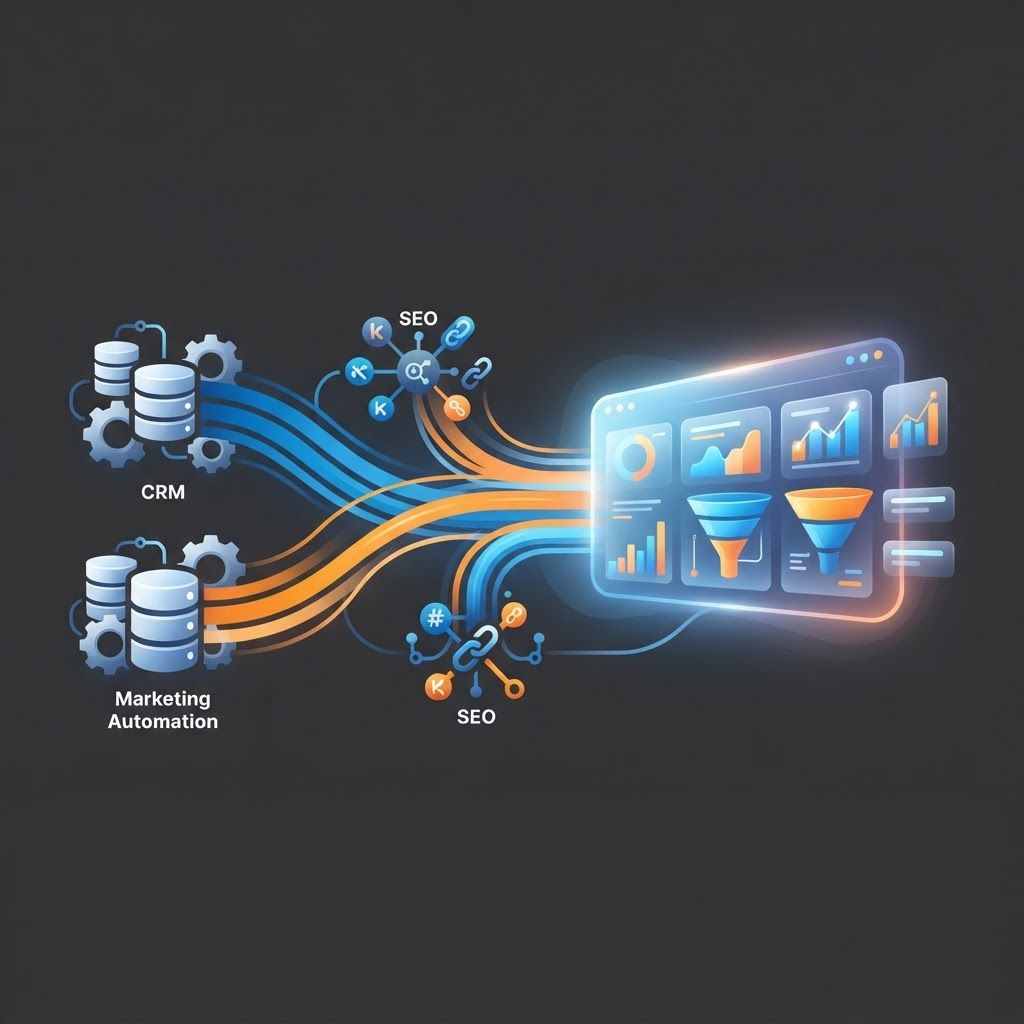
How to Integrate CRM Marketing Automation SEO Data for Insights
Most marketing teams sit on a wealth of data that never talks to itself. Your CRM knows who becomes a customer, your marketing automation platform tracks how leads behave, and your SEO analytics reveal how people find you in the first place. When these systems stay siloed, you optimize for rankings and traffic without knowing whether any of it produces revenue. Integrating them turns disconnected metrics into a single narrative that shows exactly how organic search contributes to the bottom line.
How AAMAX.CO Approaches Data Integration
At AAMAX.CO, we help organizations stitch together the tools they already use so that search engine optimization performance can be measured all the way to closed revenue. As a full service digital marketing company offering web development, digital marketing, and SEO services worldwide, we handle the technical plumbing, the analytics configuration, and the strategic interpretation. If your data lives in scattered dashboards that never quite add up, hire AAMAX.CO to build the connections and reporting that finally make organic ROI visible.
Why Integration Matters More Than Ever
Organic search is often the first touch in a long buyer journey, but last-click attribution buries its contribution. A prospect might discover you through a blog post, return weeks later via a branded search, engage with a nurture email, and finally convert through a sales call. Without integration, SEO gets no credit for sparking that journey. Connecting CRM, automation, and search data lets you trace the full path and assign fair value to each stage.
This clarity changes how you invest. Instead of pouring budget into keywords that generate traffic but no pipeline, you can double down on the topics and pages that consistently precede high-value deals. The result is a smarter allocation of resources across your entire marketing mix.
Establishing a Common Data Foundation
Integration starts with consistent identifiers. Every lead should carry the source, medium, and campaign data that describe how they arrived, and those values must persist as the contact moves from anonymous visitor to known lead to customer. UTM parameters, first-touch attribution fields, and hidden form fields all help capture and preserve this context inside your CRM and automation platform.
Next, standardize your naming conventions. If one system labels a channel "organic" and another calls it "SEO," your reports will fracture. Agreeing on a shared taxonomy for channels, campaigns, and lifecycle stages ensures that data flowing between systems remains coherent and comparable.
Connecting the Tools
Most modern platforms offer native integrations or APIs that let data move automatically. Your marketing automation platform can sync lead activity and lifecycle changes into the CRM, while your analytics platform can push conversion events and audience segments outward. Where native connectors fall short, a data warehouse can act as a central hub that ingests exports from each system and reconciles them into unified tables.
The goal is a pipeline where an organic session recorded in your analytics can be joined to a lead record in your CRM and to engagement events in your automation platform. Once that join exists, you can answer questions that were previously impossible, such as which landing pages produce the leads that close fastest or which content themes attract the highest-value accounts.
Turning Connected Data Into Insight
With systems integrated, build reports that reflect business outcomes rather than vanity metrics. Track organic-sourced pipeline and revenue, not just sessions. Measure the conversion rate from organic lead to opportunity to customer. Compare the lifetime value of customers who first arrived through search against other channels. These views reveal whether your SEO services are producing durable growth or merely surface-level traffic.
Behavioral data from your automation platform adds another layer. You can see which pieces of organic content leads engage with after their first visit, how email nurture interacts with return organic sessions, and where prospects stall in the funnel. This tells you not only what attracts people but what keeps them moving toward a purchase.
Feeding Insights Back Into Strategy
Integration becomes powerful when insights loop back into action. If you learn that a particular topic cluster reliably precedes enterprise deals, expand it and interlink it more aggressively. If certain organic keywords bring in leads who rarely qualify, refine your targeting or adjust the content to better match commercial intent. Automation can trigger tailored nurture sequences based on the organic content a lead first consumed, making follow-up feel relevant and timely.
You can also sharpen your paid and content investments by combining organic insight with your broader digital marketing efforts, ensuring every channel reinforces the others instead of competing for credit.
Maintaining Data Quality Over Time
Integrated systems require ongoing care. Audit your tracking regularly to catch broken UTM tags, missing form fields, or attribution gaps. Reconcile discrepancies between platforms before they erode trust in your reports. Document your data model so new team members understand how metrics are defined and connected. Clean, well-governed data is what separates dashboards people rely on from dashboards people ignore.
Conclusion
Integrating CRM, marketing automation, and SEO data transforms guesswork into evidence. You stop optimizing for traffic alone and start optimizing for revenue, armed with a complete picture of how organic search drives real business results. If you want a team that can connect your tools and translate the data into a growth strategy, we are ready to help you build it.
Want to publish a guest post on aamax.co?
Place an order for a guest post or link insertion today.
Place an Order