

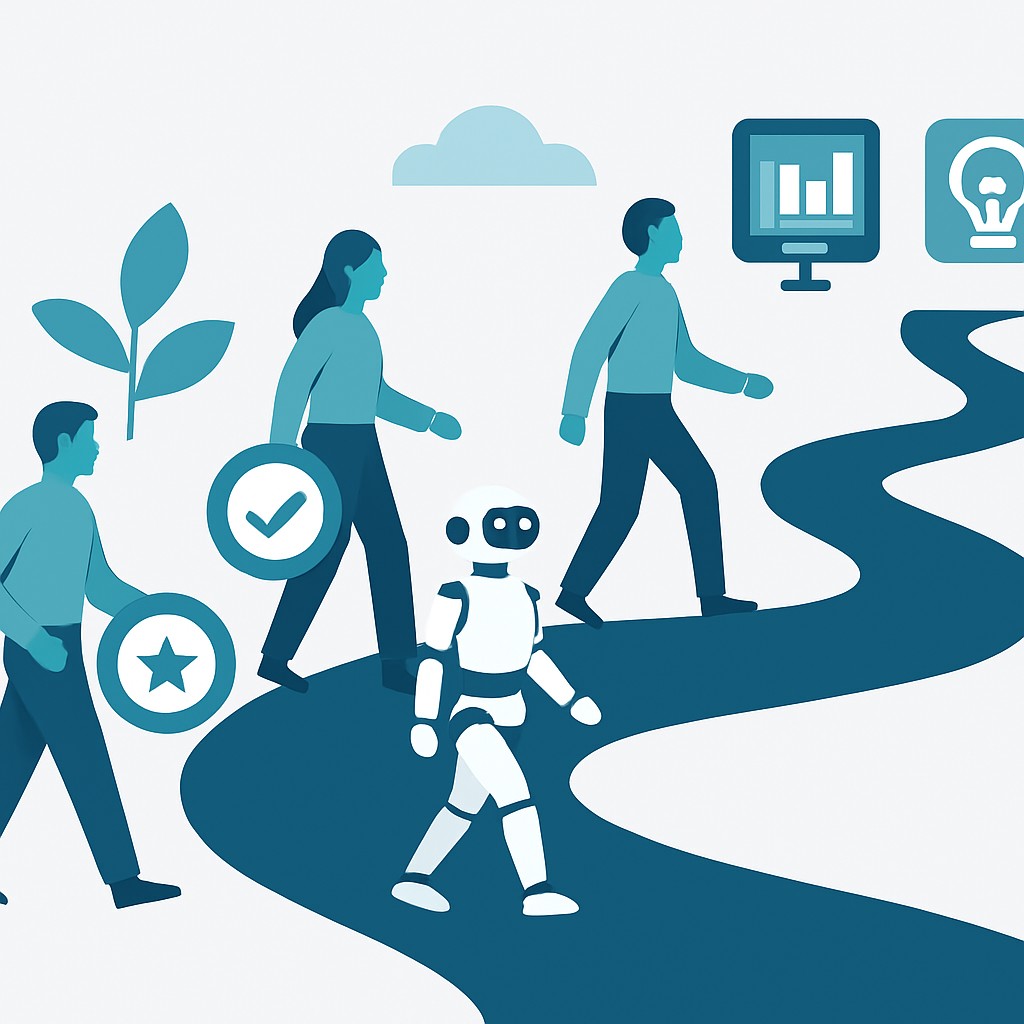
How Will AI Impact the Job Market
As artificial intelligence continues to advance, questions about its impact on the future job market grow more urgent. Will AI eliminate jobs, create them, or simply change the nature of work? The likely answer is all three, with profound implications for workers, businesses, and economies. Looking ahead helps individuals and organizations prepare for the changes on the horizon.
How We Can Help at AAMAX.CO
At AAMAX.CO, we help businesses worldwide embrace AI in ways that empower their teams rather than replace them. Our digital marketing services demonstrate how AI can augment human talent, boosting productivity and creating new opportunities. We guide organizations toward a future where people and AI thrive together.
Shifting Demand for Skills
AI will reshape which skills are in demand. Routine, repetitive tasks will increasingly be automated, reducing demand for roles centered on them. Meanwhile, demand will grow for skills that complement AI, such as data analysis, creative problem solving, and emotional intelligence. Workers who develop these complementary abilities will find themselves well positioned for the future.
Creation of New Industries and Roles
History shows that technological revolutions create new industries and jobs that were previously unimaginable. AI will likely spawn roles focused on developing, managing, and ethically governing intelligent systems. Entirely new fields may emerge around AI applications we cannot yet foresee. This wave of innovation will generate opportunities for those ready to embrace them.
Transformation of Existing Occupations
Most existing jobs will be transformed rather than eliminated. Professionals across fields will use AI as a tool to enhance their work, becoming more productive and effective. Doctors, lawyers, marketers, and engineers will all collaborate with AI in their daily tasks. The ability to work alongside intelligent systems will become a standard part of nearly every profession.
Addressing Workforce Displacement
While AI creates opportunities, it will also displace some workers, particularly in roles dominated by automatable tasks. Addressing this displacement requires proactive measures, including reskilling programs, education reform, and support for affected workers. Businesses and governments share responsibility for ensuring the transition is fair and that no one is left behind.
The Importance of Lifelong Learning
In an AI-driven economy, continuous learning becomes essential. The skills valued today may evolve quickly, requiring workers to adapt throughout their careers. Cultivating a growth mindset and embracing ongoing education will be key to long-term success. Those who commit to learning will navigate the changing landscape with confidence and resilience.
Preparing for the Future of Work
Both individuals and organizations can prepare for AI's impact by anticipating change and acting proactively. Workers should identify how AI affects their field and build relevant skills. Businesses should adopt AI strategically while investing in their people. With foresight and preparation, the AI-driven future can bring greater productivity and more meaningful work.
Conclusion
AI will impact the job market by shifting skill demands, creating new roles, transforming existing occupations, and displacing some workers. Preparation through lifelong learning and proactive strategy is essential. By embracing AI as a partner, individuals and businesses can shape a prosperous future of work.
Emerging Career Opportunities
As AI matures, entirely new career paths are emerging, from AI trainers and prompt engineers to automation strategists. These roles did not exist a few years ago and represent significant opportunity for those who develop relevant skills. The job market is expanding into areas that blend technology with human judgment.
The Premium on Adaptability
In a rapidly changing landscape, adaptability becomes one of the most valuable traits a worker can possess. Those who embrace lifelong learning and remain open to new tools will navigate disruption successfully. Adaptability, more than any single skill, will define career resilience in the AI era.
Shared Responsibility for Transition
Governments, businesses, and educational institutions all share responsibility for ensuring a smooth transition. Investment in training, supportive policies, and accessible education will determine how equitably the benefits of AI are distributed. A collaborative approach helps society capture the upside while minimizing disruption.
Industries Most Affected
Some industries will feel AI's impact sooner and more strongly than others. Sectors with high volumes of routine, data-driven tasks, such as customer service, finance, and logistics, are seeing rapid adoption. Meanwhile, fields requiring deep human connection or complex physical work change more gradually. Understanding where your industry sits on this spectrum helps you anticipate change and prepare accordingly, whether by adopting new tools or developing skills that complement automation.
Ready to put AI to work for your business? AAMAX.CO is a worldwide digital marketing company helping brands grow with intelligent, results-driven strategies. Contact us today to discover how our team can help you achieve your goals.
Conclusion
AI will profoundly impact the job market, displacing some roles while creating many others and transforming the rest. The future favors those who adapt, reskill, and cultivate uniquely human strengths. With thoughtful preparation by individuals and institutions alike, AI can expand opportunity rather than diminish it.
Want to publish a guest post on aamax.co?
Place an order for a guest post or link insertion today.
Place an Order