

How Will AI Affect the Job Market
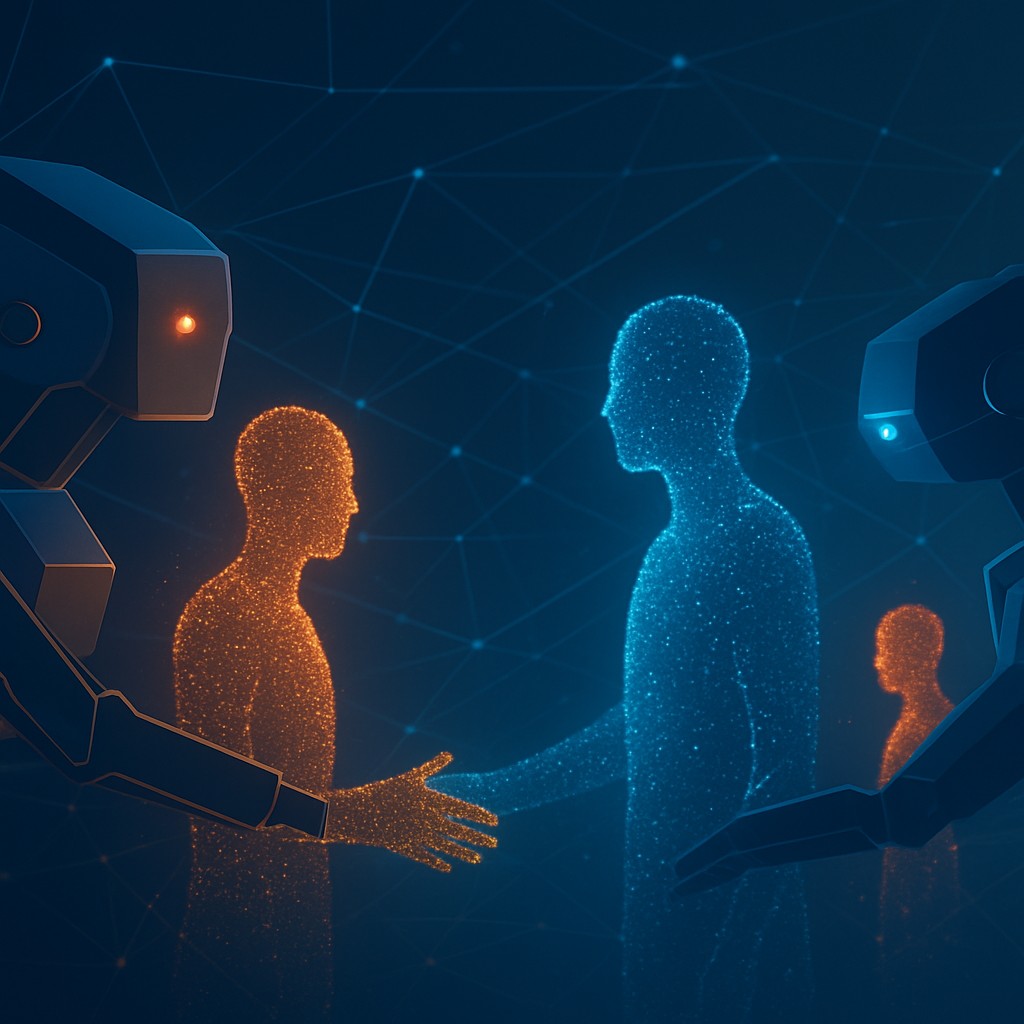
Few topics generate as much debate as the impact of artificial intelligence on employment. Some predict mass unemployment as machines replace human workers, while others foresee a wave of new opportunities and greater productivity. The truth lies somewhere in between. AI is undeniably transforming the job market, automating certain tasks while simultaneously creating new roles and reshaping existing ones. Understanding these dynamics is essential for workers, businesses, and policymakers alike.
How We Can Help at AAMAX.CO
At AAMAX.CO, we help businesses worldwide adapt to an AI-driven economy by building smarter, more efficient marketing and technology systems. As organizations rethink how work gets done, our team supports them with digital marketing and website development solutions that combine human expertise with AI efficiency. As a full service digital marketing company, we help you embrace change while keeping people at the center of your strategy.
Automation of Routine Tasks
AI is most effective at handling repetitive, predictable tasks. Data entry, basic customer service, scheduling, and routine analysis are increasingly automated. This does not necessarily eliminate entire jobs, but it changes their nature, removing tedious work and allowing people to focus on more complex and creative responsibilities. Roles heavily reliant on repetitive tasks face the greatest pressure to evolve.
Creation of New Roles
Every major technological shift creates new categories of work, and AI is no exception. Demand is rising for roles such as AI specialists, data scientists, machine learning engineers, prompt engineers, and AI ethics officers. Beyond technical positions, businesses need professionals who can interpret AI outputs, manage human-AI collaboration, and apply the technology to real-world problems. Many of the jobs of the next decade do not exist yet.
Transformation of Existing Jobs
Rather than disappearing, most jobs will be transformed. Marketers use AI to analyze data and generate content, doctors use it to support diagnoses, lawyers use it to review documents, and designers use it to accelerate creative work. In each case, AI augments human capability rather than replacing it entirely. The most successful professionals will be those who learn to work alongside AI, using it as a powerful tool to enhance their output.
The Growing Importance of Soft Skills
As AI handles more technical and analytical tasks, uniquely human skills become more valuable. Creativity, critical thinking, emotional intelligence, communication, and leadership are difficult to automate and increasingly in demand. Workers who cultivate these abilities will remain essential, complementing what machines do well with what only humans can offer.
The Need for Continuous Learning
The pace of change means that skills can become outdated quickly. Lifelong learning is no longer optional; it is a necessity. Workers who continually upskill and reskill will adapt more easily to new tools and roles. Businesses and governments have a role to play in providing training and education that prepares the workforce for an AI-augmented future.
Sector-by-Sector Impact
AI affects industries differently. Manufacturing and logistics see significant automation of physical and repetitive tasks. Knowledge work such as marketing, finance, and law sees AI augmenting analysis and content. Healthcare benefits from AI-assisted diagnostics and administration. Creative fields use AI as a collaborator. Understanding the specific impact on your sector helps you anticipate change and position yourself accordingly.
Opportunities Outweigh Fears
While disruption is real, history suggests that technology ultimately creates more opportunity than it destroys. AI can boost productivity, lower costs, and unlock new products, services, and industries. The key is managing the transition thoughtfully, ensuring that workers have the support and training they need to move into the roles of the future.
The Role of Education and Policy
Managing the transition to an AI-driven economy is not solely the responsibility of individual workers. Educational institutions, governments, and employers all play a part. Schools and universities are beginning to integrate AI literacy and adaptable skills into their curricula, while forward-thinking companies invest in retraining programs to help employees move into new roles. Thoughtful policy can support displaced workers, encourage lifelong learning, and ensure that the benefits of AI are broadly shared. The societies and organizations that prepare proactively will navigate the change far more smoothly than those that react too late.
A More Productive and Creative Workforce
When routine work is automated, people are freed to focus on tasks that require imagination, problem-solving, and human connection. This shift has the potential to make work more meaningful and productive, as employees spend less time on repetitive drudgery and more on creative and strategic challenges. Rather than diminishing human contribution, AI can amplify it, enabling workers to achieve more and find greater satisfaction in their roles. Realizing this potential depends on how thoughtfully organizations integrate AI alongside their people.
Conclusion
AI will affect the job market by automating routine tasks, transforming existing roles, and creating new opportunities that demand fresh skills. Rather than a simple story of replacement, it is one of adaptation and evolution. Those who embrace continuous learning and learn to collaborate with AI will thrive. If your business is ready to adapt and grow in this new era, our team is here to help you build for the future.
Want to publish a guest post on aamax.co?
Place an order for a guest post or link insertion today.
Place an Order