

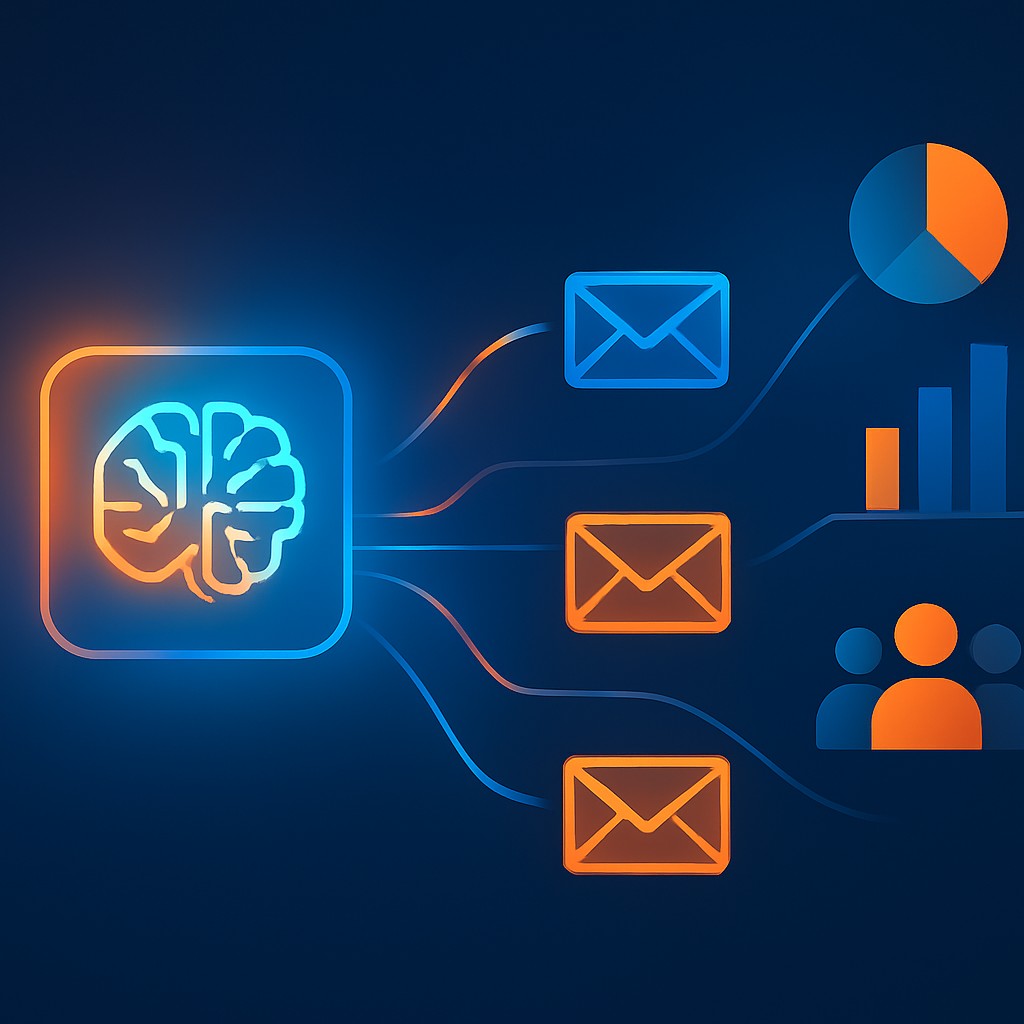
How to Use AI for Email Marketing
Email marketing remains one of the highest-return channels in digital marketing, and artificial intelligence is making it even more powerful. From writing compelling subject lines to predicting the best time to send, AI helps marketers deliver more relevant messages that drive engagement and revenue. This guide explores practical ways to use AI to elevate your email marketing program.
How We Can Help at AAMAX.CO
At AAMAX.CO we help businesses build intelligent email marketing programs that convert. Our digital marketing team combines AI tools with proven strategy to create campaigns that feel personal and perform exceptionally. We support clients worldwide in turning their email lists into reliable revenue engines.
Personalizing Content at Scale
One of AI's greatest contributions to email marketing is personalization. By analyzing subscriber behavior, preferences, and purchase history, AI can tailor content to each recipient. Instead of sending the same message to everyone, you can deliver product recommendations, offers, and content that match individual interests. This level of relevance dramatically improves open rates, clicks, and conversions while strengthening customer relationships.
Writing Better Subject Lines and Copy
Subject lines determine whether your emails get opened, and AI excels at generating and testing them. AI tools can produce dozens of variations, predict which are likely to perform best, and refine them based on results. The same applies to body copy, where AI can draft compelling messages, suggest improvements, and maintain a consistent tone. Human review ensures the final result stays authentic and on-brand.
Smart Segmentation
Effective email marketing depends on reaching the right people with the right message. AI-powered segmentation goes beyond basic demographics, grouping subscribers by behavior, engagement level, and predicted intent. These dynamic segments update automatically as subscriber behavior changes, ensuring your messages always reach the most relevant audiences. Smarter segmentation leads to higher engagement and lower unsubscribe rates.
Optimizing Send Times
Timing has a major impact on email performance, and AI can determine the optimal moment to reach each subscriber. By analyzing when individuals typically open and engage with emails, AI schedules delivery for maximum impact. Rather than guessing or relying on broad averages, you can send each message when the recipient is most likely to act, boosting open and click-through rates significantly.
Predictive Analytics and Automation
AI enables sophisticated automation driven by predictive analytics. It can identify subscribers at risk of churning and trigger re-engagement campaigns, or recognize high-intent buyers and send timely offers. Automated workflows nurture leads with perfectly sequenced messages, guiding them toward conversion without manual intervention. This combination of prediction and automation makes email marketing both efficient and highly effective.
Testing and Continuous Improvement
AI accelerates testing and optimization. Instead of slow, manual A/B tests, AI can run continuous experiments across subject lines, content, layouts, and timing, learning and adjusting in real time. This ongoing optimization ensures your campaigns keep improving, capturing insights that would take humans far longer to discover. The result is a program that gets smarter with every send.
Maintaining Authenticity and Trust
While AI brings powerful capabilities, maintaining authenticity is essential. Subscribers value genuine, helpful communication, not robotic spam. Use AI to enhance personalization and relevance, but keep your brand voice human and your intentions transparent. Respecting privacy and delivering real value builds the trust that makes email marketing sustainable over the long term.
Avoiding Common Pitfalls
While AI offers tremendous benefits for email marketing, there are pitfalls that can undermine your efforts if you are not careful. The most common mistake is over-relying on automation to the point that emails feel impersonal or robotic. Subscribers can tell when communication lacks a human touch, and generic AI-generated messages can erode the trust you have worked to build. Always review and refine AI output to ensure it reflects your brand voice and genuinely serves your audience. Another pitfall is neglecting data quality. AI is only as good as the data it learns from, so inaccurate or incomplete subscriber information leads to poor personalization and targeting. Maintaining clean, well-organized data is essential. Some marketers also fall into the trap of sending too many emails simply because AI makes it easy to produce them, overwhelming subscribers and driving unsubscribes. Quality and relevance should always take priority over volume. Privacy is another critical consideration, as misusing data or being opaque about how it is used can damage trust and even violate regulations. Finally, failing to test and monitor AI-driven campaigns can allow errors to go unnoticed. Regular oversight ensures that automated systems perform as intended. By being aware of these pitfalls and actively guarding against them, marketers can harness AI's power while maintaining the authenticity, relevance, and trust that make email marketing truly effective.
Conclusion
Using AI for email marketing means personalizing at scale, writing better copy, segmenting intelligently, optimizing timing, and automating with predictive insight. When combined with authentic, value-driven communication, AI transforms email into a highly effective channel. Businesses that embrace these tools can achieve stronger engagement and greater returns from every campaign.
Want to publish a guest post on aamax.co?
Place an order for a guest post or link insertion today.
Place an Order