

How to Structure a Website for SEO
Website structure is the invisible framework that determines how easily search engines and people can find what they are looking for on your site. When your architecture is logical, shallow, and consistently linked, crawlers discover every important page quickly, distribute authority efficiently, and interpret the relationship between your topics with confidence. When it is messy, valuable pages sit buried five clicks deep, duplicate URLs compete with each other, and rankings stall no matter how much content you publish. Structuring a website for SEO is therefore one of the highest-leverage projects you can undertake, because it multiplies the value of everything else you do.
How We at AAMAX.CO Help You Build an SEO-Ready Website Structure
At AAMAX.CO, we are a full-service digital marketing company delivering web development, digital marketing, and SEO solutions to clients worldwide. Site architecture sits exactly where our two strongest disciplines meet: we design and build the site, and we optimize it to rank. Our team audits your existing URL hierarchy, consolidates competing pages, maps keyword clusters to a clean folder structure, and implements the internal linking and technical signals search engines expect. If you want a structure that supports growth rather than fighting it, hire us for professional SEO services and we will plan, rebuild, and monitor your architecture end to end.
Start With a Flat, Logical Hierarchy
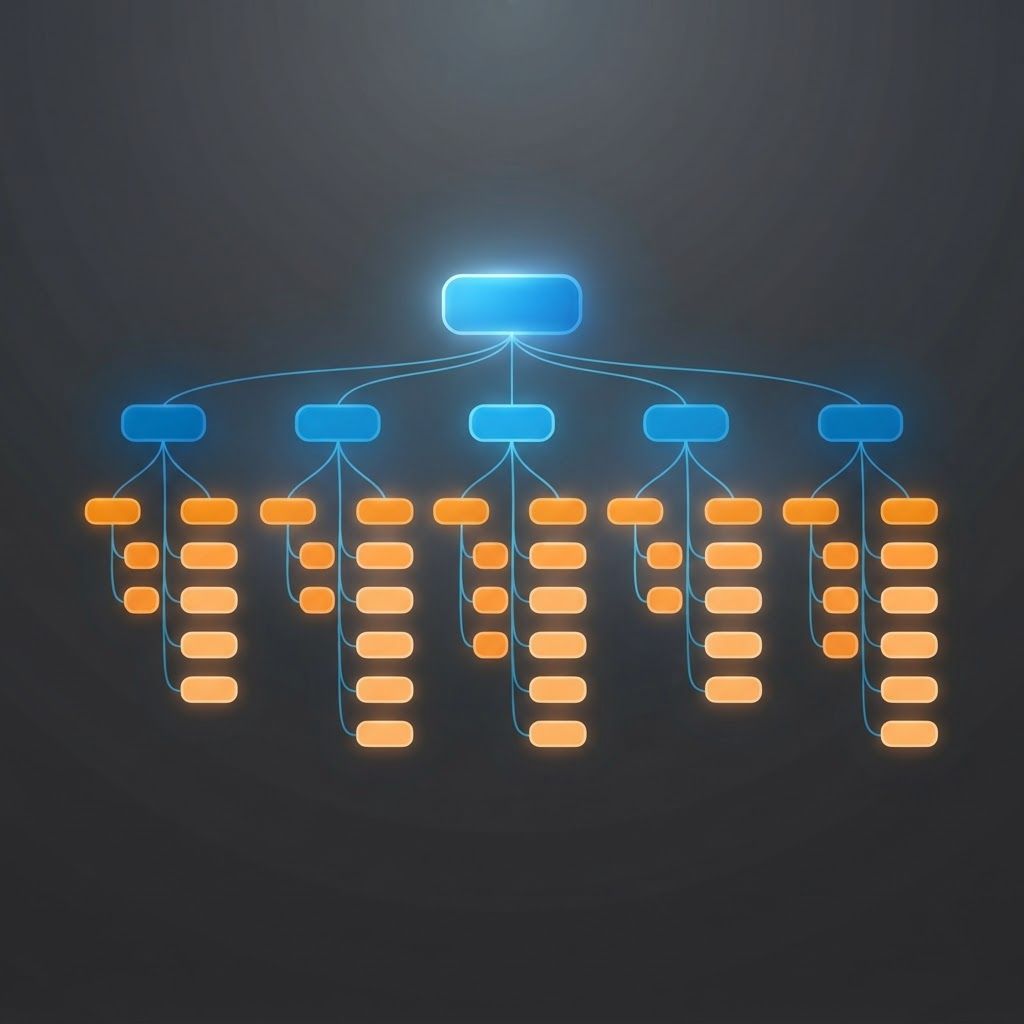
The strongest site structures resemble a shallow pyramid. Your homepage sits at the top, main categories sit one level below it, and detailed pages sit below those. As a practical rule, every commercially important page should be reachable within three clicks of the homepage. This matters because crawl depth correlates strongly with how often search engines revisit a page and how much internal authority it inherits. Begin by listing every page you own, grouping them into themes, and eliminating pages that serve no user or business purpose. Thin, redundant pages dilute your topical focus and waste crawl budget.
Once your groups are defined, decide which group becomes a top-level category. A good category is broad enough to hold at least a handful of related pages but narrow enough to describe a single subject. If a category holds only one page, it probably belongs inside a broader category instead.
Design URLs That Describe the Path
URLs are both a ranking signal and a usability feature. Keep them lowercase, hyphenated, short, and descriptive, and let the folder path mirror your hierarchy so that the address itself communicates context. A URL such as /services/technical-seo/ tells a visitor and a crawler exactly where they are, while /page?id=4172 tells them nothing. Avoid stuffing keywords, avoid dates in evergreen URLs, and never change a live URL without implementing a permanent redirect. Stable URLs accumulate links and history, and every unnecessary migration resets part of that equity.
Use Internal Linking as an Authority Distribution System
Internal links are the mechanism by which authority earned on one page flows to another. Treat them deliberately rather than accidentally. Create pillar pages that cover a broad topic and link outward to supporting articles, then link each supporting article back to the pillar. Use descriptive anchor text that reflects the target page's subject so search engines can infer relevance. Add contextual links inside body copy, because those carry more weight than repetitive footer links. Review orphan pages, which have no internal links at all, and connect them into the relevant cluster.
Breadcrumb navigation reinforces this system. It gives users a clear sense of position, adds an extra layer of contextual internal linking, and can appear in search results when marked up with structured data.
Get Navigation and Taxonomy Right
Your main navigation should expose your most valuable categories without overwhelming visitors. Limit top-level items so each one earns attention, and resist the temptation to hide key sections inside mega menus that require several interactions to reach. For content-heavy sites, decide whether categories or tags govern your taxonomy and apply the rule consistently. Overlapping tag archives generate near-duplicate pages that compete with each other, so prune aggressively and noindex archives that hold no unique value.
Handle Technical Foundations Deliberately
Structure is not only about menus and folders. Several technical elements determine whether your architecture is legible to crawlers:
An XML sitemap should list every canonical, indexable URL and exclude redirects, error pages, and blocked resources. A robots.txt file should allow access to CSS and JavaScript so search engines can render pages accurately. Canonical tags should point each variation of a page to its preferred version, especially where filters, sorting parameters, or pagination create multiple addresses for the same content. Pagination should use clean, crawlable links rather than infinite scroll alone. If you serve multiple regions or languages, hreflang annotations tell search engines which version belongs to which audience.
Structured data adds another layer of clarity. Organization, breadcrumb, article, product, and FAQ markup all help search engines connect your pages to entities and features they already understand.
Build for Speed and Mobile First
Architecture influences performance. Deeply nested templates, unoptimized images, blocking scripts, and heavy third-party embeds slow every page in a section at once. Because indexing is mobile-first, the mobile experience is the version that counts. Ensure your mobile navigation exposes the same links as desktop, that tap targets are comfortable, and that Core Web Vitals stay within recommended thresholds. Fast, stable pages earn better engagement, and engagement reinforces the signals that support rankings.
Plan for Growth From the Beginning
A structure that works with fifty pages can collapse at five hundred. Before you scale, define naming conventions, template rules, and a policy for where new content lives. Decide in advance how you will handle expired products, retired services, and seasonal campaigns so that abandoned URLs get redirected rather than left to generate errors. Complementing this with a broader digital marketing plan ensures new pages arrive with promotional support and internal links rather than in isolation.
Measure, Audit, and Refine
Treat structure as an ongoing discipline. Crawl your site regularly to identify broken links, redirect chains, orphan pages, and unexpected depth. Watch which pages search engines index versus which you submitted, and investigate gaps. Review internal link counts per page and redistribute links toward pages you want to strengthen. Small, continuous corrections deliver far more value than a single rebuild every few years.
Final Thoughts
Structuring a website for SEO is about clarity: clear hierarchy, clear URLs, clear links, and clear technical signals. Get those right and every article, product page, and landing page you publish performs better than it would in a disorganized environment. If you would rather have specialists handle the audit, the rebuild, and the ongoing optimization, our team is ready to help you turn your website into a structured, high-performing asset.
Want to publish a guest post on aamax.co?
Place an order for a guest post or link insertion today.
Place an Order