

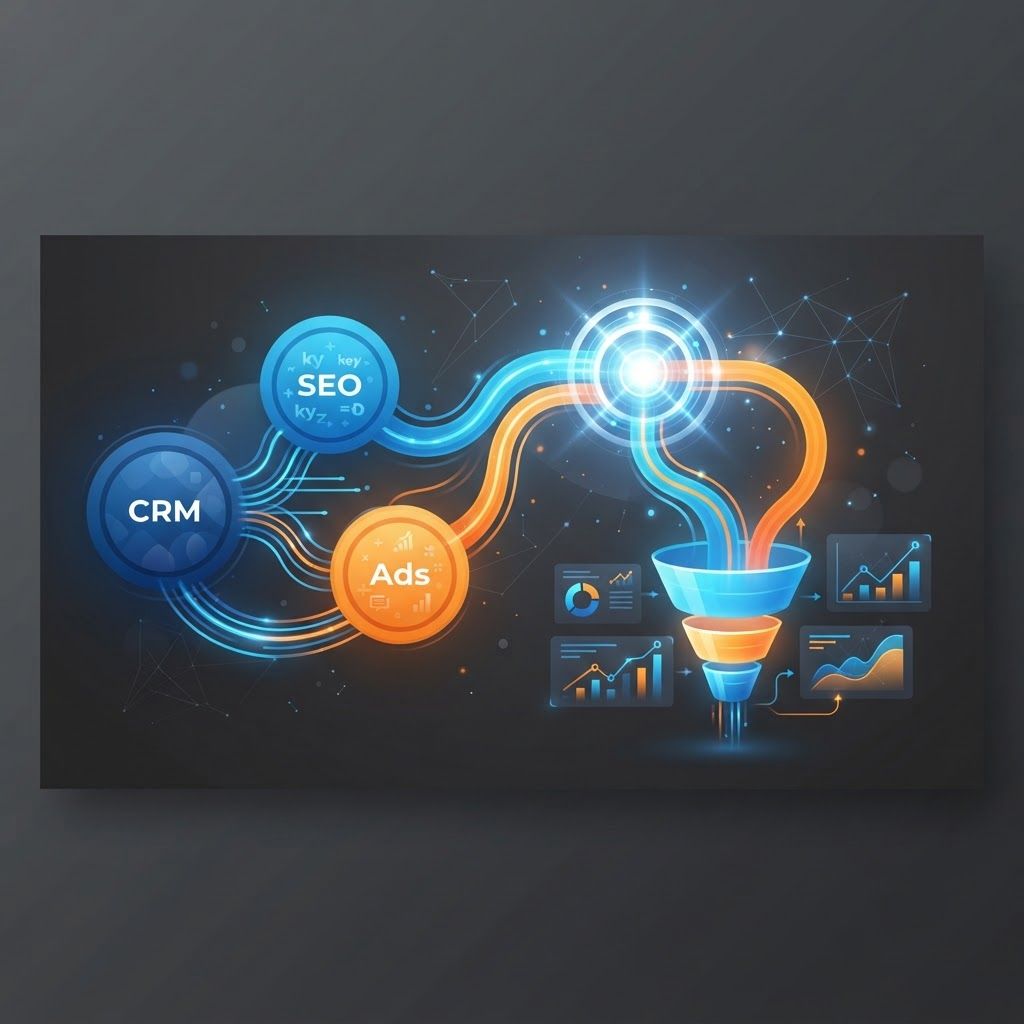
How to Integrate Marketing Data Across CRM SEO Ads
Modern marketing generates an enormous amount of data, yet most of it sits trapped in separate tools that never speak to each other. Your CRM knows who becomes a customer, your SEO platform knows which keywords bring visitors, and your ad accounts know what you spend, but rarely do these systems combine to tell the full story. Learning how to integrate marketing data across CRM, SEO, and ads transforms scattered numbers into a clear picture of what actually drives revenue.
Why Data Integration Matters
When data lives in silos, you are forced to make decisions based on fragments. You might see that a campaign generated clicks without knowing whether those clicks became paying customers, or you might rank well for a keyword that never converts. Integrating your data closes these gaps by connecting the top of the funnel to actual outcomes. This unified view lets you invest in the channels and keywords that produce real business results and stop wasting budget on activity that only looks good on the surface. Strong search engine optimization becomes far more powerful when its performance is measured against genuine revenue rather than isolated rankings.
Unify Your Marketing Data With AAMAX.CO
Bringing together CRM, SEO, and advertising data requires the right strategy, tools, and technical setup. At AAMAX.CO, we help businesses design integrated measurement frameworks that connect every stage of the customer journey. Our team configures tracking, aligns data sources, and builds reporting that reveals which efforts drive growth. When you hire AAMAX.CO, you get a partner that turns tangled data into clear, revenue-focused insights so every marketing dollar works harder across all your channels.
Start With Consistent Tracking and Naming
Integration begins with clean, consistent data. Establish a standardized system for campaign naming, UTM parameters, and conversion definitions so that information flows into your CRM in a structured way. When every source tags its traffic consistently, you can trace a lead from its first search or ad click all the way through to a closed deal. Without this discipline, even the most sophisticated integration will produce misleading results, so invest the time to get your foundations right before connecting systems.
Connect Your CRM to Your Channels
Your CRM should be the central hub where marketing activity meets sales outcomes. Connect it to your website forms, ad platforms, and analytics so that lead sources are captured automatically. Many CRMs offer native integrations or support connections through data pipelines and automation tools. The goal is to attach source information to every contact, so you can later report on which keywords, campaigns, and channels generate the most valuable customers rather than just the most leads.
Bring SEO and Ad Data Into the Picture
Once your CRM captures sources, layer in performance data from search and advertising. Pull organic keyword and landing page data from your search console and analytics, and combine it with spend and conversion data from your ad accounts. When these datasets sit side by side, you can compare cost per acquisition across channels, identify which organic pages support paid conversions, and discover keywords worth targeting both organically and through ads. This blended view is where the real optimization opportunities appear.
Build Dashboards That Tell the Whole Story
Raw integrated data is only useful if people can act on it. Build dashboards that connect spend, traffic, leads, and revenue in one place, using a visualization tool that pulls from your unified sources. Focus on the metrics that matter to your business, such as customer acquisition cost, return on investment by channel, and lifetime value by source. Clear dashboards let your whole team make faster, smarter decisions and reduce the endless debates about which channel deserves credit.
Turn Insights Into Coordinated Action
The true payoff of integration is coordinated strategy. When you can see how organic search, paid ads, and CRM outcomes interact, you can shift budget toward what works, double down on high-value keywords, and align messaging across channels. This is where a holistic digital marketing approach pays off, because every channel is optimized with full knowledge of how it contributes to the bigger picture rather than being managed in isolation.
Keep Data Clean and Privacy-Compliant
As you integrate systems, protect data quality and respect privacy. Regularly audit your tracking, remove duplicate records, and ensure your collection practices comply with relevant regulations and consent requirements. Reliable, ethical data builds trust with both customers and stakeholders, and it ensures the insights you act on are accurate. Treat data governance as an ongoing responsibility rather than a one-time project.
Making Your Data Work Together
Integrating CRM, SEO, and advertising data turns marketing from a collection of disconnected efforts into a coordinated growth engine. With consistent tracking, a connected CRM, unified dashboards, and a commitment to clean data, you gain the clarity needed to invest confidently and grow efficiently. If you want expert help designing and implementing an integrated measurement system, we are ready to help your business see the full journey and act on what truly drives results.
Want to publish a guest post on aamax.co?
Place an order for a guest post or link insertion today.
Place an Order