

How to Get SEO on Google by Using Tags
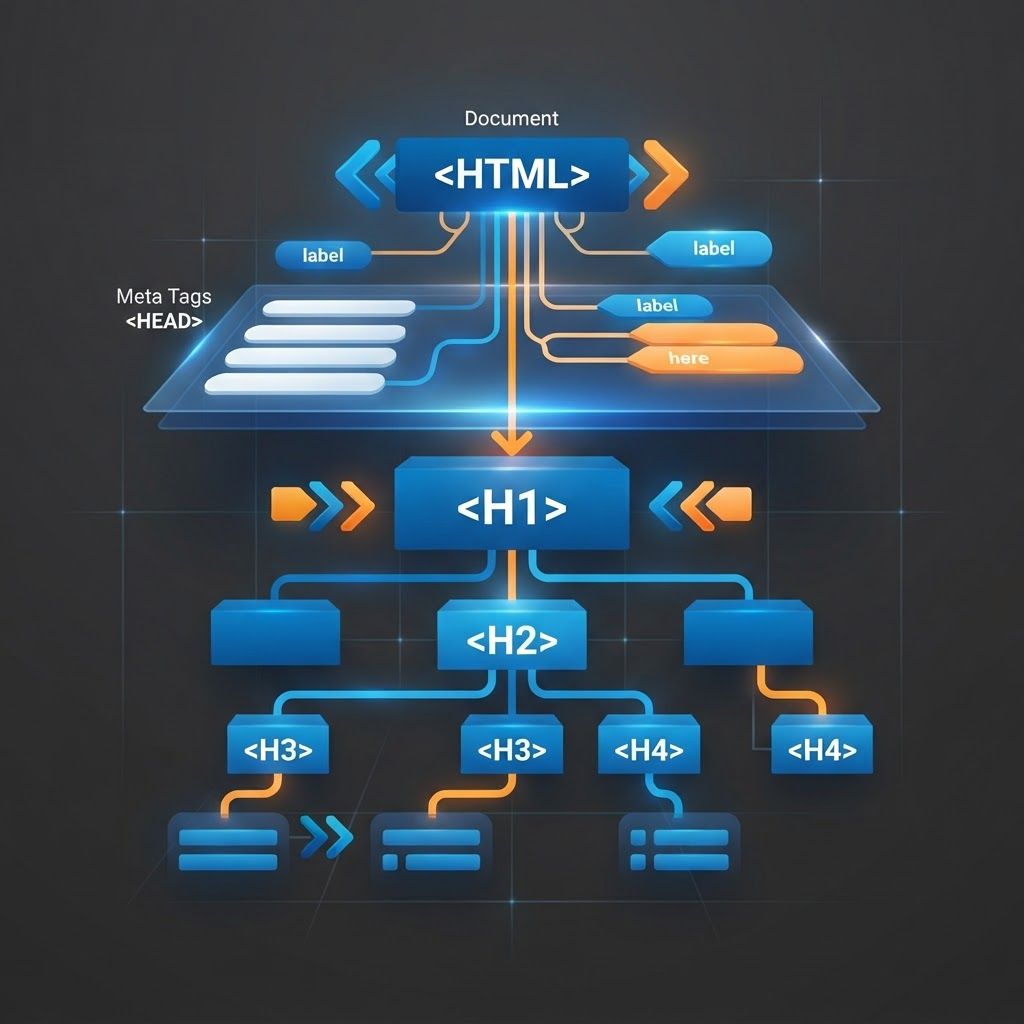
Ask ten people what tags mean in SEO and you will get several different answers. Some mean the HTML tags in a page's head, such as title, meta description, canonical, and robots. Others mean heading tags that structure content. Bloggers usually mean the tag taxonomy inside their content management system, the little labels attached to posts. And a growing number mean tags in the analytics sense, deployed through a tag manager. All four affect your search performance, some positively and some negatively when misused, so it is worth understanding each properly rather than treating tags as a single mysterious lever you can pull for rankings.
How We Can Help You Get Your Tags Right
We are AAMAX.CO, a full service digital marketing company delivering web development, digital marketing, and SEO services to clients worldwide, and tag-level problems are among the most common issues we find in audits. Duplicate title tags across hundreds of pages, canonical tags pointing everywhere except where they should, noindex directives left over from a staging site, missing structured data, and thousands of indexed blog tag archives creating thin duplicate content are all routine discoveries. Our team audits every tag your templates output, corrects the ones that are wrong, implements the ones that are missing, and removes the ones that are diluting your site. If you want your markup working for you rather than against you, hire AAMAX.CO and we will handle it end to end.
The Title Tag Is Still the Most Important One
Your title tag is the strongest on-page signal you control and, in most cases, the clickable headline in search results. Every page needs its own unique title that leads with the primary term for that page and reads naturally to a human. Keep it around fifty to sixty characters so it is unlikely to be truncated, place the brand name at the end for most pages, and avoid stuffing multiple keyword variations separated by pipes, which reads as spam to users even when it technically contains your terms. Google sometimes rewrites titles it considers unhelpful, and the usual causes are titles that are too long, keyword-stuffed, or duplicated across a site. A well-written specific title is the best defence against rewriting.
Meta Description, Robots, and Canonical Tags
The meta description does not directly influence rankings, but it heavily influences whether anyone clicks, so write it as persuasive copy with a clear benefit rather than a summary. Around one hundred fifty characters is a safe target. The robots meta tag controls indexation, and it is where serious accidents happen; a stray noindex on a template can remove entire sections of a site from search, so audit it regularly. Use it deliberately to keep thin utility pages out of the index. The canonical tag tells Google which URL is the preferred version when duplicates or parameter variants exist. Each page should self-canonicalise unless it genuinely is a duplicate, and canonical tags that all point at the homepage, a surprisingly common template bug, will devastate your visibility. Meta keywords, by contrast, are ignored entirely and can be left out.
Heading Tags Structure Meaning, Not Just Size
Heading tags from H1 through H6 communicate the hierarchy of your content to both readers and crawlers. Use one H1 per page containing the main topic, then organise the body with H2 sections and H3 subsections that reflect how people actually phrase their sub-questions. This matters more than ever because passage-level understanding and AI-generated summaries both rely on clear structure to extract answers. The most common mistake is treating headings as styling: bolding large text instead of using a real heading tag, or choosing an H4 because it looks the right size. Style with CSS and choose heading levels based on meaning alone. Descriptive, question-shaped headings also frequently win featured snippets.
Structured Data Tags Unlock Rich Results
Structured data, usually implemented as JSON-LD, is a set of machine-readable tags that describe what your page is about in unambiguous terms. Marking up an article, product, local business, event, recipe, or FAQ correctly makes you eligible for enhanced search appearances such as review stars, prices, availability, and breadcrumbs. Include all required properties, keep the data accurate and consistent with what users can see on the page, and avoid duplicate schema blocks from competing plugins. Validate everything with Google's Rich Results Test and monitor the enhancement reports in Search Console. Structured data does not guarantee a rich result, but without it you are not even in the running.
Be Careful With CMS Tag Pages
This is where tags most often damage a site. Content platforms let you attach arbitrary tags to posts, and each tag generates an archive page. Sites routinely end up with hundreds of tag archives holding one or two posts each, producing thin, near-duplicate pages that compete with the content they list, waste crawl budget, and dilute internal link equity. Use tags sparingly and only where a tag archive would genuinely be a useful page for a real visitor, such as a substantial ongoing topic with many posts. Noindex the rest, or disable tag archives entirely. If you have an existing sprawl, consolidate the useful ones, remove the rest, and redirect where a merged destination exists.
Tag Managers and Measurement Tags
Analytics and marketing tags deployed through a tag manager do not directly influence rankings, but they determine whether you can measure anything, and they can hurt performance if handled carelessly. Load them asynchronously, audit for redundant or abandoned tags, and remember that heavy third-party scripts degrade Core Web Vitals, which does affect search performance indirectly. Verify Google Search Console, install analytics, and set up conversion tracking before you begin any optimisation programme, because otherwise you have no way to prove what worked. Sound measurement also underpins wider digital marketing decisions and the increasingly important work of tracking visibility through GEO services as AI answers capture more queries.
Final Thoughts
Tags are not a ranking trick; they are the vocabulary your site uses to explain itself to search engines. Write unique compelling titles, use meta descriptions to earn clicks, control robots and canonical directives carefully, structure content with meaningful headings, implement accurate structured data, and keep CMS tag archives under tight control. Get those right and every other optimisation effort works harder. If you want a professional audit and implementation, our team is ready when you are.
Want to publish a guest post on aamax.co?
Place an order for a guest post or link insertion today.
Place an Order