

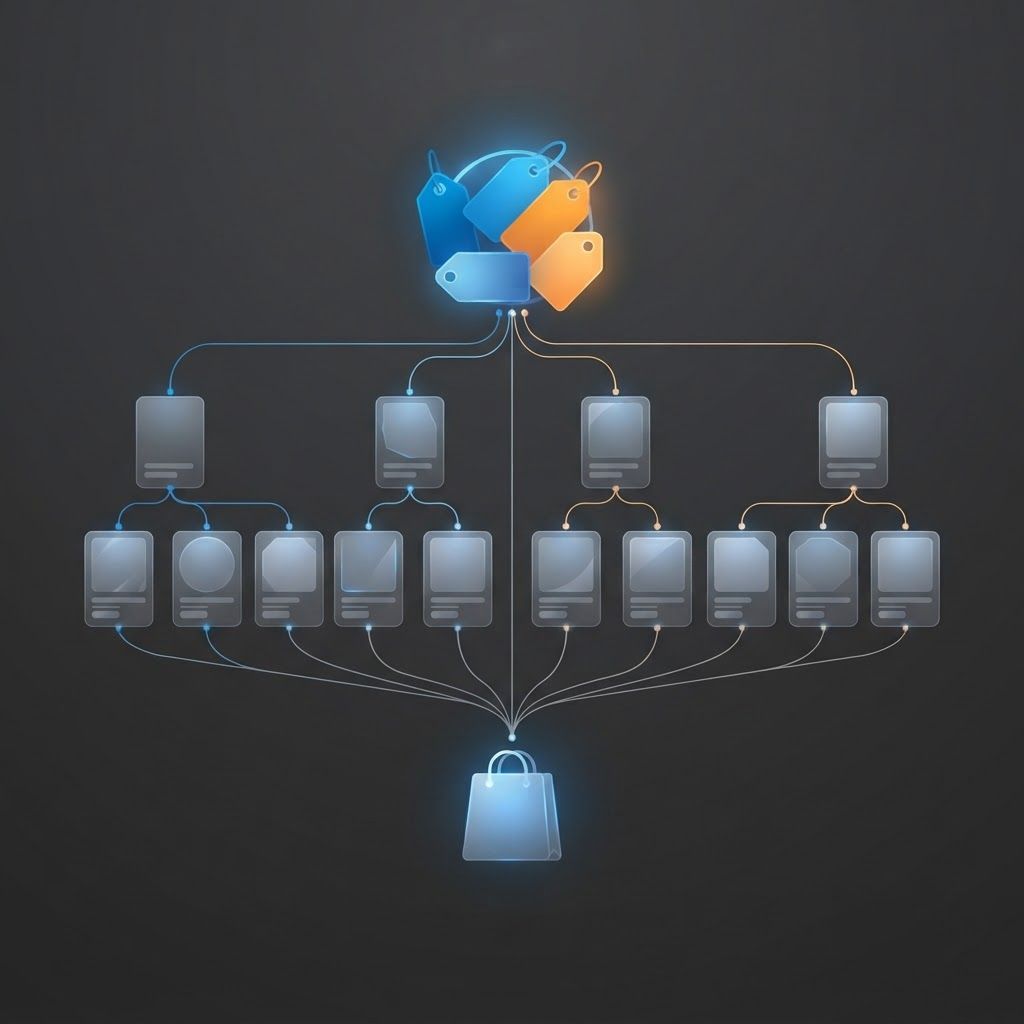
How Shopify Tags for SEO
Tags are one of Shopify's most useful and most misused features. Merchants apply them freely to products, orders, customers, and blog posts, and they quietly shape how your store is organised, filtered, and merchandised. From an SEO perspective, tags are neither good nor bad on their own — they are a structural tool. Used deliberately, they help you build valuable collection pages that capture real search demand. Used carelessly, they generate thousands of thin, near-duplicate URLs that dilute your crawl budget and confuse search engines about which page deserves to rank.
How We Help at AAMAX.CO
Ecommerce SEO lives or dies on catalogue architecture, and that is exactly where we focus for Shopify clients. Our team maps your tag taxonomy against actual search demand, decides which tag-driven pages deserve to be indexable landing pages, and locks down the rest so crawlers spend their time on pages that earn money. Because we combine store development with SEO services, we can implement theme-level changes, structured data, and canonical logic rather than handing you a list of requests. If you want your Shopify catalogue engineered to rank, hire AAMAX.CO — we support merchants worldwide.
What Shopify Tags Actually Do
A tag is a simple keyword label attached to a record. On products, tags serve three main purposes: they drive automated collection rules, they power filter and faceted navigation in most modern themes, and they feed internal search relevance. Tags are not the same as product type, vendor, or collection, and they are not meta keywords — search engines do not read your tags as ranking instructions. Their SEO impact is entirely indirect, through the URLs, navigation paths, and internal links they create.
The Duplicate Content Risk
The biggest hazard is tag-based collection URLs. Shopify can serve a collection filtered by tag at a path combining the collection handle and the tag, and themes often link to many of these combinations. A store with a hundred collections and twenty tags can theoretically expose thousands of filtered URLs, most containing the same products in a different order with nearly identical text. Search engines crawl them, find little unique value, and may treat your important collection pages as less distinctive. Worse, crawl capacity gets consumed on combinations that will never rank.
Deciding Which Tag Pages Deserve to Be Indexed
The discipline is simple: a tag-driven page should be indexable only if a meaningful number of people search for that concept. "Womens running shoes size 10" may have genuine demand and deserve a real, curated collection with unique copy and a clean handle. "Products tagged summer-2023-restock" has none and should never be indexable. Run keyword research on your tag list, identify the intersections with real volume, and promote those to proper collections with their own handle, title, meta description, and introductory content. Everything else should be filter-only.
Controlling Crawling and Indexation
For the non-valuable combinations, you have several levers. Ensure filtered URLs canonicalise to the parent collection so ranking signals consolidate. Add a noindex directive to tag-filtered variations in your theme's head logic, keeping the parent collection fully indexable. Avoid linking to endless filter permutations in crawlable anchor tags where possible, and use robots.txt rules carefully — blocking a URL prevents crawling but does not remove an already-indexed page, so noindex plus canonical is usually the safer combination. Keep your sitemap limited to pages you genuinely want ranked.
Naming Tags Properly
Because tags can become URL segments and filter labels, naming matters. Use lowercase, human-readable terms that match how customers describe products, not internal codes. Keep a documented taxonomy with defined categories such as material, colour, style, use case, audience, and season, and enforce one spelling per concept. Avoid near-duplicates like "waterproof", "water-proof", and "water resistant" existing simultaneously, since they fragment your filters and confuse merchandising. Periodically audit and merge stray tags; most stores accumulate dozens created accidentally during bulk imports.
Using Tags to Build Better Internal Linking
Where tags genuinely help SEO is internal linking. Well-structured tags let you programmatically surface related products, build curated cross-collection modules, and create logical paths from broad category pages down to specific intent pages. That improves crawl discovery and distributes authority to deep product pages that otherwise sit several clicks from the homepage. Linking from blog content to tag-based curated collections also converts informational traffic into commercial journeys — a tactic that pairs naturally with a broader digital marketing content plan.
Tags on Blog Posts and Other Records
Shopify blog articles support tags too, and the same rules apply: only expose tag archives that represent topics people search for, and make sure those archives have unique introductory content rather than just a list of post titles. Order and customer tags have no SEO implication at all, but keeping their naming conventions clean prevents confusion when teams work across the admin.
Optimising the Pages That Do Matter
Once your indexable set is defined, treat those collections as real landing pages. Write a unique title and meta description reflecting search intent. Add genuinely useful introductory copy above or below the grid explaining what the collection covers and how to choose. Include structured data for products, breadcrumbs, and pagination handling. Ensure images are compressed with descriptive alt text, and keep page speed tight, since collection pages with heavy filter scripts often become the slowest templates on a store. As AI-driven shopping surfaces grow, clean structured data and clear category semantics also improve your chances of being surfaced there, which is where GEO services increasingly overlap with classic ecommerce SEO.
Key Takeaway
Shopify tags help SEO only when they are governed. Build a deliberate taxonomy, promote high-demand tag combinations into fully optimised collections, prevent the rest from being indexed, and use tags to strengthen internal linking rather than to multiply URLs. A tidy tag structure makes merchandising easier for your team and makes your catalogue far easier for search engines to understand.
Want to publish a guest post on aamax.co?
Place an order for a guest post or link insertion today.
Place an Order