

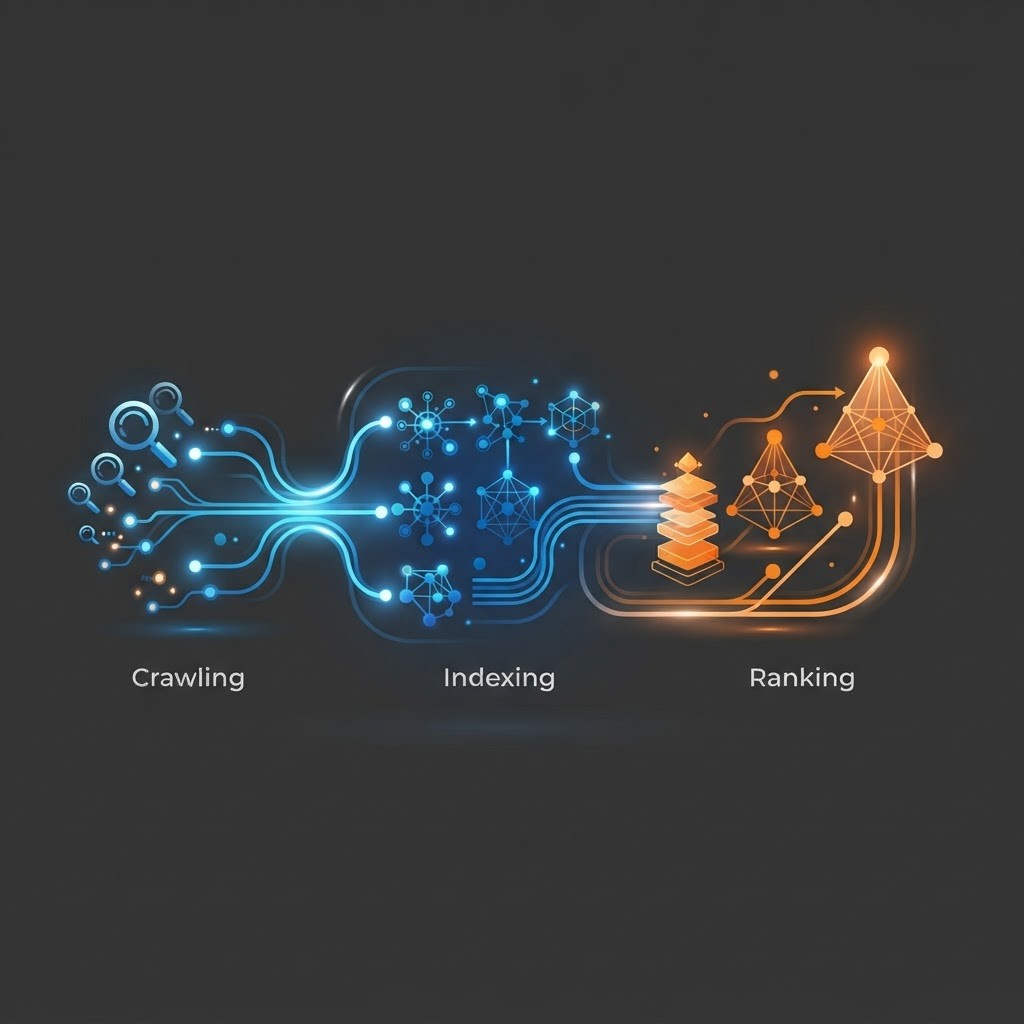
How SEO Works Diagram
Understanding SEO becomes far easier when you can picture it as a diagram rather than a list of disconnected tactics. At its core, search engine optimization is a pipeline: search engines discover pages, understand them, store them, and then decide which ones to show for a given query. When you map this flow visually, the individual tasks such as keyword research, technical fixes, and link building suddenly make sense as parts of one connected system. In this guide, we walk through how an SEO works diagram is structured and what each stage means for your rankings.
Boost Your Rankings With AAMAX.CO
Turning an SEO diagram into real results takes strategy, tools, and consistent execution. At AAMAX.CO, we help businesses translate SEO theory into measurable growth. Our team maps your entire search pipeline, from crawlability to conversions, and builds a plan that moves you up the rankings. If you want expert help implementing everything shown in a typical SEO workflow, our SEO services are designed to do exactly that. As a full-service digital marketing company, we support clients worldwide with web development, marketing, and search optimization under one roof.
Stage One: Crawling
The first box in any SEO diagram is crawling. Search engines deploy automated bots, often called spiders or crawlers, that follow links across the web to discover new and updated pages. Your job is to make this discovery effortless. That means maintaining a clean internal linking structure, submitting an XML sitemap, and avoiding broken links or orphaned pages. If a crawler cannot reach a page, that page simply cannot rank. This is why technical health sits at the very front of the diagram.
Stage Two: Indexing
Once a page is crawled, the search engine analyzes and stores it in a massive database called the index. During indexing, the engine reads your content, evaluates your headings, images, and structured data, and determines what the page is about. Pages with thin content, duplicate text, or noindex tags may be excluded. In your diagram, indexing is the stage where on-page optimization matters most, because clear titles, descriptive headings, and well-organized content help the engine categorize your page correctly.
Stage Three: Ranking Signals
The central and most complex part of an SEO diagram is the ranking algorithm. Search engines weigh hundreds of signals to decide the order of results. These signals generally fall into three groups: relevance, authority, and experience. Relevance measures how well your content matches the searcher's intent. Authority is largely influenced by the quality and quantity of backlinks pointing to your site. Experience covers factors like page speed, mobile friendliness, and secure connections. A strong digital marketing approach touches all three groups at once rather than chasing a single signal.
Stage Four: The Search Results Page
The final output of the diagram is the search engine results page, or SERP. Here your listing competes with ads, featured snippets, local packs, images, and video carousels. Optimizing for this stage means writing compelling title tags and meta descriptions that earn clicks, plus adding schema markup so you qualify for rich results. Even a top-ranked page underperforms if its snippet is unappealing, so the SERP stage deserves as much attention as ranking itself.
Connecting the Feedback Loop
A good SEO diagram is not a straight line, it is a loop. After users interact with your listing, engines observe behavior such as click-through rate and dwell time. Those insights feed back into ranking decisions and inform your next round of optimization. This is why SEO is never a one-time project. You measure, adjust, and re-optimize continually. New search behaviors, including AI-driven answers, are reshaping this loop, which is why forward-looking brands also invest in GEO services to stay visible in generative search results.
Putting the Diagram to Work
To apply this framework, audit each stage of your own site. Confirm crawlers can reach every important page, verify those pages are indexed, strengthen relevance and authority signals, and refine how your listings appear in the SERP. When you treat SEO as an interconnected diagram rather than a checklist, every effort reinforces the others. If mapping and executing this system feels overwhelming, our team at AAMAX.CO can build and manage the entire pipeline for you, turning a simple diagram into consistent organic traffic.
Want to publish a guest post on aamax.co?
Place an order for a guest post or link insertion today.
Place an Order