
How Do You Choose the Best Programming Classes for Kids?
There are many courses, coding languages, and learning formats to consider. So, how do you know which one is right? Start by looking at your child's age, interests, and current skills.
The right programming classes for kids should make learning enjoyable while helping children build useful skills. Parents should also consider the teaching style, practical projects, and support available.
Consider Your Child's Age and Experience
Many coding classes follow developmental stages rather than school grades.
Here are some general recommendations:
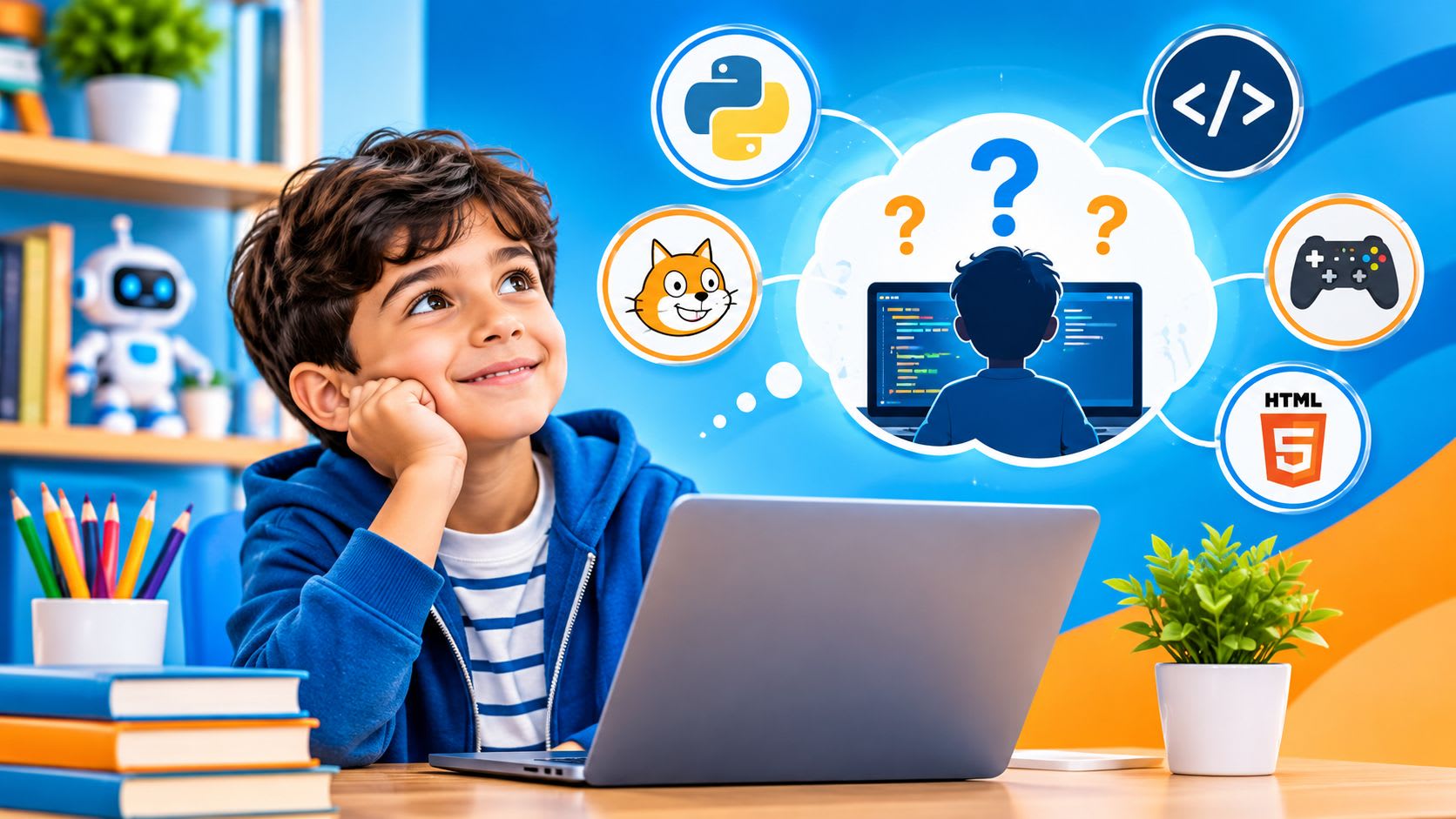
- Ages 6–7: Start with visual programming tools. Their icon-based activities introduce basic coding principles.
- Ages 7–11: Explore Scratch and beginner game projects. Children can also try Lua by making simple game mods.
- Ages 11–14: Start learning Python and basic web development with HTML and CSS.
- Ages 14–17: Explore more advanced options, such as JavaScript and C++.
Python is a good starting point because its syntax is easy to read. Children can explore more advanced programming languages as they gain experience.
Choose a Course Based on Your Child's Interests
Children often learn better when lessons involve subjects they enjoy.
If your child loves video games, they might enjoy creating games using Roblox Studio or Minecraft.
Consider these options:
| Child's interest | Course to consider |
|---|---|
| Video games | Game development |
| Roblox | Lua coding |
| Minecraft | Minecraft modding |
| Websites | HTML, CSS, and JavaScript |
| Artificial intelligence | AI and machine learning |
Connecting lessons to their hobbies can keep children interested. They can practise their coding skills by building games, making animations, and creating interactive projects.
Check the Teaching Style and Class Size
When comparing programming classes for kids, pay attention to how lessons are taught. A good learning environment should meet your child's needs and provide sufficient support to help them understand new concepts.
Some children enjoy learning at their own pace, while others benefit from guidance and regular feedback.
Before enrolling, check whether the classes offer:
- Live lessons with an instructor.
- Step-by-step explanations.
- Opportunities to ask questions.
- Feedback on completed projects.
Choose a format that suits your child, whether that's live online classes, self-paced lessons, or one-to-one tuition.
Look for Hands-On Coding Projects
Children need opportunities to practise what they learn. Watching tutorials alone isn't enough.
Choose classes that let children practise coding through real projects instead of focusing only on lessons and theory. These might include:
- Creating simple games.
- Designing apps and interactive stories.
- Building animations.
- Completing robotics projects.
Through practice, children develop critical, logical, and computational thinking. They also learn to keep trying when their code doesn't work.
Compare Course Formats and Schedules
Choose a learning format that fits your family's routine.
Common options include:
- Term-time classes: Regular lessons during the school year.
- Holiday camps: Short courses during school breaks.
- Self-guided courses: Independent lessons completed at the child's own pace.
- One-to-one tuition: Personal lessons with a tutor.
Check the schedule and flexibility before enrolling. The right format should fit around school and other activities.
Check the Curriculum and Qualifications
A good course should have clear learning goals and a structured curriculum.
Check what your child will learn and whether lessons progress from basic to advanced topics.
You should also ask:
- Is the course suitable for beginners?
- What programming languages will students learn?
- Are there practical projects or assessments?
- Does the programme offer recognised qualifications?
A balanced curriculum should combine coding practice with wider computer science concepts.
Consider the Cost and Learning Support
Price shouldn't be the only factor when choosing a coding course. Compare what the fees include.
Some programmes offer live tutoring, learning materials, project feedback, and progress updates.
Check for additional costs, such as software licences or registration fees. You can also ask whether a free trial or introductory lesson is available.
What are the Best Coding Courses for Kids?
Software Academy offers online coding and technology courses for children aged 6–16.
Its programmes cover different interests and experience levels, including:
- Python Programming: Learn coding through practical projects.
- Roblox Coding: Create their own games using Lua.
- Minecraft Modding: Explore game customisation and coding.
- AI and Machine Learning: Discover how artificial intelligence works.
- 3D Game Design: Develop creative game design skills.
Parents can choose from term-time classes, holiday camps, self-guided courses, and one-to-one tuition.
FAQs
When should a child start learning coding?
Children can start from around age five or six. Visual coding tools make it easier for younger children to understand how programming works.
Do children need coding experience before joining a class?
No. Many beginner courses teach basic concepts from the start. As children gain more coding experience, they can move on to more advanced programming languages.
What skills can children develop through coding?
Coding helps children become better problem-solvers and encourages creativity, logical thinking, and critical thinking. It can also make them more confident when using technology.
Find the Best Coding Classes
Finding the right computer programming class means understanding your child's interests, age, and learning needs. Compare course content, teaching methods, and available support before enrolling. A good programme should make coding enjoyable while helping children develop new skills.
Want to publish a guest post on aamax.co?
Place an order for a guest post or link insertion today.
Place an Order