

How SEO Effects Redirects
Why Redirects Matter So Much
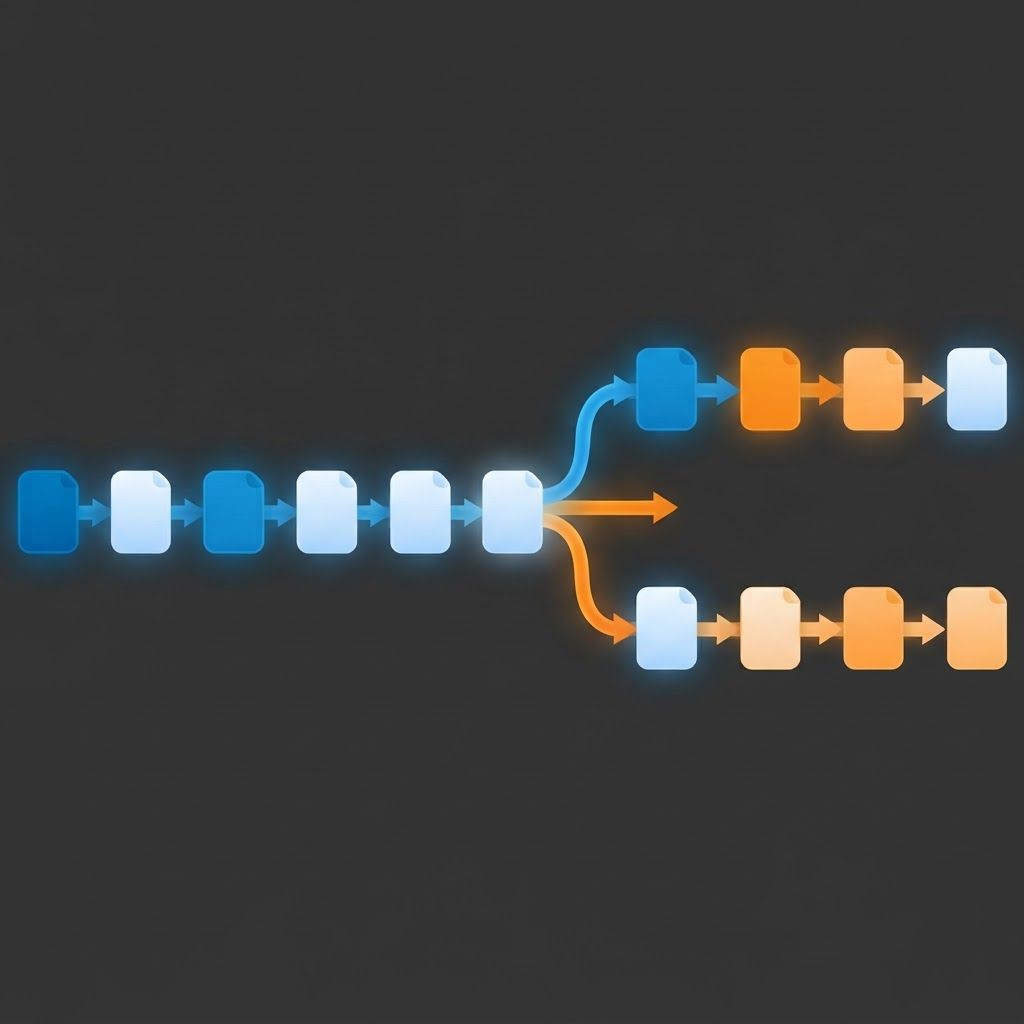
A redirect tells a browser and a search engine that the content they requested now lives somewhere else. That sounds trivial, but redirects sit at the intersection of every high-risk SEO event: site migrations, replatforming, domain changes, URL restructures, HTTPS transitions, product retirement, and content consolidation. Handled well, redirects preserve accumulated rankings and link equity almost entirely. Handled badly, they are the most common single cause of catastrophic organic traffic loss, and the damage is often not noticed for weeks.
The core mechanic is straightforward. When a search engine encounters a permanent redirect, it eventually transfers the ranking signals associated with the old URL to the new one, consolidates them, and replaces the old URL in the index. That process is not instant. It requires the crawler to revisit the old URL, follow the redirect, evaluate the destination, and update its records. On a small site that may take days. On a large site with millions of URLs it can take months, and during that window rankings fluctuate.
How AAMAX.CO Protects Rankings During Redirects and Migrations
Migrations are where SEO programmes are made or broken, and at AAMAX.CO we treat them as engineering projects with mandatory pre-launch verification. Before any migration we crawl and archive the full existing URL inventory, capture current rankings and traffic by URL, pull backlink data to identify which old pages carry real link equity, and build a complete one-to-one redirect map reviewed URL by URL rather than generated by a blanket rule. We test the map in staging, verify status codes and destinations, eliminate chains and loops, and monitor closely after launch so problems are caught in hours rather than quarters. Our SEO services include this migration work as standard, and because we are a full service digital marketing company delivering web development, digital marketing and SEO worldwide, our developers and SEO specialists are the same team, which removes the handover gap where most redirect errors originate. If you have a replatform, domain change, or restructure coming, hire us before you launch it, not after.
Redirect Types and Their SEO Implications
A 301 permanent redirect is the standard choice when content has moved for good. It signals consolidation, passes ranking signals to the destination, and eventually causes the old URL to be dropped from the index in favour of the new one. Use it for migrations, restructures, and consolidations.
A 302 temporary redirect signals that the original URL will return. Search engines generally keep the original URL indexed and do not fully consolidate signals to the destination. Modern engines are reasonably good at detecting when a 302 has been left in place for months and treating it as permanent, but relying on that is unnecessary risk. Use 302s only for genuinely temporary situations such as short-term promotions or maintenance.
A 308 behaves like a 301 while preserving the request method, and a 307 behaves like a 302 with the same guarantee. They are functionally equivalent for SEO purposes to their older counterparts.
Meta refresh redirects and JavaScript redirects both work in browsers but are slower, less reliably interpreted, and offer no advantage. Avoid them for anything ranking-critical. A 410 gone, rather than a redirect, is the correct response when content is permanently removed with no relevant equivalent, because redirecting an obsolete page to an unrelated destination is treated as a soft 404 and wastes the signal entirely.
The Mistakes That Cause Traffic Loss
Redirecting everything to the homepage is the most destructive common error. It appears to preserve traffic because visitors still land somewhere, but search engines interpret bulk redirects to an irrelevant destination as soft 404s, and the ranking signals from every redirected page are lost. Each URL needs the closest genuine equivalent, or a 410 if none exists.
Redirect chains erode equity and waste crawl budget. Old URL to intermediate to final destination forces extra requests and, over long chains, causes crawlers to give up entirely. After any migration, flatten every chain so each old URL points directly at its final destination in a single hop. This is especially important on sites that have migrated more than once, where chains accumulate invisibly across generations of URL structures.
Redirect loops make content permanently inaccessible and are usually caused by conflicting rules at different layers, such as a server rule fighting a CMS rule or a CDN rule. Always test the full request path, not just the application layer.
Mismatched canonical tags and redirects create contradictory signals. If a page redirects to a new URL, the destination should self-canonicalise, and no page should canonicalise to a URL that redirects elsewhere.
Finally, removing redirects too early throws away the benefit. Keep permanent redirects in place for at least a year, and indefinitely for URLs with significant backlinks. External links do not get updated because you finished a migration.
A Reliable Redirect Process
Inventory every existing URL, prioritise by traffic, rankings, and backlinks, and map each to the single most relevant destination. Implement at the highest reliable layer, usually server or edge configuration, so redirects survive application changes. Verify status codes with a crawler before launch and again immediately after. Update internal links to point at final destinations rather than relying on redirects, and update your sitemap to contain only final URLs.
Then monitor. Watch crawl stats, index coverage, and rankings for the redirected URLs weekly for the first two months. Expect some short-term fluctuation and resist the urge to reverse course prematurely. Because AI answer engines and citation-based discovery also depend on stable, resolvable URLs, this same discipline underpins the visibility our GEO services build. Redirects done properly are invisible. Done carelessly, they are the most expensive mistake in technical SEO.
Want to publish a guest post on aamax.co?
Place an order for a guest post or link insertion today.
Place an Order