

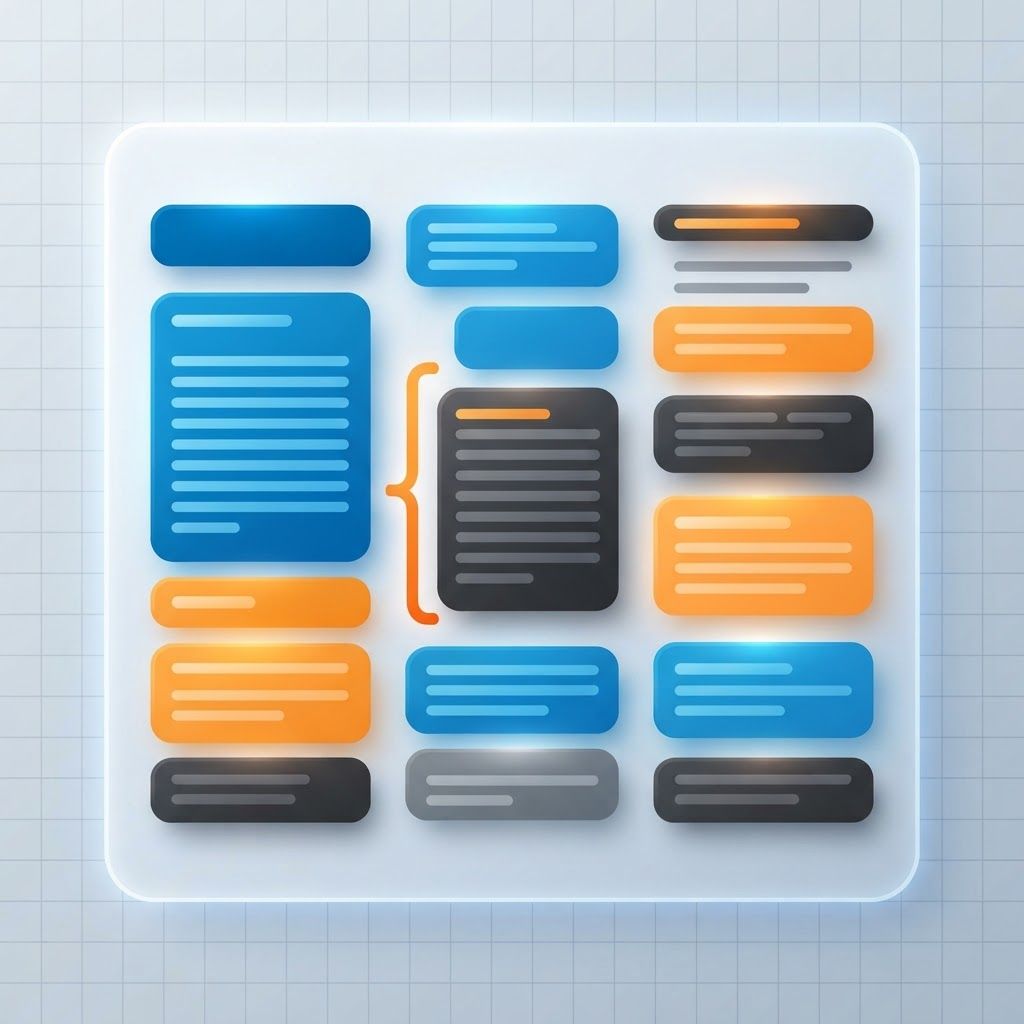
How Long Should Each Paragraph Be for SEO Best Practices
The Short Answer
For most web content, aim for paragraphs of two to four sentences, roughly forty to eighty words, with a hard ceiling around one hundred and fifty words. There is no algorithmic rule that rewards a specific paragraph length, and no penalty for a long one. What search engines measure is whether readers find your page satisfying, and what they need technically is the ability to isolate a clear, self-contained passage that answers a query. Short, focused paragraphs make both outcomes more likely.
Think of paragraph length as a readability lever rather than an optimization trick. On a mobile screen, a one-hundred-word paragraph can occupy the entire viewport with no visual break, which is exactly when readers scroll past or leave. The same information split into three tight paragraphs feels effortless.
Let AAMAX.CO Handle Content Structure and Performance
Formatting decisions like this compound across hundreds of pages, and most teams do not have the bandwidth to enforce them consistently. AAMAX.CO is a full service digital marketing company offering web development, digital marketing, and SEO services worldwide, and content structure is part of every engagement we run. We audit existing articles for readability and snippet eligibility, rewrite dense passages into scannable blocks, tighten heading hierarchies, and build editorial templates your writers can follow without thinking about it. If you want content that reads well for humans and parses cleanly for search engines, hire AAMAX.CO and we will make structure a permanent advantage rather than an afterthought.
Why Paragraph Length Affects SEO Indirectly
Three mechanisms connect formatting to search performance.
Engagement behavior. Dense text increases bounce and reduces time on page and scroll depth. While these are not direct ranking signals in any simple sense, they reflect satisfaction, and satisfaction drives the long-term performance of a page and the site around it.
Passage-level extraction. Search engines increasingly rank and quote individual passages rather than whole documents. A tight paragraph that fully answers one question is far easier to lift into a featured snippet or an AI-generated summary than the same answer buried in the middle of a wall of text.
Accessibility and comprehension. Screen readers, translation tools, and readers with cognitive or visual differences all benefit from shorter units of meaning. Accessibility improvements almost always improve measured engagement as well.
Recommended Lengths by Content Type
Blog posts and guides: two to four sentences per paragraph. Lead each one with the point, then support it. This is the format that reads best on mobile and in email previews.
Product and service pages: one to three sentences. Commercial pages are scanned, not read. Pair short paragraphs with bullet lists and clear subheadings so a visitor can qualify themselves in seconds.
Definitions and how-to answers: a single paragraph of forty to sixty words placed immediately under a question-style heading. This is the shape most likely to be quoted directly.
Technical documentation: one idea per paragraph, with code blocks and steps separated out. Never combine explanation and instruction in the same block.
Thought leadership and long-form essays: up to five or six sentences is acceptable when the argument genuinely requires it, provided you vary rhythm and break the page with headings, pull quotes, and images.
Structure Beats Length
A well-structured page with occasional long paragraphs will outperform a poorly structured page of uniformly short ones. Give equal attention to the surrounding architecture.
Use a single H1 and a logical hierarchy of H2 and H3 headings that describe content rather than decorate it. Phrase some headings as the questions your audience actually types. Insert a list wherever you have three or more parallel items. Bold the phrase a skimmer must not miss, but only once or twice per section. Keep sentences under roughly twenty-five words on average and vary their length so the prose has rhythm. Add white space between sections so the page never looks like a document dump.
Writing Snippet-Ready Paragraphs
If you want a paragraph to be quotable, make it independent. It should make sense to someone who has read nothing else on the page. Avoid opening with connectors such as however, therefore, or as mentioned above, because those signal dependency on surrounding context. State the answer in the first sentence, add the qualifying detail in the second, and stop. Include the entity or keyword naturally so the passage is unambiguous about what it describes. Resist the temptation to pad; a forty-word answer that is complete beats a ninety-word answer that meanders.
Common Mistakes
The most frequent error is treating every paragraph as a single sentence. Broken into fragments, content loses argument and reads like a slide deck, which undermines the depth that competitive queries require. The opposite error is transplanting academic or legal writing conventions onto the web, producing three-hundred-word blocks that no visitor finishes. Also avoid using length as a proxy for quality. A two-thousand-word article of well-formatted filler still fails, because the reader leaves without the answer they came for.
Finally, do not format only for one surface. Content is now consumed in search results, AI summaries, social previews, and email digests. Clean structure travels across all of them, and it is a meaningful part of how you stay visible as answer engines mature. Our GEO services focus specifically on making content easy for those systems to quote accurately.
A Quick Editing Checklist
Before publishing, read the article on a phone. Any paragraph that fills the screen gets split. Any section without a heading for more than three hundred words gets one. Any paragraph containing two distinct ideas becomes two paragraphs. Any question-style heading gets a direct answer in the first forty to sixty words beneath it. Any list hiding inside prose becomes an actual list. That five-minute pass will improve more pages than most keyword tweaks.
Conclusion
There is no magic paragraph length, but there is a reliable range: two to four sentences for most content, shorter for commercial pages and direct answers, occasionally longer for genuine argument. Optimize for the reader's eye and for clean passage extraction, and the SEO benefit follows naturally. If you would like an experienced team to apply that standard across your entire content library, we can help you get there.
Want to publish a guest post on aamax.co?
Place an order for a guest post or link insertion today.
Place an Order