

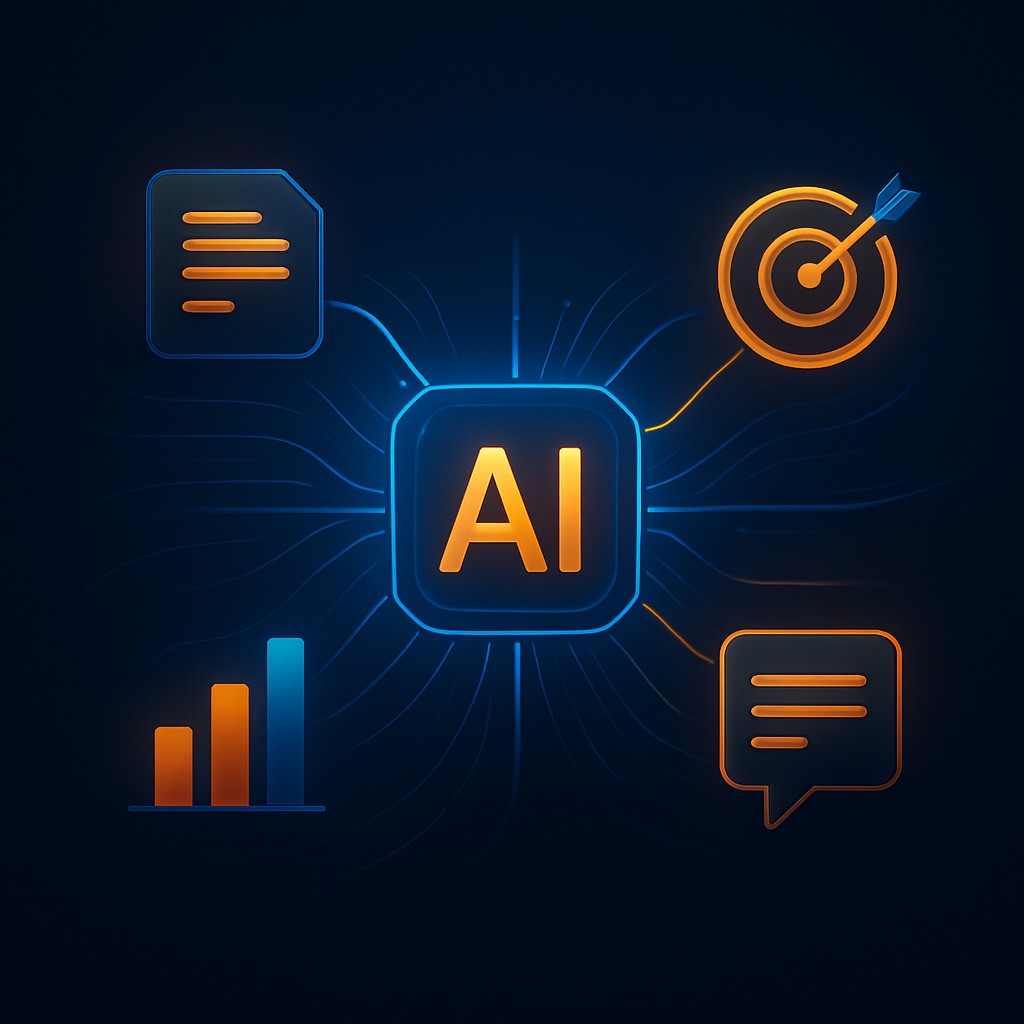
How Is AI Used for Marketing
Artificial intelligence has become a practical, everyday tool for marketers around the world. Far from being abstract or futuristic, AI now powers concrete tasks that drive measurable results, from writing emails to predicting which customers will buy next. Understanding how AI is used for marketing helps businesses identify the opportunities most relevant to their goals and apply them effectively.
Put AI to Work With AAMAX.CO
At AAMAX.CO, we help businesses apply AI to marketing in practical, results-driven ways. As a full-service digital marketing company serving clients worldwide, we identify the right tools and strategies for your needs and put them to work. From search engine optimization to automation and analytics, we make AI an accessible, profitable part of your marketing toolkit.
Content Creation and Copywriting
One of the most common uses of AI is generating content. Marketers use AI tools to draft blog posts, social media updates, ad copy, product descriptions, and email subject lines. These tools accelerate production and provide creative starting points, while human editors refine the output for tone, accuracy, and brand voice. The result is more content produced faster without sacrificing quality.
Personalization and Recommendations
AI powers the personalized experiences customers now expect. Recommendation engines suggest products based on browsing and purchase history, while dynamic content adapts websites and emails to each visitor. This individualized approach increases engagement and conversions by showing each customer what is most relevant to them at the right moment.
Predictive Analytics
Marketers use AI to predict future outcomes. Predictive models identify which leads are most likely to convert, which customers may churn, and which products will trend. Armed with these insights, teams can prioritize high-value prospects, launch retention campaigns, and plan inventory and promotions with greater confidence and accuracy.
Advertising Optimization
AI is widely used to optimize advertising. Platforms automatically adjust bids, allocate budgets, and refine targeting based on real-time performance. AI also tests creative variations and identifies the best-performing combinations. This continuous optimization maximizes return on ad spend and reduces wasted budget without constant manual management.
Customer Segmentation
AI segments audiences with remarkable precision. Instead of relying on broad categories, AI groups customers based on behavior, preferences, and predicted value. These dynamic segments update automatically as new data arrives, ensuring campaigns always target the most relevant audiences. This precision improves both efficiency and effectiveness.
Chatbots and Customer Engagement
AI-powered chatbots handle customer inquiries instantly and around the clock. They answer questions, recommend products, qualify leads, and guide customers toward conversion. Beyond service, these tools capture valuable data and create seamless, responsive experiences that strengthen relationships and support sales.
Analytics and Reporting
AI transforms raw data into clear, actionable insight. Automated dashboards track performance across channels, identify trends, and flag anomalies. AI can even generate plain-language summaries and recommendations, helping marketers understand what is working and where to focus. This saves time and improves decision-making across the board.
Conclusion
AI is used for marketing in many practical ways, including content creation, personalization, prediction, advertising optimization, segmentation, customer engagement, and analytics. These applications deliver real, measurable value to businesses of every size. By identifying the right uses for your goals and applying them well, you can transform your results. AAMAX.CO is here to help you put AI to work effectively.
Want to publish a guest post on aamax.co?
Place an order for a guest post or link insertion today.
Place an Order