

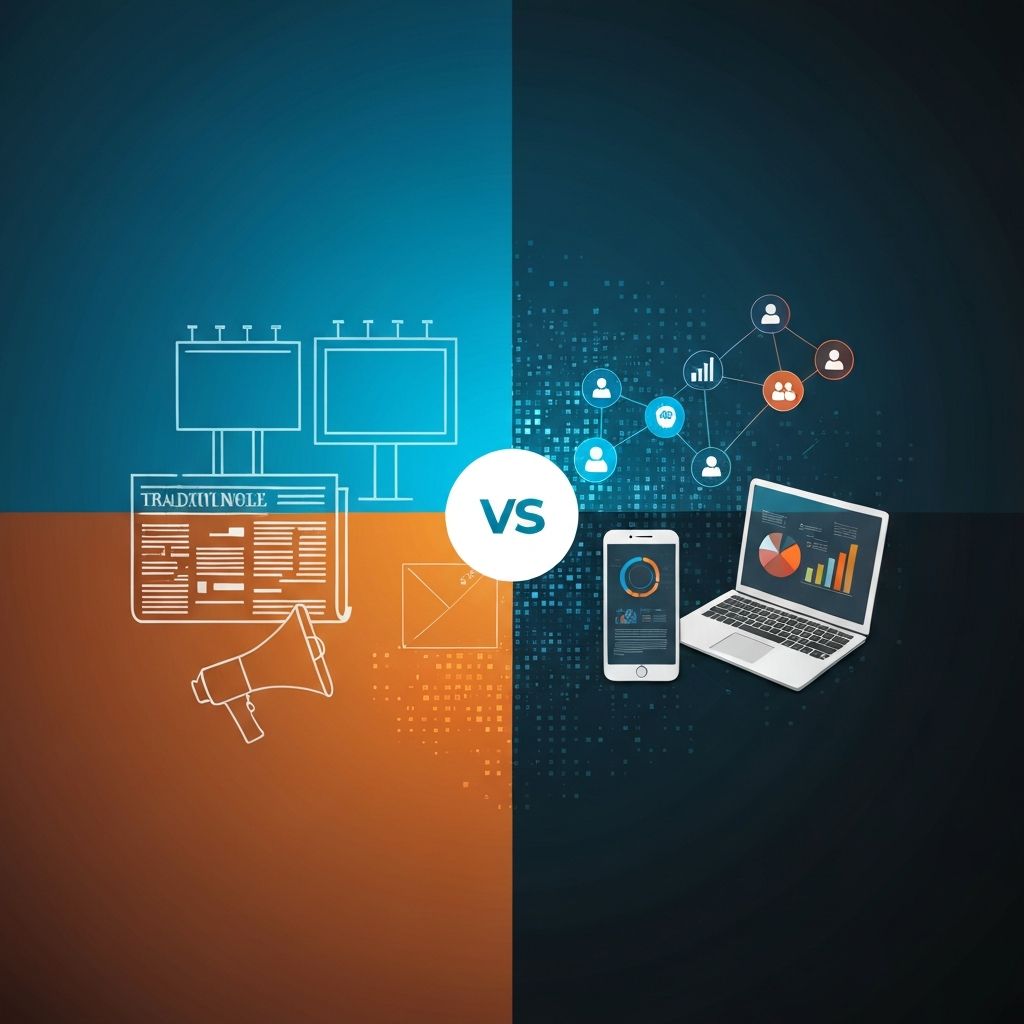
How Does Digital Marketing Differ From Traditional Marketing
Two Worlds, One Goal
Both digital and traditional marketing share one ultimate goal: connecting brands with the right audiences to drive growth. But how they reach that goal could not be more different. Understanding these differences helps you allocate budget wisely, measure results accurately, and build a marketing mix that delivers consistent ROI. As a full-service digital marketing partner, we help brands navigate both worlds and find the right balance.
What Is Traditional Marketing?
Traditional marketing covers offline channels like print ads, billboards, direct mail, radio, and television. These channels built the foundations of modern advertising and still play meaningful roles, especially for local awareness, prestige branding, and audiences less reachable online. They tend to be expensive, broad in reach, and difficult to measure with precision.
What Is Digital Marketing?
Digital marketing covers all online and digital channels: search engines, social media, email, content marketing, influencer marketing, paid ads, and more. It allows precise targeting, real-time measurement, and rapid optimization. Channels like SEO, Google ads, and social media marketing can reach exactly the right audience at the right moment.
Difference 1: Audience Targeting
Traditional marketing reaches broad audiences. A billboard is seen by everyone driving by, regardless of intent or interest. Digital marketing flips that model. With targeting based on demographics, behavior, interests, search intent, and even past website activity, you can serve highly relevant messages to highly specific people. This precision dramatically improves efficiency and ROI.
Difference 2: Cost and Accessibility
Traditional channels often require significant upfront investment. A national TV spot or magazine ad can cost tens or hundreds of thousands of dollars. Digital channels scale to fit any budget. A small business can run a focused Google or Facebook campaign for a fraction of the cost while still reaching the right buyers. This makes digital marketing far more accessible to startups and growing companies.
Difference 3: Measurement and Analytics
Measuring traditional marketing relies on surveys, sales lift estimates, or coupon codes. Digital marketing offers granular, real-time data: clicks, conversions, time on page, ad view-throughs, attribution paths, and lifetime value. With proper tracking, you can see exactly which keyword, ad, or post produced revenue and double down on what works.
Difference 4: Speed and Flexibility
Once a print ad goes to press, it cannot be changed. A radio spot is locked in. Digital campaigns are different. You can launch an ad in hours, test multiple versions, and update creative based on early performance. This agility is invaluable in fast-moving markets where customer behavior shifts quickly.
Difference 5: Engagement and Interaction
Traditional marketing is one-way. Brands speak, audiences listen. Digital marketing invites two-way interaction. Customers comment, share, message, and review in real time. This creates richer relationships and faster feedback loops, but it also requires a thoughtful presence and consistent community management.
Difference 6: SEO and Long-Term Equity
Traditional ads stop working the moment the campaign ends. Strong SEO services create assets that continue producing traffic, leads, and revenue long after the initial work is done. A well-ranked blog post can drive value for years.
Difference 7: Reach and Geography
Traditional marketing usually targets local or regional audiences. Digital marketing extends globally with the click of a button. This is especially valuable for e-commerce, SaaS, and service businesses with broad geographic markets.
When to Use Traditional Marketing
Traditional marketing still works for hyper-local businesses, prestige brands, mass-market consumer goods, and audiences where digital adoption is limited. It also reinforces digital campaigns by adding visibility and brand authority.
When to Use Digital Marketing
For most businesses today, digital marketing is the primary growth engine. It is more cost-effective, more measurable, more flexible, and more scalable. From local services to global e-commerce brands, almost every business benefits from a strong digital presence.
Building the Right Mix
The smartest brands integrate both. Traditional channels build broad awareness. Digital channels capture and convert demand. The two work together rather than competing. The right mix depends on your audience, industry, and budget, but digital should almost always be the foundation.
Why Partner With Us
We are a full-service digital marketing company offering web development, digital marketing, and SEO services worldwide. We help brands move beyond traditional advertising and unlock predictable, measurable growth through modern digital strategies. To upgrade your marketing for the digital era, hire us at AAMAX.CO.
Final Thoughts
Digital marketing differs from traditional marketing in nearly every meaningful way: cost, targeting, measurement, speed, and engagement. While traditional channels still have a place, the future of growth is digital. Understanding these differences allows you to invest where the highest returns are, and build a marketing engine that scales with your business.
Want to publish a guest post on aamax.co?
Place an order for a guest post or link insertion today.
Place an Order