

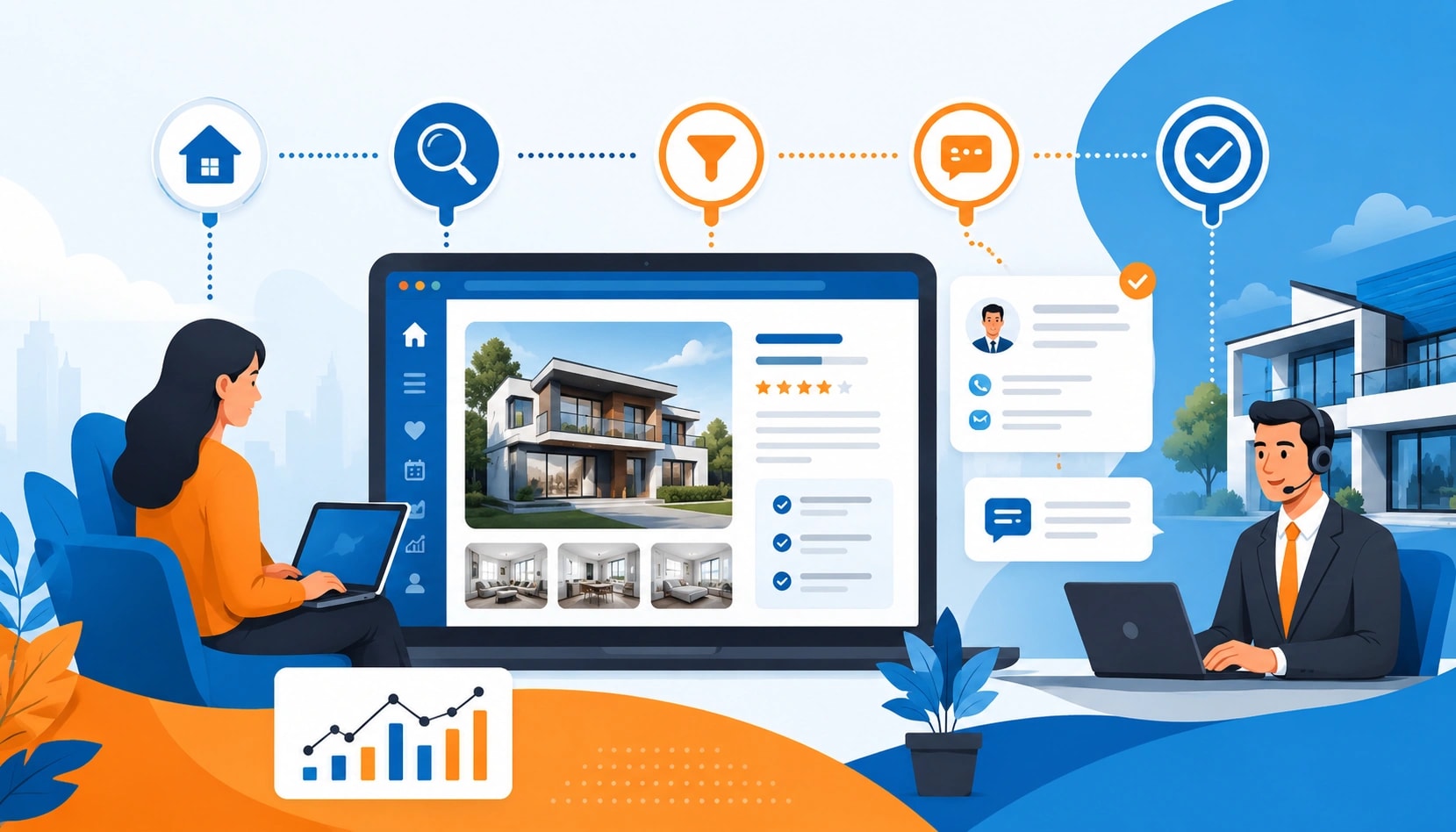
How Custom Web Applications Can Improve the Property Enquiry Journey
A property enquiry rarely begins with a neat contact form. It starts earlier, usually when someone opens ten tabs, compares floor plans, checks prices, studies photos, and tries to decide whether a listing is worth the effort. By the time they send a message, they've already made several small judgments.
That's where custom web applications can change the experience. A standard website can show information. A custom application can guide people through it.
For property businesses, that difference matters. Buyers, renters, investors, students, and families don't all ask the same questions. They don't move at the same pace either. Some want a quick answer about availability. Others need finance details, location comparisons, inspection times, or build options. A generic contact page treats them all the same. A smarter web app does not.
Turning Browsers Into Better Qualified Leads
A basic enquiry form usually asks for a name, phone number, email address, and message. Fine. It works, technically. But it also pushes too much work onto the sales team.
Custom web applications can collect better details without making the user feel like they're filling out a tax form. The trick is sequencing. Ask one useful question at a time. What type of property are they looking for? What budget range makes sense? Are they buying soon, comparing options, or just researching? Do they need help with inspections, documents, or location advice?
Small steps feel easier.
This approach also improves lead quality. A property consultant can open a dashboard and instantly see intent, timeline, preferred property type, location interest, and enquiry source. No guessing. No digging through vague messages like "Is this still available?" fifteen times before lunch.
Personalization Makes the Journey Feel Less Cold
Property decisions carry emotion. A person may be looking for a first home, a larger place for a growing family, an investment, or somewhere temporary during study. The page should not feel like a filing cabinet.
A custom web application can personalize the journey based on user behavior. If someone keeps viewing land and design pages, the site can surface information about custom build homes in fast-growing suburban areas where buyers often want more control over layout, storage, outdoor space, and long-term family needs. That feels useful because it matches what the visitor is already thinking about.
Personalization doesn't need to be creepy. Nobody wants a website that acts like it has been watching from behind the curtains. Keep it practical. Recommend related listings. Save viewed properties. Show comparison tools. Let users return later without starting again.
That alone can make a website feel more helpful.
Speed Matters More Than Property Teams Think
People don't wait patiently online. They bounce. They forget. They get distracted by another listing with better photos and a smoother form.
A slow or clunky enquiry process can quietly damage conversions. Not dramatically. Quietly. One extra field here. A confusing filter there. A calendar that doesn't load properly on mobile. Then the lead disappears.
Custom applications can fix these weak points by building around real user behavior. Smart filters help people narrow choices faster. Interactive maps show nearby transport, schools, shops, or business districts. Live availability tools reduce back-and-forth emails. Instant booking systems let users schedule inspections before enthusiasm cools.
One property team once struggled with enquiry volume but still missed good leads because staff spent hours replying to basic availability questions. After adding clearer filters and automated inspection booking, the team didn't just get more enquiries. They got better ones. Less noise. More serious conversations.
Better Mobile Journeys Win More Enquiries
A huge number of property searches happen on phones. On the couch. On the train. During lunch. Sometimes while walking past an actual property and wondering what it costs. The mobile journey has to work beautifully.
Not "it shrinks to fit." That's not enough.
A custom web application can make mobile enquiry paths faster and cleaner. Large buttons. Sticky enquiry options. Tap-to-call features. Short forms. Saved favorites. Swipeable galleries. Map tools that don't require finger gymnastics. Tiny frustrations matter on mobile because people abandon pages quickly when the experience feels awkward.
Property images also need thoughtful handling. A heavy gallery can slow everything down. A custom solution can optimize image loading, prioritize the first few visuals, and keep the page moving. That's the kind of detail users may not notice, which is exactly the point. Good technology disappears into the experience.
Matching Enquiries to the Right Team Faster
Not every enquiry belongs in the same inbox. Sales, leasing, property management, finance, operations, and support may all handle different parts of the journey. When everything lands in one shared inbox, delays happen.
Custom web applications can route enquiries automatically. A buyer interested in a new development goes to one team. A maintenance-related message goes elsewhere. A rental availability question reaches the leasing team. A commercial investment lead can be tagged by value, urgency, or location.
This saves time, but it also improves the user's first impression. Nobody enjoys explaining the same thing three times.
For example, a provider managing student accommodation near major university precincts may receive enquiries from local students, international students, and parents, all asking different questions about lease terms, transport, safety, furnishings, and move-in dates. A tailored enquiry system can sort those questions properly from the start.
Dashboards Help Teams See What's Really Happening
Property teams often think they know what users want. Sometimes they do. Sometimes the data tells a different story.
A custom dashboard can show which listings attract the most attention, which filters users rely on, where enquiries drop off, and which marketing channels bring qualified leads. That information can shape everything from ad spend to content planning.
Say a listing gets heavy traffic but few enquiries. The issue may not be the property. It could be unclear pricing, weak photos, missing floor plans, or a form that asks too much too soon. Without a proper tracking layer, the team may blame the wrong thing.
Data keeps everyone honest.
It also helps managers spot trends early. If more users search by lifestyle features than suburb names, content can shift. If inspection bookings spike after virtual tours go live, add more tours. Simple. Useful. Not glamorous, but valuable.
Automation Should Support People, Not Replace Them
Automation often gets sold like magic. It isn't. Used badly, it makes a property business feel robotic. Used well, it removes repetitive tasks so humans can focus on the conversations that actually need judgment.
Custom web applications can send instant confirmations, reminder emails, viewing instructions, document checklists, and follow-up messages. They can also integrate with CRMs, email platforms, calendars, and reporting tools. That creates a smoother journey from enquiry to appointment to decision.
The best systems leave room for human timing. A serious buyer should not get trapped in a generic email sequence when they clearly need a call. A renter with an urgent move-in date should not wait two days for a standard response. Good automation knows when to step aside.
That's the sweet spot.
A Stronger Enquiry Journey Builds Trust
A property website doesn't need to be flashy to perform well. It needs to be clear, fast, helpful, and connected to the way real people search. Custom web applications make that possible because they shape the journey around user intent, not around a template.
The result is a smoother path for the visitor and a cleaner workflow for the property team. People find what they need faster. Teams respond with better context. Fewer leads fall through the cracks.
And in property, that matters. A slow reply or confusing form can cost more than a missed click. It can cost a serious enquiry.
Want to publish a guest post on aamax.co?
Place an order for a guest post or link insertion today.
Place an Order