

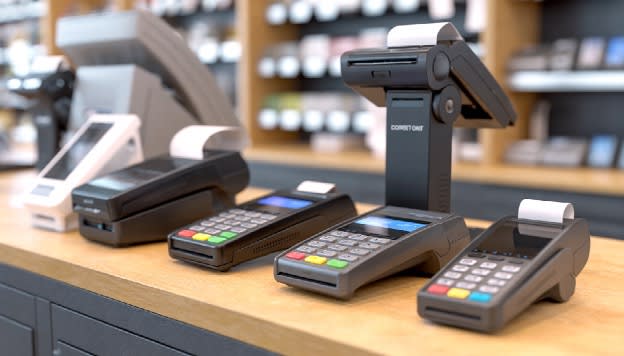
How Credit Card Terminals Power Modern E-commerce Growth
The infrastructure behind online payments has fundamentally reshaped retail over the past two decades. Credit card terminals—once bulky countertop machines reserved for brick-and-mortar stores—now form the backbone of digital commerce, processing billions of transactions annually across web platforms, mobile apps, and hybrid retail environments.
As consumer expectations evolve and payment technologies advance, understanding how these systems work has become essential for any business operating online. This article examines the development of credit card processing infrastructure, the role terminals play in e-commerce operations, the security frameworks that protect transactions, recent technological innovations, and practical considerations for selecting payment hardware.
From Carbon Copies to Real-Time Processing
Credit card processing began as a manual, paper-intensive process. Merchants used imprinters—mechanical devices that transferred card details onto carbon-copy receipts—and submitted batches to banks for settlement days later. The system was slow, error-prone, and limited to physical locations.
The shift to electronic processing in the 1970s marked the first major transformation. Dedicated phone lines connected terminals to bank networks, enabling authorization checks within minutes rather than days. By the 1990s, internet connectivity had reduced transaction times to seconds, while the emergence of payment gateways allowed websites to accept cards without physical hardware.
Today's processing ecosystem operates on a global scale. Cloud-based platforms handle authorization, fraud detection, and settlement simultaneously across multiple currencies and payment methods. What once required dedicated phone lines now happens over standard internet connections, with terminals serving as secure endpoints in a vastly more complex network.
Why Terminals Remain Central to Digital Commerce
Despite the rise of purely digital payment methods, credit card terminals continue to serve critical functions in e-commerce operations. Modern terminals bridge physical and digital channels, supporting businesses that operate across multiple sales environments.
The practical advantages include:
Universal acceptance: Credit and debit cards remain the dominant payment method globally, with McKinsey research showing card payments account for over 40% of global transaction volume.
Immediate settlement: Funds typically reach merchant accounts within 24-48 hours, compared to longer timelines for alternative payment methods.
Cross-border capability: Multi-currency processing enables businesses to accept international payments without establishing foreign bank accounts.
Integrated operations: Modern terminals sync with inventory systems, accounting software, and customer databases, creating unified transaction records.
For businesses scaling beyond purely online operations—pop-up shops, trade shows, delivery services—terminals provide payment consistency across channels. The same hardware and processing infrastructure supports both in-person and remote transactions, simplifying reconciliation and reporting.
Security Frameworks That Protect Transaction Data
Payment security operates on multiple layers, with industry standards defining minimum requirements for any business handling card data. The Payment Card Industry Data Security Standard (PCI DSS), maintained by major card networks, establishes baseline security controls.
Compliance requirements include:
Network segmentation to isolate payment systems from other business infrastructure
Encryption of cardholder data during transmission and storage
Restricted access controls limiting who can view sensitive information
Regular vulnerability scanning and penetration testing
Documented security policies and employee training programs
The PCI Security Standards Council publishes detailed technical requirements, which vary based on transaction volume. Small businesses processing fewer than 20,000 e-commerce transactions annually face simpler compliance paths than large retailers, but all merchants must meet core security standards.
Beyond PCI DSS, terminals employ point-to-point encryption (P2PE) and tokenization. P2PE encrypts card data the moment a customer swipes or inserts their card, rendering intercepted data useless. Tokenization replaces card numbers with random identifiers, allowing businesses to process recurring payments without storing actual card details.
Recent Advances in Terminal Technology
Payment hardware has evolved significantly beyond basic card readers. Current-generation terminals incorporate multiple technologies to accommodate changing consumer preferences and security requirements.
Key innovations include:
Contactless acceptance: Near-field communication (NFC) chips enable tap-to-pay transactions from cards and mobile wallets, reducing physical contact and transaction time.
Mobile integration: Bluetooth-connected card readers transform smartphones and tablets into full payment terminals, eliminating the need for dedicated hardware in certain environments.
Biometric authentication: Fingerprint sensors and facial recognition add verification layers beyond PINs and signatures, particularly for high-value transactions.
Multi-rail processing: Advanced terminals route transactions across different networks based on cost and speed, optimizing processing fees automatically.
Looking forward, several trends are reshaping payment infrastructure. Blockchain-based settlement systems promise faster cross-border transactions with lower fees. Artificial intelligence enhances fraud detection by analyzing transaction patterns in real time. Digital wallets continue gaining market share, projected to reach over 5 billion digital wallet users globally by 2026.
These developments don't eliminate the need for traditional terminals but rather expand their capabilities. Modern devices function as multi-purpose payment hubs, accepting everything from magnetic stripe cards to cryptocurrency while maintaining backward compatibility with older payment methods.
Selecting Payment Hardware for Your Business
Choosing appropriate terminal equipment requires balancing immediate needs against future growth. The right solution depends on transaction volume, sales channels, and technical infrastructure.
Primary considerations include:
Total cost structure: Beyond purchase price, evaluate per-transaction fees, monthly service charges, and costs for consumables like receipt paper. Lease agreements may offer lower upfront costs but higher long-term expenses.
System compatibility: Terminals must integrate with existing point-of-sale software, accounting systems, and e-commerce platforms. API availability and developer support matter for custom integrations.
Feature requirements: Determine which capabilities—contactless payments, mobile connectivity, multi-currency support, offline processing—are essential versus optional for your operations.
Scalability: Consider whether the solution can accommodate growth in transaction volume and expansion into new sales channels without requiring complete replacement.
Businesses exploring terminal options can review various payment terminal models from suppliers such as DCCSupply, Helcim, and Payment Depot to compare specifications and pricing. Direct manufacturer relationships often provide better support and warranty terms than third-party resellers, though specialized payment processors may bundle hardware with more competitive transaction rates.
For businesses operating primarily online, virtual terminals—web-based interfaces for manually entering card details—may suffice initially. However, companies planning to add physical locations or mobile sales capabilities should invest in hardware that supports multiple transaction types from the outset.
Common Questions About Payment Terminals
What's involved in setting up a new terminal? Most modern devices require connecting to power and internet, then following on-screen prompts to link the terminal to your merchant account. Cloud-based systems typically complete setup in under 30 minutes. Legacy systems may require technician installation and phone line configuration.
How often do terminals need maintenance? Regular cleaning of card readers prevents read errors, while software updates—often automatic—patch security vulnerabilities and add features. Physical components like receipt printers require periodic replacement. Most terminals function reliably for 3-5 years with basic maintenance.
What should I do when transactions fail? First verify network connectivity and ensure all cables are secure. Restart the terminal and attempt the transaction again. If problems persist, contact your payment processor's technical support—most provide 24/7 assistance. Keep backup processing methods available for critical sales periods.
Are there hidden costs beyond the advertised price? Transaction fees vary based on card type, with rewards cards typically costing more to process. Some processors charge monthly minimums, PCI compliance fees, or early termination penalties. Request complete fee schedules in writing before committing to any provider.
The payment infrastructure supporting e-commerce continues evolving, but core principles remain constant: security, reliability, and customer convenience. Businesses that understand these fundamentals can make informed decisions about payment technology, positioning themselves to adapt as new methods emerge while maintaining the transaction security customers expect.
Want to publish a guest post on aamax.co?
Place an order for a guest post or link insertion today.
Place an Order