

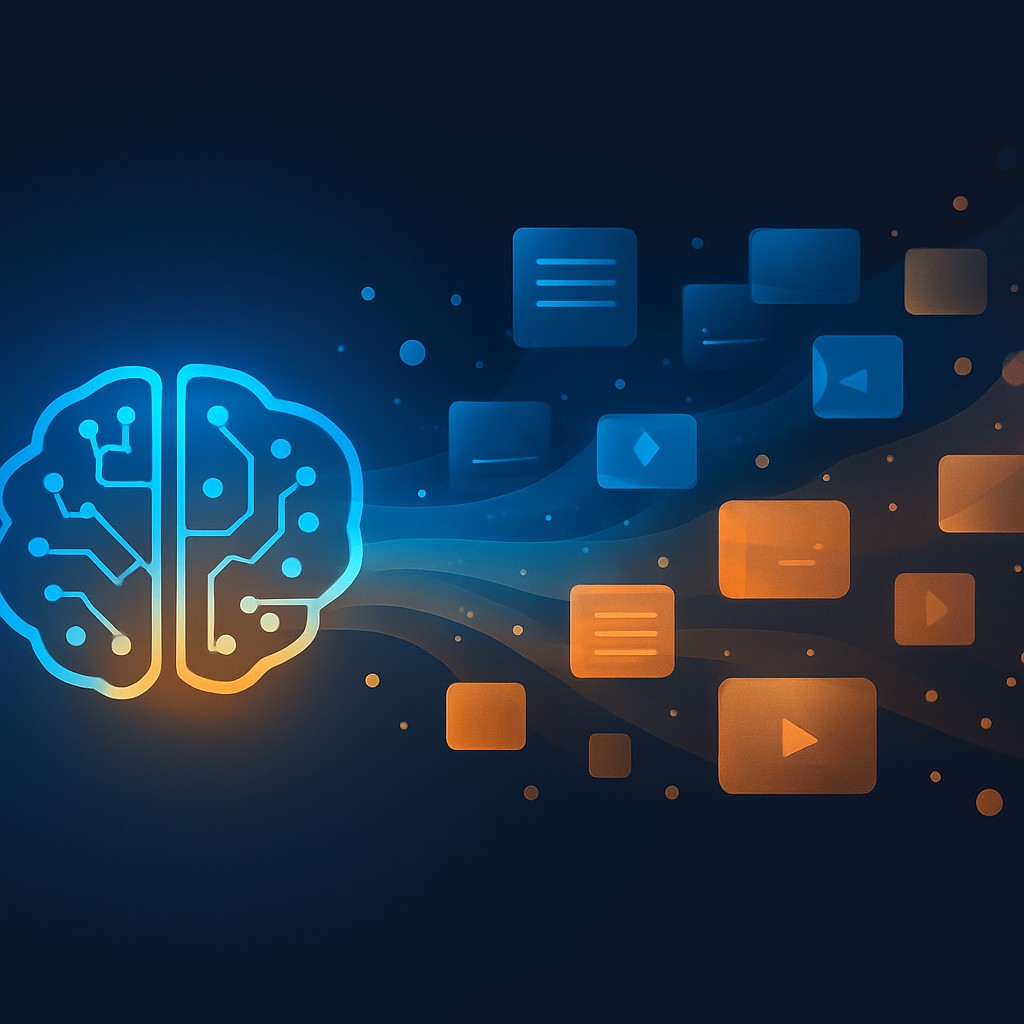
How Content Marketers Use AI in Content Marketing 2025 2026
Content marketing has entered a new era. In 2025 and 2026, artificial intelligence is no longer an experimental add-on but a core part of how teams plan, produce, and optimize content. The most successful marketers aren't using AI to replace creativity; they're using it to remove friction, accelerate research, and scale production without sacrificing quality. Understanding where AI fits across the content lifecycle is now essential for staying competitive in an increasingly crowded digital landscape.
How We Can Help at AAMAX.CO
We are AAMAX.CO, a global digital marketing company that helps brands integrate AI into their content workflows responsibly and effectively. Our team pairs AI-assisted production with strategic digital marketing so your content drives traffic, leads, and authority rather than just filling a calendar. Whether you're starting with AI or scaling an existing program, we can guide the strategy and handle execution so your team gets results, not just output.
Smarter Ideation and Research
One of the earliest and most popular uses of AI is ideation. Marketers use AI tools to brainstorm topics, cluster related keywords, and identify content gaps competitors haven't filled. Instead of staring at a blank page, teams can generate dozens of angles in minutes, then apply human judgment to choose the strongest. AI also speeds up research by summarizing sources, surfacing statistics, and outlining structures, cutting hours from the planning phase and freeing strategists to focus on the ideas that matter most.
Accelerating Content Creation
AI now assists heavily with drafting. Writers use it to produce first drafts, expand outlines, rephrase sections, and overcome writer's block. The key shift in 2025 and 2026 is that AI handles the heavy lifting of structure and momentum, while humans focus on insight, voice, and accuracy. This collaboration dramatically increases output, letting small teams produce content volumes that once required much larger staffs, all while maintaining a consistent brand voice across every piece.
Personalization at Scale
Personalization has become a major AI use case. Marketers use AI to tailor content variations for different audience segments, industries, or buyer stages. From dynamic email copy to localized landing pages, AI makes it feasible to deliver relevant messaging at scale. This relevance improves engagement and conversion, turning generic broadcasts into targeted conversations that feel personal even when delivered to thousands of people at once.
Optimization and SEO
AI plays a growing role in optimization. Tools analyze top-ranking content, recommend improvements, and predict how changes might affect performance. Marketers use AI to refine headlines, improve readability, and align content with search intent. Pairing these tools with experienced search engine optimization ensures the AI's suggestions serve a coherent strategy rather than chasing isolated metrics, keeping your content both reader-friendly and search-friendly.
Repurposing and Distribution
Creating content is only half the battle; distribution determines its reach. AI helps marketers repurpose a single asset into many formats, turning a blog post into social snippets, email sequences, and video scripts. It also assists with scheduling and channel optimization, ensuring each piece reaches the right audience at the right time. This multiplies the value of every original asset and stretches limited content budgets much further.
Maintaining Quality and Authenticity
As AI-generated content proliferates, quality and authenticity become key differentiators. The best marketers use AI to accelerate work but insist on human review for accuracy, originality, and genuine insight. They add real experience, data, and perspective that AI alone cannot provide. This commitment to quality protects brand trust and helps content stand out in a sea of generic, machine-produced material, which is increasingly important as audiences grow more discerning.
Adapting to AI-Powered Search
A defining trend of 2025 and 2026 is the rise of AI answer engines. Marketers now optimize not just for traditional rankings but for visibility inside AI-generated responses. Embracing generative engine optimization helps content remain discoverable as users increasingly ask AI tools instead of browsing search results. Forward-looking teams are building this capability now to secure visibility before competitors catch on.
Building an AI-Enabled Content Team
Adopting AI successfully is as much about people as technology. The most effective teams in 2025 and 2026 train their writers and strategists to prompt AI well, edit critically, and recognize where human input is irreplaceable. They establish clear workflows that define when AI is used, who reviews the output, and how quality is maintained. They also foster a culture of experimentation, testing new tools and approaches while measuring results. This combination of skills, processes, and curiosity allows teams to scale production without losing the originality and accuracy that build trust. Organizations that invest in their people alongside their tools see the greatest and most durable returns from AI.
Conclusion
In 2025 and 2026, AI touches every stage of content marketing, from ideation to distribution, but it amplifies rather than replaces human skill. The marketers who win are those who combine AI's speed with genuine expertise and strategy. If you want to build an AI-powered content engine that delivers real business results, our team is ready to help you make it happen.
Want to publish a guest post on aamax.co?
Place an order for a guest post or link insertion today.
Place an Order