

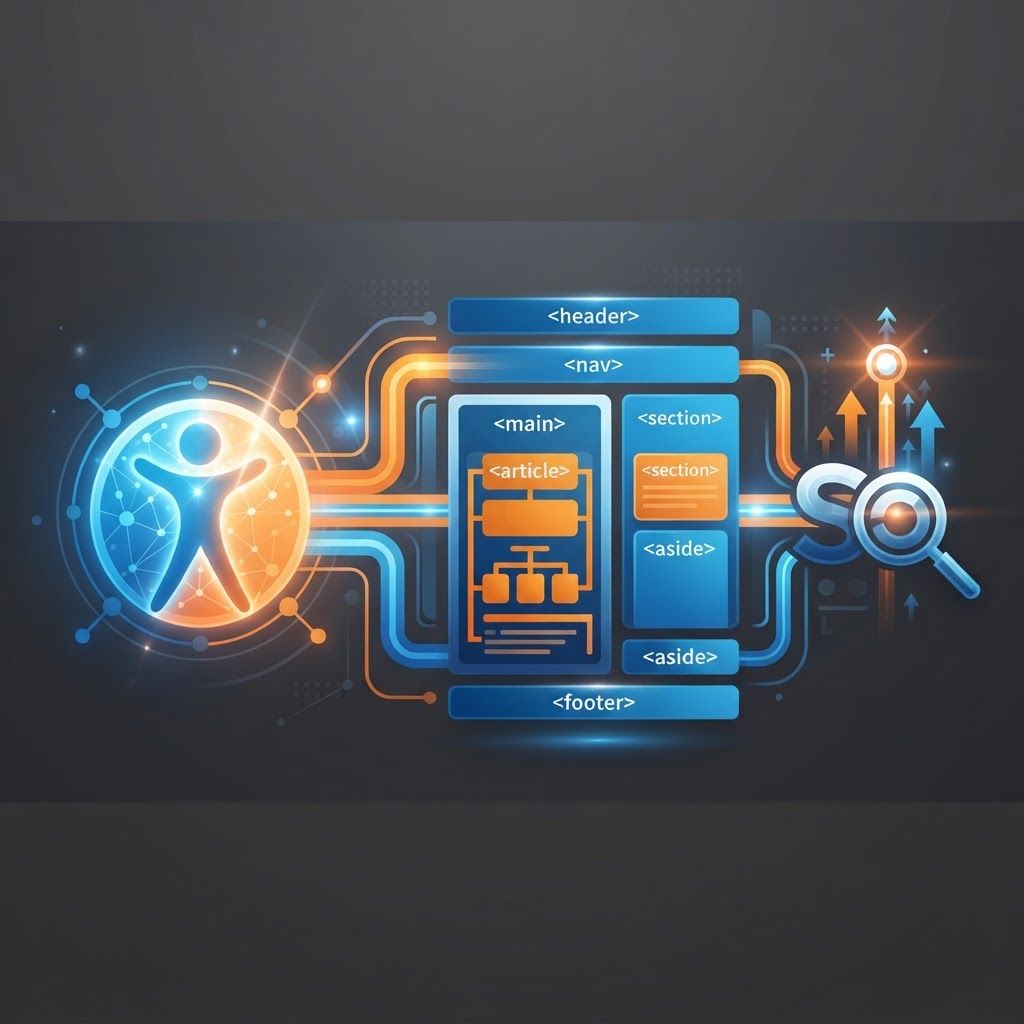
How Are SEO 508-Accessiblity and Semantic Markup Related
Accessibility and search engine optimization are often treated as separate disciplines, handled by different teams with different goals. In reality, they are deeply intertwined, and the connecting thread is semantic markup. When a website is built with clean, meaningful HTML that communicates structure and purpose, it becomes easier for assistive technologies to interpret and for search engines to understand. Section 508 accessibility standards and SEO best practices frequently point toward the same technical decisions. This article explores how these disciplines reinforce one another.
How We Build Accessible, Search-Friendly Sites
At AAMAX.CO, we build websites that serve every user and every search engine, because we know accessibility and visibility go hand in hand. As a full-service digital marketing company offering web development, digital marketing, and SEO services worldwide, we combine engineering expertise with a commitment to inclusive, standards-compliant markup. When you hire us for SEO services, you get sites that are structured to rank well and welcome all visitors. We would love to help you create a web presence that is both discoverable and genuinely usable.
Understanding Section 508 and Semantic Markup
Section 508 refers to the requirement that electronic and information technology be accessible to people with disabilities. In practice, this means websites must work with screen readers, keyboard navigation, and other assistive tools. Meeting these standards depends heavily on semantic markup, which is HTML that describes the meaning and role of content rather than just its appearance.
Semantic elements such as headings, lists, navigation regions, and landmarks tell assistive technologies how a page is organized. A screen reader user relies on these signals to move through content efficiently. When markup is semantic, the page becomes navigable and understandable to people who cannot see the visual layout, which is the core purpose of accessibility.
Why Search Engines Value the Same Structure
Search engine crawlers, much like screen readers, cannot see a page the way a sighted human does. They parse the underlying HTML to understand what the content means and how it is organized. This is why the same semantic structure that helps assistive technologies also helps search engines. A properly nested heading hierarchy signals the topic and subtopics of a page to both a screen reader and a crawler.
When markup is clean and meaningful, search engines can more confidently interpret the content, identify its main themes, and match it to relevant queries. Disorganized or purely visual markup, by contrast, forces both crawlers and assistive tools to guess at meaning. In this sense, accessibility and SEO are two views of the same underlying quality: a site that communicates clearly through its structure.
Shared Best Practices in Practice
Several concrete practices serve accessibility and SEO simultaneously. Descriptive alternative text for images helps screen reader users understand visual content and gives search engines context they cannot extract from the image itself. A single, clear page title and logical heading order aid navigation for assistive tools while helping crawlers grasp the page's hierarchy.
Descriptive link text is another shared win. Links that say where they lead help screen reader users who navigate by jumping between links, and they give search engines meaningful context about the destination page. Vague phrases like a generic call to action provide little value to either audience. These overlaps show that accessible design is rarely at odds with SEO and often actively supports it.
Structured Data and Meaningful Context
Beyond basic semantics, structured data adds another layer of meaning that benefits both fields. By explicitly labeling content types such as articles, products, or events, structured data helps search engines display rich results and helps assistive technologies convey context. Well-labeled forms, clear error messages, and properly associated labels improve usability for everyone while reducing confusion for automated systems.
This convergence means that investing in a technically sound, well-labeled site produces compounding returns. The effort spent making a site accessible tends to strengthen its search performance, and the effort spent optimizing for search often improves accessibility as a natural byproduct.
Building With Both Goals in Mind
The most efficient approach is to treat accessibility and SEO as complementary from the start rather than retrofitting one after the other. When developers write semantic HTML by default, provide meaningful alternatives for non-text content, and structure pages logically, they satisfy accessibility standards and search engine expectations at once.
This unified approach also future-proofs a site. As search engines grow more sophisticated at understanding meaning and as accessibility expectations rise, sites built on clean semantics adapt gracefully. Rather than chasing two separate checklists, teams can pursue a single standard of quality that serves people and machines alike. When you are ready to build a website that honors both accessibility and search visibility, our team is here to help you do it right.
Want to publish a guest post on aamax.co?
Place an order for a guest post or link insertion today.
Place an Order