

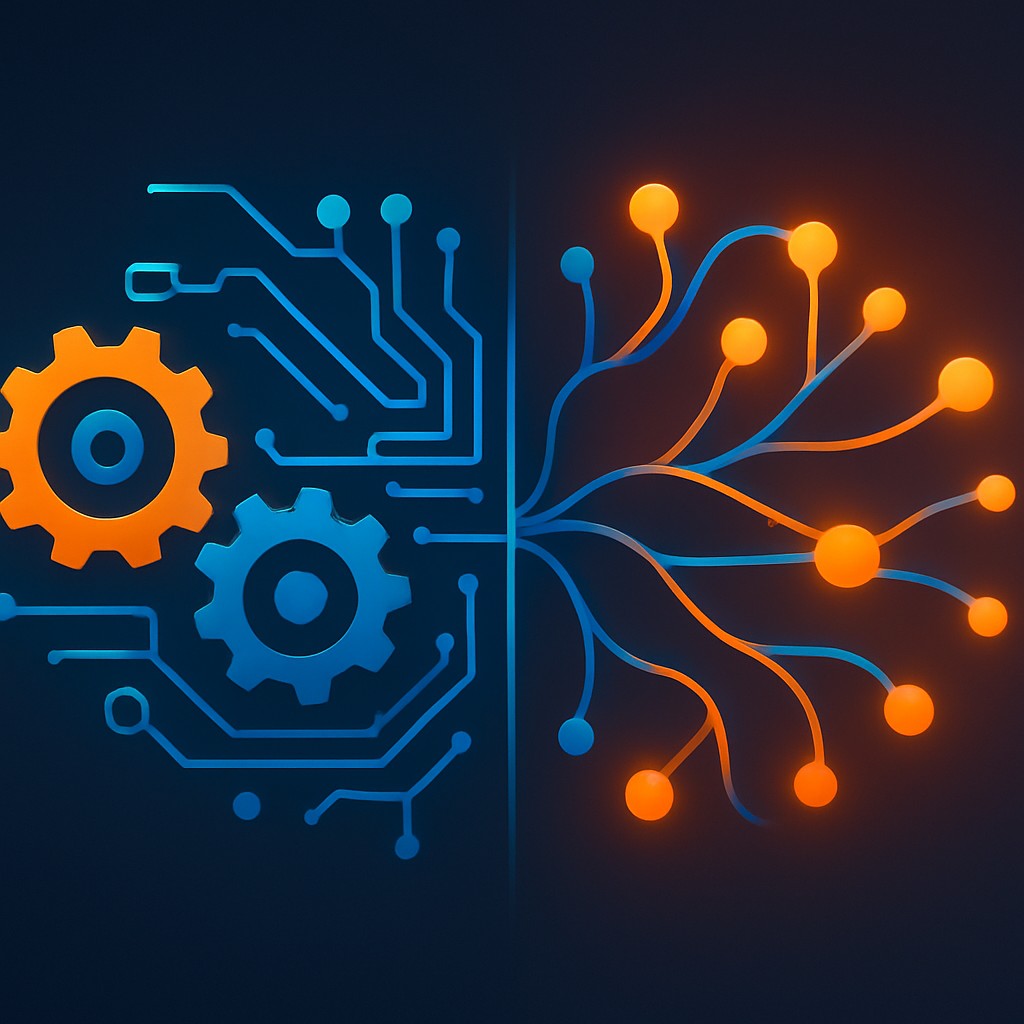
How Are AI and Marketing Automation Different
The terms artificial intelligence and marketing automation are often used interchangeably, but they describe fundamentally different technologies. Confusing the two can lead to misguided investments and unrealistic expectations. Understanding how they differ, and how they work together, is essential for any team looking to modernize its marketing operations effectively.
In short, marketing automation executes predefined tasks based on rules, while AI learns, adapts, and makes decisions. Both are valuable, but they solve different problems. The most powerful marketing systems combine the two, using automation to handle execution and AI to add intelligence and adaptability.
Let AAMAX.CO Build Your Intelligent Marketing Stack
At AAMAX.CO, we help businesses understand and implement the right blend of AI and automation for their needs. As a full-service digital marketing company serving clients worldwide, we design marketing systems that pair reliable automation with adaptive AI, so you get both efficiency and intelligence. Our team guides you in choosing, integrating, and optimizing the tools that fit your goals and budget.
What Marketing Automation Actually Does
Marketing automation refers to software that performs repetitive marketing tasks automatically based on predefined rules and triggers. Common examples include sending a welcome email when someone subscribes, moving a lead through a nurture sequence, or posting scheduled social content. The logic is deterministic: if a condition is met, a specific action follows.
This rule-based approach is excellent for consistency and efficiency. It ensures tasks happen reliably without manual effort, but it does not learn or improve on its own. The system does exactly what it is told, no more and no less.
What Artificial Intelligence Brings
AI, by contrast, is designed to learn from data and make decisions that are not explicitly programmed. Instead of following fixed rules, AI models recognize patterns, adapt to new information, and generate outputs based on probability and learning. This allows AI to handle ambiguity and complexity that rule-based systems cannot.
For example, AI can predict which leads are most likely to convert, generate personalized content for each user, or determine the optimal send time for each individual. These are decisions that require analysis and adaptation rather than simple if-then logic.
The Key Differences in Practice
The core distinction is adaptability. Marketing automation follows static rules that a human must define and update. AI continuously refines its behavior based on outcomes, improving over time without manual reprogramming. Automation is about doing tasks faster, while AI is about doing tasks smarter.
Another difference is the type of problem each solves. Automation handles structured, predictable workflows. AI tackles unstructured challenges like understanding language, predicting behavior, and personalizing at scale. Recognizing which type of problem you face helps determine which technology to apply.
How They Work Together
The real power emerges when AI and automation combine. AI provides the intelligence to decide what should happen, and automation provides the mechanism to execute it reliably. For instance, AI might identify the best-performing message for a segment, and automation delivers that message at scale through an email or ad workflow.
This partnership lets teams move beyond simple, rules-based campaigns to intelligent, self-optimizing systems. The automation handles the heavy lifting while AI ensures every action is as relevant and effective as possible.
Choosing the Right Approach for Your Goals
Not every business needs the most advanced AI immediately. Many gain significant value from automation alone, then layer in AI as their needs grow. The right approach depends on your objectives, data maturity, and resources. A thoughtful strategy ensures you invest in the capabilities that deliver real return rather than chasing buzzwords.
These technologies also support your broader efforts. Intelligent systems power campaigns delivered through digital marketing, and they help structure content for discoverability through search engine optimization. As AI-driven search grows, aligning with GEO services keeps your brand visible in new discovery channels.
Conclusion
AI and marketing automation are distinct but complementary. Automation executes predefined tasks efficiently, while AI adds learning, prediction, and adaptability. Used together, they create marketing systems that are both reliable and intelligent. Understanding the difference helps you invest wisely and build a stack that grows with your ambitions. We at AAMAX.CO are ready to help you combine these technologies into a marketing engine that delivers lasting results.
Want to publish a guest post on aamax.co?
Place an order for a guest post or link insertion today.
Place an Order