

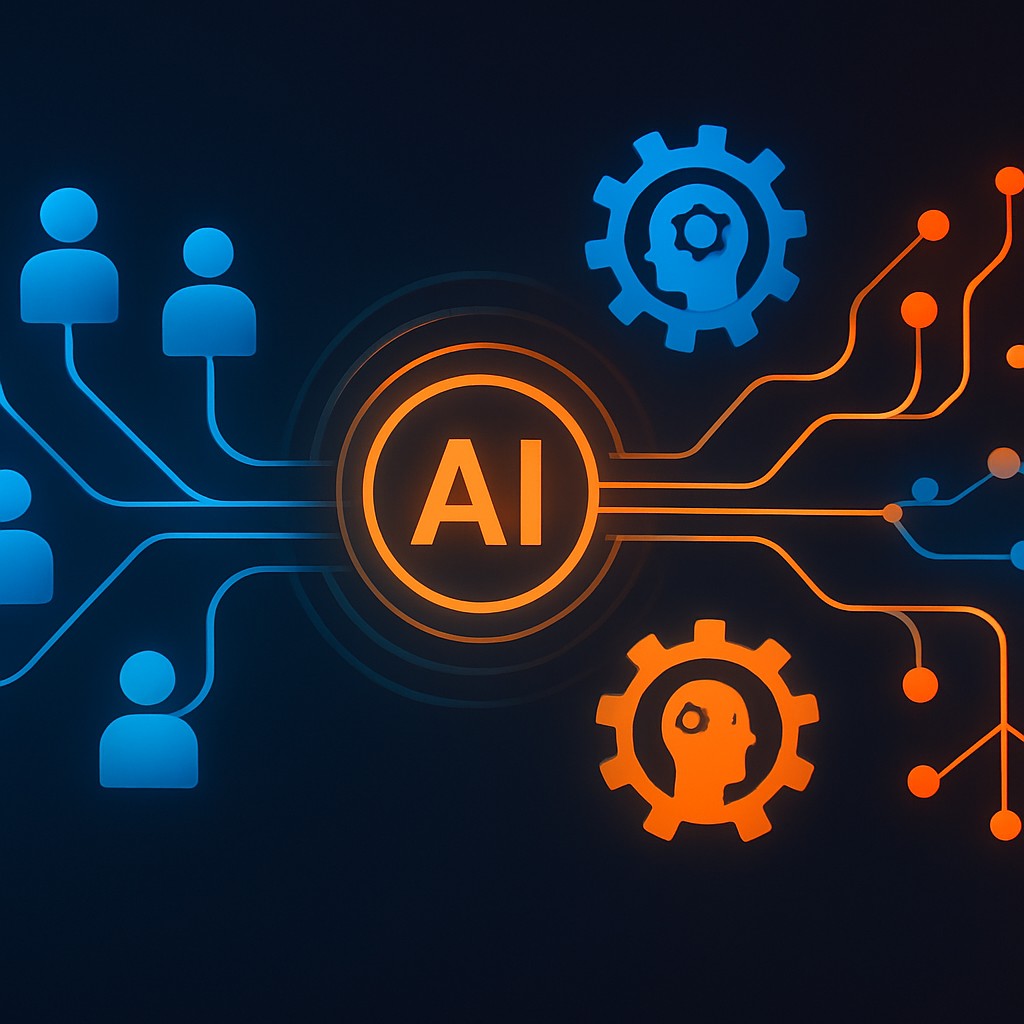
How AI Will Change the Job Market
The job market is entering a period of rapid transformation as artificial intelligence reshapes how work gets done. Unlike previous waves of automation that primarily affected manual labor, AI touches knowledge work, creative fields, and professional services alike. This broad reach means nearly every career will be influenced in some way. Rather than fearing this change, workers and organizations can prepare for it strategically. This article examines how AI will change the job market and what it takes to stay ahead.
Future-Proof Your Business With AAMAX.CO
At AAMAX.CO, we help organizations embrace AI in ways that strengthen their teams and operations. As a worldwide full service digital marketing agency, we demonstrate how AI augments human talent to drive growth rather than simply cutting costs. Our team helps you build an AI-ready organization positioned to thrive amid workforce change.
A Broader Impact Than Past Automation
Earlier automation mainly affected repetitive physical work. AI extends automation into cognitive tasks, including analysis, writing, design, and decision-making. This means professionals across industries, not just factory workers, will see their roles affected. The breadth of this impact makes preparation essential for everyone.
Tasks Change Before Jobs Disappear
AI rarely eliminates an entire job at once. Instead, it automates specific tasks within roles. A job composed of many automatable tasks may shrink or disappear, while jobs requiring judgment, creativity, and human connection evolve rather than vanish. Understanding which tasks AI can handle helps workers focus on the parts that remain uniquely human.
Emerging Professions and Opportunities
AI is creating demand for roles that did not exist a few years ago. Specialists who build, train, manage, and oversee AI systems are increasingly sought after. Fields like data science, AI ethics, machine learning engineering, and AI-assisted creative work are growing rapidly, offering new career paths for those who develop relevant skills.
The Skills That Will Matter Most
As AI handles technical execution, human-centric skills rise in value. Critical thinking, creativity, emotional intelligence, complex problem-solving, and adaptability become the most prized capabilities. Technical fluency with AI tools also matters, as workers who can effectively collaborate with AI will outperform those who cannot.
The Need for Reskilling
Workforce transformation demands large-scale reskilling. Workers must continually update their abilities, and organizations and governments must invest in training programs. Those who commit to ongoing learning will navigate transitions successfully, while those who rely on static skill sets risk obsolescence.
Human-AI Collaboration as the Norm
The future workplace will center on collaboration between humans and AI. Workers will delegate routine tasks to AI and focus on areas where humans excel. Learning to work alongside AI effectively will be a core competency across virtually every profession.
Building an Inclusive Transition
For the AI-driven economy to benefit everyone, the transition must be managed thoughtfully. Supporting displaced workers, expanding access to education, and ensuring opportunities are widely available will determine whether AI lifts the workforce or deepens divides. Responsible organizations have a role to play here.
How Workers Can Stay Competitive
Individuals can take concrete steps to thrive as AI reshapes work. Developing fluency with AI tools relevant to your field makes you more valuable, since employers increasingly seek people who can collaborate effectively with technology. Cultivating uniquely human skills like creativity, communication, and complex problem-solving builds resilience against automation. Committing to continuous learning ensures your abilities stay current as demands shift. Rather than competing against AI, the most successful workers will position themselves as people who use AI to amplify their impact, becoming more productive and indispensable in the process.
The Opportunity Within the Disruption
While the changes ahead are significant, they also bring real opportunity. AI can eliminate tedious, repetitive work, freeing people to focus on more meaningful and creative tasks. It can boost productivity, enabling higher wages and new business models. It can also lower barriers to entrepreneurship, letting individuals accomplish what once required large teams. Approaching the AI transition with optimism and preparation, rather than fear, allows workers and organizations to capture these benefits. The future of work will reward those who see AI as a tool for human potential rather than a threat to it.
Conclusion
AI will change the job market by automating tasks, creating new professions, and elevating human-centric skills, demanding adaptability from everyone. Those who embrace learning and human-AI collaboration will thrive. If you want to build an AI-ready organization that empowers its people, our team is ready to help you prepare.
Want to publish a guest post on aamax.co?
Place an order for a guest post or link insertion today.
Place an Order