

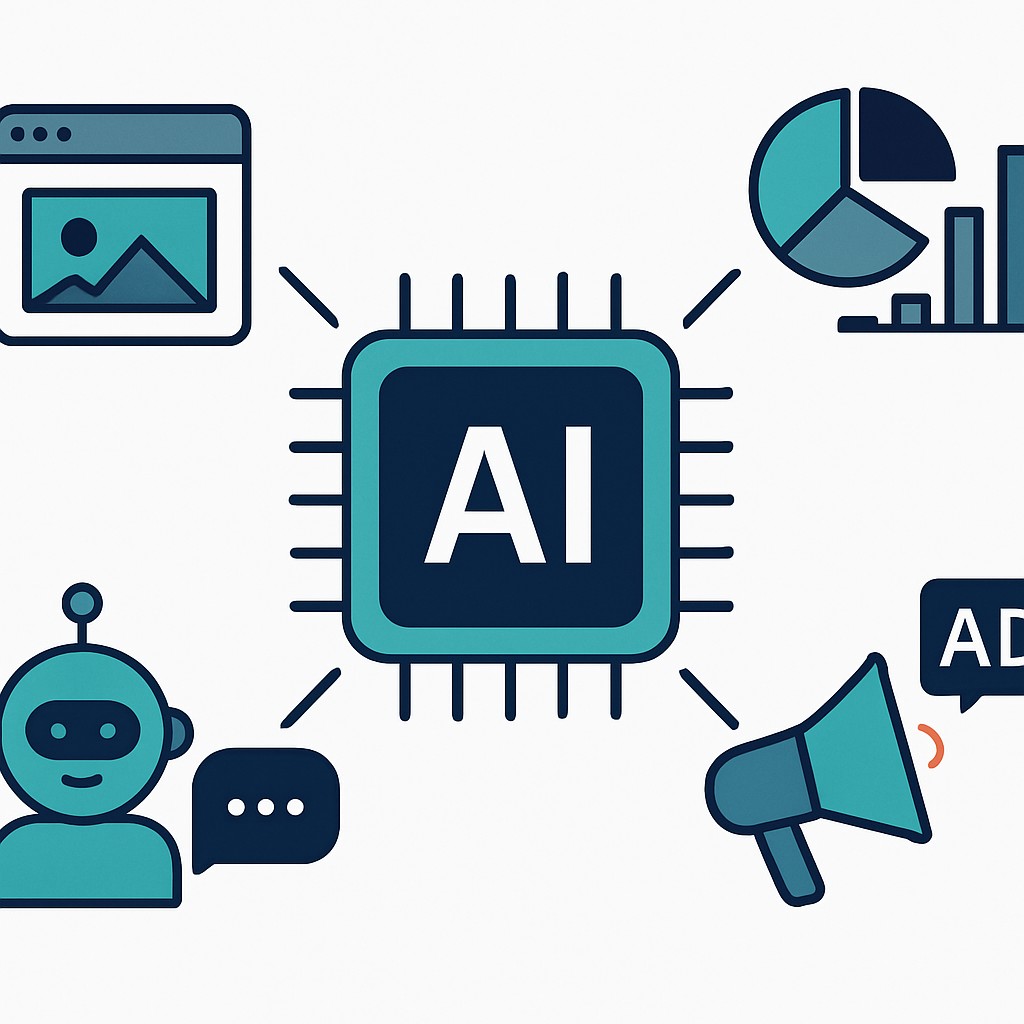
How AI Is Used in Marketing
Artificial intelligence has quietly become part of nearly every marketing function. Whether you are personalizing an email, optimizing an ad, or analyzing customer behavior, AI is likely working behind the scenes. Understanding the concrete ways AI is used in marketing helps you identify opportunities to work smarter and compete more effectively. The technology is no longer experimental; it is a practical toolkit available to businesses of every size.
How We Can Help at AAMAX.CO
At AAMAX.CO, we put AI to work across the full marketing spectrum for clients worldwide. Our digital marketing services blend intelligent automation with human strategy so you get efficiency without sacrificing quality. If you want to apply AI in ways that move the needle for your business, we can help you choose and implement the right solutions.
Content Creation and Ideation
AI assists marketers in brainstorming topics, drafting copy, and producing variations for testing. It analyzes search demand and audience interests to suggest content that resonates. Used as a collaborator, AI speeds up production while human writers ensure originality, accuracy, and brand voice. This combination allows teams to publish more consistently without compromising standards.
Customer Segmentation and Insights
AI analyzes vast amounts of customer data to identify meaningful segments and patterns that humans might miss. It reveals which audiences are most valuable, what motivates them, and how they move through the buying journey. These insights allow marketers to target precisely and craft messages that speak directly to each group's needs.
Personalization and Recommendations
Recommendation engines powered by AI suggest products, content, and offers tailored to individual users. From e-commerce product suggestions to personalized email content, this technology increases relevance and conversions. Customers receive experiences that feel curated for them, which strengthens engagement and loyalty.
Advertising Optimization
AI manages much of the complexity behind modern advertising, including audience targeting, bid management, and creative testing. It continuously learns which combinations perform best and adjusts campaigns in real time. Marketers who feed these systems clear goals and quality data achieve stronger returns with less manual effort.
Chatbots and Customer Support
AI-powered chatbots handle common inquiries, qualify leads, and guide customers around the clock. They reduce response times and capture opportunities outside business hours. When integrated with human support for complex issues, they enhance the overall customer experience while easing the load on teams.
Predictive Analytics
AI forecasts future behavior, such as which leads are likely to convert or which customers may churn. These predictions help marketers act proactively, focusing resources where they will have the greatest impact. Predictive analytics turns historical data into forward-looking strategy.
Email and Campaign Automation
AI optimizes email marketing by determining ideal send times, crafting subject lines, and personalizing content for each recipient. Automated campaigns triggered by user behavior deliver timely, relevant messages that boost engagement. This automation scales personalized communication without overwhelming your team.
Social Media and Influencer Marketing
AI has become invaluable in social media marketing. It can identify the best times to post, analyze which content resonates, and even help schedule and manage campaigns across platforms. For influencer marketing, AI tools assess audience authenticity, engagement quality, and brand fit, helping marketers choose partners who will genuinely move the needle. By turning vast amounts of social data into clear recommendations, AI helps brands stay relevant and responsive in fast-moving social channels.
Measuring ROI and Attribution
Understanding which marketing efforts drive results has always been challenging, and AI is making attribution far more accurate. By analyzing the many touchpoints a customer encounters before converting, AI reveals which channels and messages contribute most to outcomes. This insight allows marketers to allocate budget wisely and prove the value of their work. Instead of relying on last-click assumptions, businesses gain a clearer picture of the full customer journey and can optimize accordingly.
Getting Started With AI in Marketing
For businesses new to AI, the path forward is simpler than it may seem. Begin by identifying a single, well-defined challenge where AI could help, such as improving email open rates or speeding up content production. Choose a reputable tool designed for that purpose, set clear success metrics, and run a focused pilot. Learn from the results, refine your approach, and gradually expand AI into other areas. This measured strategy builds confidence and capability over time, ensuring each step delivers value. With clean data, clear goals, and human oversight, even small teams can harness AI to compete effectively against larger players.
Conclusion
AI is used throughout marketing, from content and segmentation to advertising, support, and analytics. The brands that integrate these capabilities thoughtfully gain efficiency, relevance, and competitive advantage. The most successful organizations do not treat these applications in isolation; they connect them into a unified system where insights from one area inform decisions in another, multiplying the overall impact. If you want to harness AI across your marketing efforts, our team is ready to help you implement it strategically.
Want to publish a guest post on aamax.co?
Place an order for a guest post or link insertion today.
Place an Order