

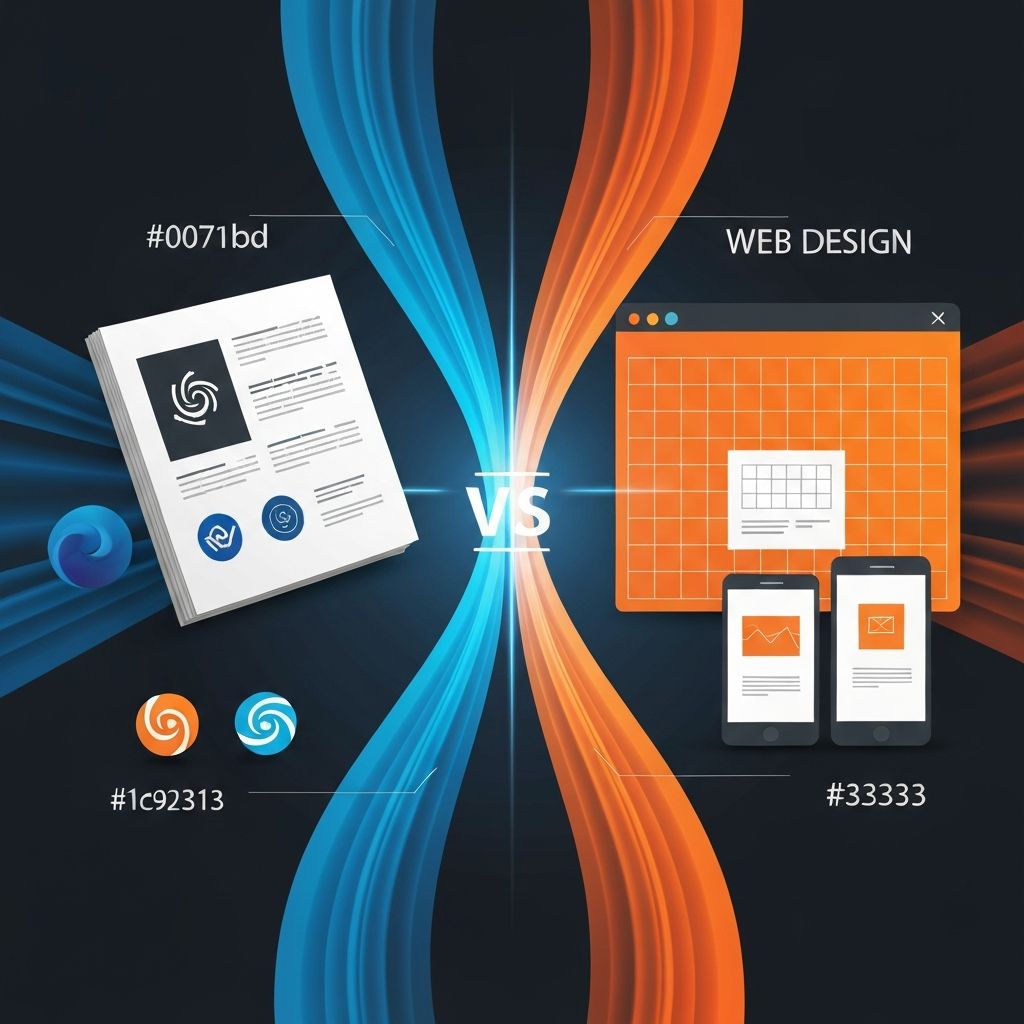
Graphic Design vs Web Design
Graphic Design vs Web Design: Why the Distinction Matters
On the surface, graphic design and web design look like siblings. Both care about typography, color, composition, and brand. Both attract creative people who love to make things look good. But the more closely we examine them, the more we find that they serve very different purposes, follow different rules, and deliver different kinds of value to a business. Understanding the distinction helps you hire the right talent, brief them well, and get results that actually move the needle.
At AAMAX.CO, we work with both disciplines every day. Our studio produces brand systems, marketing collateral, and full product websites under one roof, and we have seen first hand how the two fields complement each other when you understand where each one begins and ends.
What Graphic Design Is Really About
Graphic design is the practice of communicating ideas through static visual composition. A logo, a poster, a packaging layout, a social media graphic, and an annual report are all classic examples of graphic design. The designer controls every pixel, every millimeter, and every moment the viewer's eye travels across the canvas. The final output is usually fixed. It may be printed, exported as a PDF, or posted as an image, but once it ships, it does not change.
Because the canvas is fixed, graphic designers can use highly refined typography, carefully set kerning, custom illustrations, and precise color systems. They think in terms of hierarchy, rhythm, and narrative. Their deliverables are judged by how clearly and beautifully they communicate a single idea to a specific audience.
What Web Design Actually Solves
Web design, by contrast, is the practice of designing interactive experiences that live inside a browser. A website is never fixed. It resizes across phones, tablets, and desktops, reflows across languages, and adapts to accessibility settings. Visitors scroll, tap, hover, search, and submit forms. A web designer has to plan for all of those behaviors while still creating a cohesive visual feeling.
Web design is inseparable from user experience. The designer must think about information architecture, user flows, conversion points, form states, loading states, and empty states. A beautiful page that buries the primary call to action is a failed web design, no matter how good it looks on a portfolio shot. Our Website Design team treats every layout as a living system rather than a static artifact.
Key Differences Between Graphic Design and Web Design
The first difference is the canvas. Graphic design uses fixed dimensions, while web design uses fluid, responsive layouts. The second difference is interaction. Graphic design is a one-way communication, while web design is a two-way conversation between the user and the interface. The third difference is collaboration. Graphic designers often work closely with printers and production houses, while web designers work alongside developers, content strategists, and SEO specialists.
Tooling is also different. Graphic designers spend most of their time in vector and layout applications, while web designers live in interface design tools that support components, variables, and interactive prototypes. Finally, success metrics differ. Graphic design is judged by clarity and emotional impact, while web design is judged by usability, conversion, engagement, and performance.
Where Graphic Design and Web Design Overlap
Despite these differences, the two fields share a large creative foundation. Both require a strong sense of typography, color theory, and composition. Both rely on grids and spacing to create order. Both benefit from a clear understanding of brand strategy, because a website that contradicts the brand system is just as damaging as a billboard that ignores it.
Many modern designers move fluidly between both worlds, which is why hybrid roles are increasingly common. A graphic designer who understands web constraints produces better assets for digital channels, and a web designer with a graphic design foundation makes more intentional typographic and compositional choices.
When Your Business Needs Each Discipline
If your business needs a new identity, marketing collateral, packaging, or editorial design, you need a graphic designer. If you are launching a new product, redesigning a website, improving conversion, or building a web application, you need a web designer, ideally paired with a developer. Most growing companies need both at different stages. The brand system comes first, then the website gives that brand a digital home.
For product-focused companies, the web design investment tends to grow over time, because the site becomes the center of marketing, sales, and support. Platforms such as React give you the flexibility to scale design into rich interactive experiences. Our ReactJs Web Development team often partners with in-house graphic designers to translate their brand assets into a performant, component-based web presence.
How to Brief a Graphic Designer vs a Web Designer
A graphic design brief usually focuses on the audience, the message, the tone, and the deliverable format. A web design brief is broader. It covers the audience, the business goals, the user journeys, the content strategy, the technical stack, and the performance targets. A good web design brief reads almost like a small business plan, because the website is expected to support real outcomes such as lead generation, trial signups, or ecommerce sales.
Hire Us for Web Design and Development
If you are trying to decide whether your next project calls for graphic design, web design, or both, we can help you plan it properly. Hire AAMAX.CO for Web Design and Development services and work with a team that understands both disciplines, from logo to launch. We will help you turn your brand into a digital experience that works as hard as your best graphic designer.
Want to publish a guest post on aamax.co?
Place an order for a guest post or link insertion today.
Place an Order