

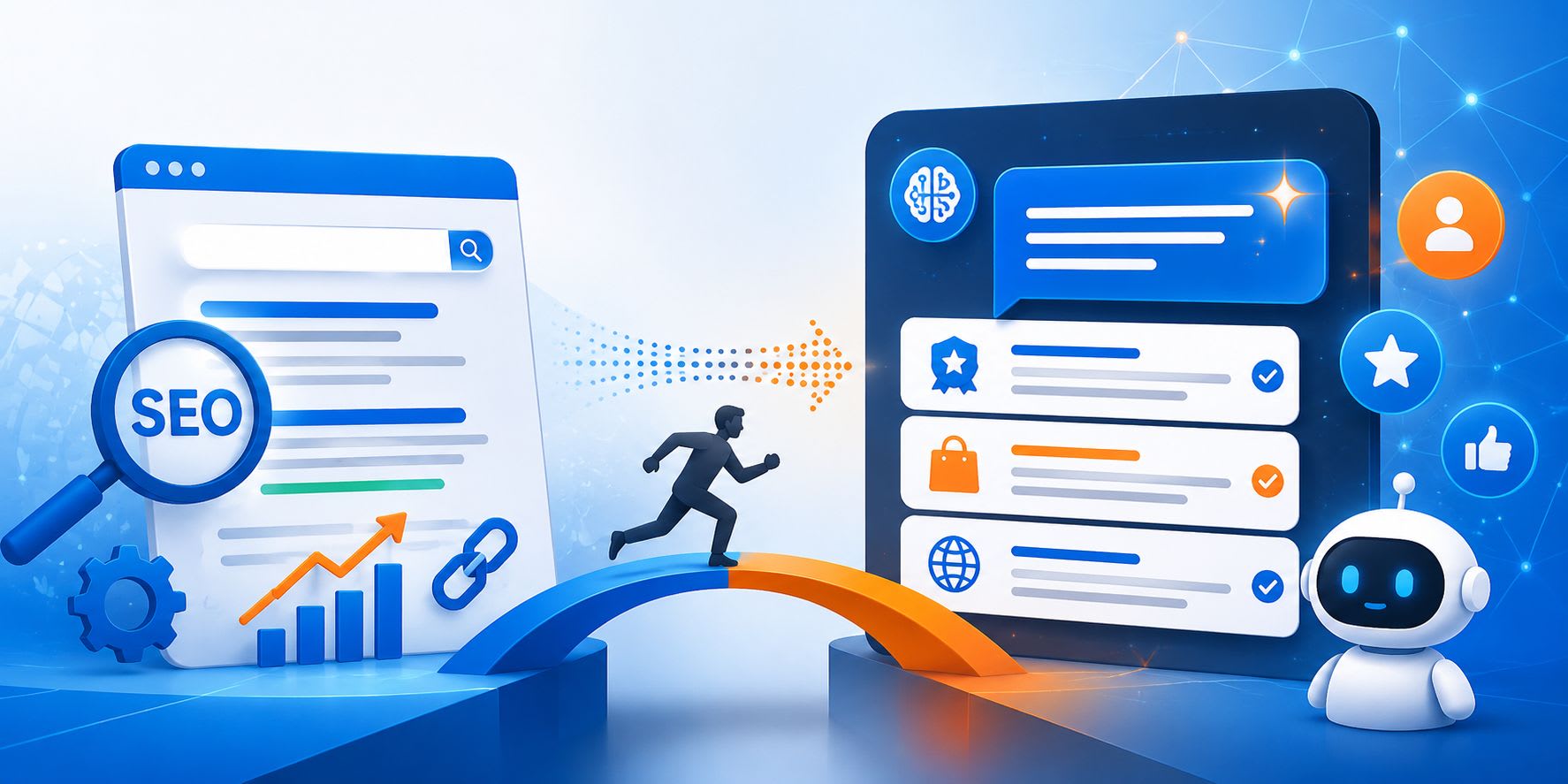
From SEO to AEO: How Brands Are Competing for Visibility Inside AI Answers
For twenty years, ranking on the first page of Google was the goal every business chased. Marketers studied keywords, built backlinks, and optimized page titles, all hoping to land that coveted top spot. That world is shifting fast. Millions of people now ask ChatGPT, Perplexity, and Google AI Overviews their questions instead of typing them into a search bar and scrolling through blue links. This change is giving rise to a new kind of optimization, one built not just for search engines, but for the AI models generating direct answers. It is called Answer Engine Optimization, or AEO, and it is quickly becoming just as important as traditional SEO.
This shift is not a small trend that will fade away. Analysts across the marketing industry keep pointing to the same pattern, more searches ending inside an AI answer rather than on a traditional results page. For business owners, that means the old playbook of chasing rankings alone is no longer enough to guarantee visibility. Understanding how AI models choose their sources has become just as important as understanding how Google ranks a webpage.
The difference between the two approaches is bigger than it might first appear. Traditional SEO focuses on ranking a webpage high enough that a person clicks on it. AEO focuses on something different, getting a brand's information cited, quoted, or trusted inside the actual answer an AI tool gives. Instead of hoping someone clicks through ten blue links, a business now wants to be the source an AI model chooses to summarize and repeat. That shift changes everything about how content gets written, structured, and promoted online.
This does not mean clicks stop mattering entirely. A well optimized AEO strategy can still drive real traffic, since many AI tools include links back to the sources they cite. The real difference is where the competition happens. Instead of competing only against other websites for a spot on page one, brands now compete against every possible source an AI model might choose to quote, which raises the bar for clarity and trustworthiness.
This new reality is forcing marketers to rethink strategies that worked for years. Content that once ranked well simply by matching a keyword often gets ignored by AI systems that are looking for clarity, fresh data, and genuine authority. AI models tend to favor content that reads naturally, answers a real question, and gets refreshed often, rather than content stuffed with repeated phrases. Businesses that fail to adapt risk becoming invisible, even if their website still technically ranks somewhere on Google.
What makes this moment especially interesting is that AEO does not replace SEO, it builds on top of it. A website still needs strong technical foundations, clean structure, and real authority to be trusted by AI systems in the first place. The businesses succeeding right now are the ones treating AEO as the next evolution of search, not a separate discipline. They are combining classic SEO fundamentals with new strategies built specifically for how AI models read, rank, and repeat information.
Building the Foundation Before Chasing AI Visibility
Before any brand can expect to show up inside an AI generated answer, it first needs a website built on a strong foundation. That means clear page structure, content that matches what people are actually searching for, and a site that search engines can crawl and understand without confusion. Skipping this step and jumping straight to advanced AI tactics rarely works, since AI models still rely heavily on the same signals that traditional search engines have used for years.
Many businesses get this order backward. They chase flashy AI visibility tactics before their website even has the basics in place, and the results usually disappoint. A site with confusing navigation, thin content, or unclear page purpose gives both search engines and AI models very little to trust, no matter how many new tactics get layered on top. Getting the foundation right first is not the exciting part of the work, but it is the part that makes everything else possible.
Jono Farrington, Founder & Owner of The Equestrian, understands the value of building a strong digital foundation around relevance, usability, and long-term authority rather than relying on short-term SEO tactics.
"I’ve always believed that strong SEO comes from creating something genuinely useful for your audience, not simply chasing rankings. At The Equestrian, the focus has been on building a clear, trustworthy online presence with quality content and a solid site structure. When you get those fundamentals right and stay consistent, search visibility tends to grow naturally over time."
Once that foundation is solid, businesses can begin thinking seriously about how their content performs specifically inside AI tools. This is where dedicated AEO strategy comes into play, since ranking well on Google no longer guarantees a brand gets mentioned when someone asks an AI model a related question. The two goals are connected, but they require slightly different thinking and execution.
Earning a Place Inside the Answer, Not Just the Search Results
Getting cited by an AI model requires more than good writing. It requires understanding exactly what questions people are asking these tools and structuring content to directly answer those questions in a way AI systems can easily extract and trust. This is a skill set that barely existed a few years ago, and it is quickly becoming one of the most valuable specialties in digital marketing.
Austin Heaton, Founder at Austin Heaton AEO Consulting, has built his entire practice around helping B2B companies earn exactly this kind of visibility inside tools like ChatGPT and Gemini.
"I have spent 12 years in SEO, and the shift to AI search has been the biggest change I have seen in my career. We helped one B2B client earn 656 AI sourced clicks and 101 conversions in just 60 days by refreshing content monthly. Getting quoted inside ChatGPT or Perplexity now matters as much as ranking on page one of Google. Brands that ignore AI answers today are choosing to stay invisible tomorrow."
While some experts focus on refining content for long-term authority, others are exploring faster paths to visibility by identifying gaps competitors have not yet filled. Both approaches matter in a search landscape that keeps changing month after month, and businesses often benefit from blending patience with speed depending on their goals and resources.
Vlad Ivanov, Founder of Search GAP Method, has built a following around helping smaller businesses and beginners find fast wins by targeting content gaps most competitors overlook entirely.
"I built SearchGAP Method because I got tired of watching beginners wait months just to see their first ranking. We rank brand new websites with zero domain authority in as little as 24 to 48 hours by targeting real content gaps. One member of our community, Toni, hit page one in 22 hours using a single multimedia article. Speed does not have to come at the cost of real results if you know exactly where to look."
The Common Thread Behind Every Winning Strategy
These three approaches, patient foundation building, structured AEO strategy, and fast gap targeting, might look different on the surface, but they share a common thread. Each one recognizes that visibility today means something bigger than a blue link on a search results page. It means being the source that both people and AI models trust enough to repeat. As search continues shifting toward AI generated answers, brands that only think about traditional rankings risk missing the bigger opportunity happening right in front of them.
The businesses that adapt fastest will not be the ones with the biggest budgets, but the ones willing to rethink how content gets built, structured, and shared. Whether that means strengthening a site's foundation, targeting the exact questions people ask AI tools, or finding untapped content gaps before anyone else does, the goal remains the same. Visibility is no longer just about being found. It is about being trusted enough to be repeated, and that lesson will only become more important as AI keeps reshaping how people search for answers. The brands that start building that trust today will be the ones AI models continue to recommend for years to come.
Want to publish a guest post on aamax.co?
Place an order for a guest post or link insertion today.
Place an Order