

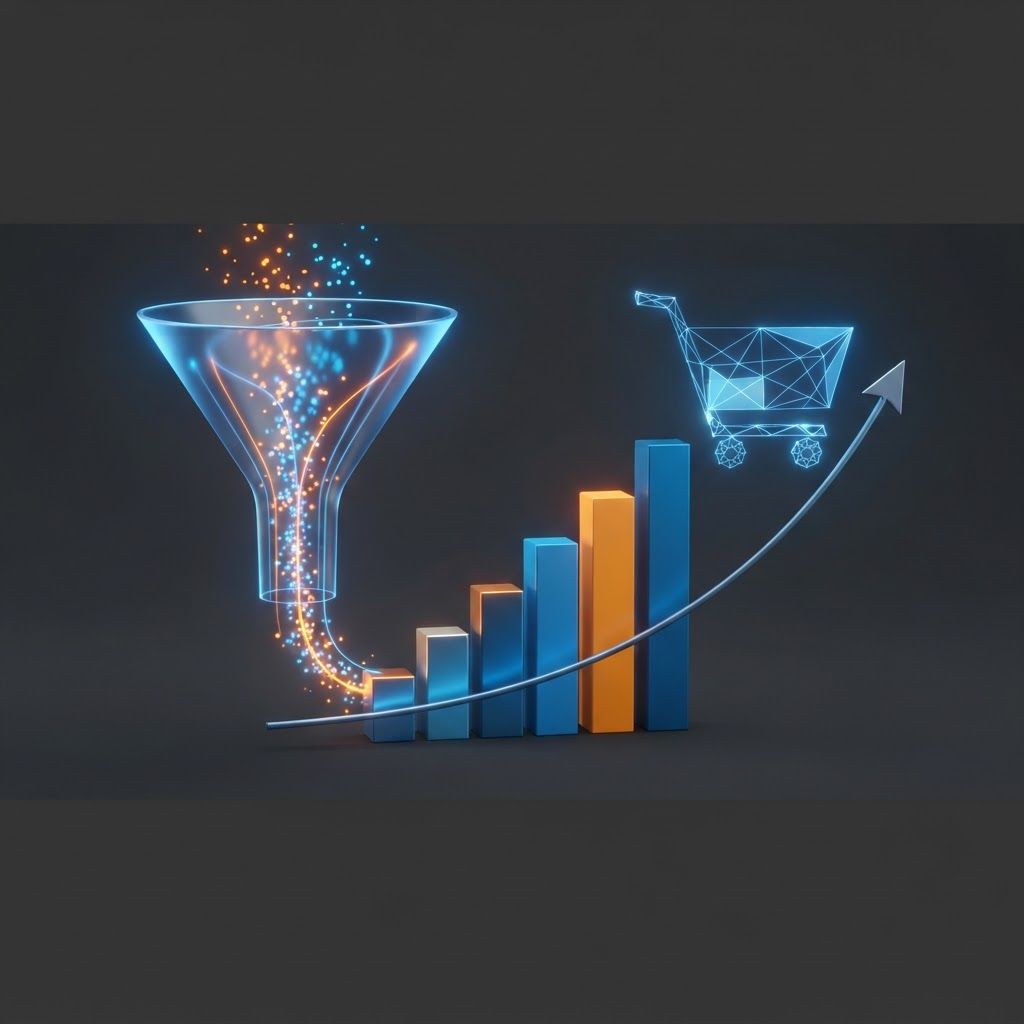
Does SEO Increase Sales
Rankings are a vanity metric until they produce revenue. Business owners rarely care about position three versus position five in the abstract; they care whether investing in organic search produces more customers, better margins and predictable growth. The honest answer is that SEO does increase sales — but only when it is aimed at commercial intent, supported by pages designed to convert, and measured against pipeline rather than pageviews. Done well, organic search becomes the highest-margin acquisition channel most businesses have, because the traffic keeps arriving after the work is done. Done poorly, it generates impressive-looking traffic reports and nothing in the bank.
How We Drive Revenue, Not Just Rankings — AAMAX.CO
At AAMAX.CO we are a full-service digital marketing company delivering Web Development, Digital Marketing and SEO Services worldwide, and we build organic programmes around commercial outcomes from day one. That means prioritising keywords by revenue potential rather than search volume, building and optimising the money pages that actually close business, fixing the technical and speed issues that quietly leak conversions, and reporting on leads, sales and return rather than abstract visibility scores. If your current organic traffic is not translating into customers, our SEO services focus on the gap between being found and being chosen.
Why Organic Search Converts So Well
Search is fundamentally different from interruption-based advertising. Nobody searches "best accounting software for small business" by accident. The query itself is a declaration of need, which is why organic search consistently produces some of the strongest conversion rates and lowest blended acquisition costs across channels. You are not persuading someone to want something; you are appearing at the exact moment they have already decided to solve a problem. Capture that moment with a relevant, credible page and a meaningful share of those visitors become customers.
Intent Is the Whole Game
The difference between SEO that sells and SEO that entertains is intent targeting. Informational queries build audience and authority. Commercial investigation queries — comparisons, alternatives, pricing, reviews, "best X for Y" — are where buyers shortlist. Transactional queries — "buy", "hire", "near me", service plus city — are where money changes hands. A programme that only publishes top-of-funnel blog content will grow traffic and disappoint the finance team. A programme that maps keywords across the funnel and deliberately builds pages for the commercial and transactional layers grows revenue.
This is why keyword prioritisation should be weighted by expected value: estimated volume multiplied by realistic click share, multiplied by conversion likelihood for that intent, multiplied by average order value. A term with 200 monthly searches and buying intent frequently outperforms one with 20,000 informational searches.
The Pages That Actually Generate Sales
In almost every business, a small number of pages carry the commercial load: core service or category pages, individual product pages, location pages for local demand, comparison and alternatives pages, and high-intent guides that end in a clear offer. These deserve the most investment — original copy, proof, specificity, internal links from supporting content, structured data, fast load times and unambiguous calls to action. Meanwhile, supporting informational content earns links, captures early-stage demand and passes internal authority to those money pages. The architecture is the strategy.
Conversion Rate Optimisation Multiplies SEO
Doubling traffic is hard. Doubling conversion rate is often easier and has an identical effect on revenue. Yet many SEO programmes stop at the click. Clear value propositions, credible social proof, transparent pricing or at least pricing guidance, frictionless forms, visible trust signals, fast mobile performance and obvious next steps routinely change conversion rates by multiples. Because digital marketing performance is the product of traffic and conversion, ignoring the second factor wastes the first.
Compounding Returns and Cost Advantage
Paid media stops the moment the budget stops. Organic rankings, supported by maintained content and a healthy site, keep producing. That creates a compounding asset: month twelve benefits from everything built in months one through eleven. Over a two- to three-year horizon the effective cost per acquisition of organic search typically falls well below paid channels, and the resulting reduction in dependency on ad platforms protects margins when auction prices rise. Organic visibility also lifts the performance of everything else — familiar brands get clicked more in paid results and social feeds too.
Local SEO and Direct Revenue
For businesses with a physical presence or a defined service area, local search is the most direct sales channel in the organic toolkit. Map pack visibility, an optimised business profile, consistent citations, genuine reviews and location-specific landing pages drive calls, direction requests and walk-ins — actions that convert at extraordinarily high rates because the searcher is ready now. Small improvements in local visibility often show up in revenue within weeks rather than months.
How Long Before Sales Increase
Expectations should be realistic and staged. Technical fixes and conversion improvements can produce measurable gains almost immediately because they help traffic you already have. Optimising existing pages that rank on page two often shows results in weeks. Building authority for competitive commercial terms typically takes several months, with meaningful compounding over six to twelve. The right early KPI is not revenue alone but leading indicators: impressions for commercial queries, average position for money pages, click-through rate improvements and conversion rate on key templates.
Measuring the Commercial Return Honestly
Set up proper conversion tracking before you start, and define what a lead and a sale are worth. Connect analytics to your CRM so you can attribute closed revenue, not just form fills. Report organic revenue, organic-assisted revenue, cost per acquisition versus other channels and lifetime value of organically acquired customers. Remember that attribution is imperfect: many buyers discover you organically and convert later through direct or branded search, so single-touch models systematically understate SEO. As AI answer engines increasingly summarise options before a click happens, being cited and recommended matters more than ever, which is why measurement frameworks now increasingly include GEO services alongside classic organic reporting.
Why Some SEO Fails to Increase Sales
The usual culprits are predictable: chasing high-volume informational keywords with no buying intent, weak or generic service pages, slow mobile experiences, no clear call to action, targeting the wrong geography, publishing volume without depth or differentiation, and treating SEO as a technical checklist disconnected from sales conversations. Almost every underperforming programme we audit has strong traffic charts and untouched money pages.
Final Thoughts
SEO increases sales when it is designed as a revenue programme rather than a visibility exercise. Target intent that indicates buying, build pages that earn trust and remove friction, fix the technical foundations that silently cost conversions, and measure against pipeline. Do that and organic search becomes a durable, compounding growth engine rather than a line item. If you want it built that way, our team delivers search engine optimization accountable to the numbers that matter to your business.
Want to publish a guest post on aamax.co?
Place an order for a guest post or link insertion today.
Place an Order