

Does One Page Navigation Effect SEO
The Core Limitation of a One Page Website
One page sites, where all content lives on a single URL and navigation scrolls to anchored sections, are popular for good reasons. They feel modern, they tell a story in a controlled sequence, and they can convert extremely well. From a search perspective, though, they carry a structural constraint that no amount of clever design can remove: one URL can carry only one title tag, one meta description, one H1, and one primary topical focus. Search engines rank pages, not sections. So a one page site is entering the competition with a single contender, while a multi-page competitor fields one specialised page for every service, location, and question their audience searches for. That is the whole issue in a sentence, and everything else follows from it.
Getting the Structure Right With AAMAX.CO
We build plenty of single page experiences at AAMAX.CO, and we also rescue businesses whose one page site stopped growing because it could not rank for anything beyond their brand name. The approach we recommend most often is a hybrid: keep the beautiful scrolling narrative as the homepage, then add properly structured supporting pages for each service, location, and content topic that people actually search for. That preserves the design intent while giving you the URL inventory organic search requires. As a full service digital marketing company delivering web development, digital marketing and SEO services worldwide, we handle the design, the build, and the keyword architecture together rather than bolting search on afterwards. If your single page site has plateaued, our search engine optimization team can plan the expansion without losing what already works.
Where One Page Sites Genuinely Work
Not every project needs dozens of pages. A single page is a sensible choice for a personal portfolio or CV, a single-product launch, an event or conference microsite, a campaign landing page fed by paid traffic, a coming-soon page, or a very small local business whose visitors mostly arrive from a map listing or word of mouth. In these situations the audience is either already aware of you or arriving from a channel other than organic search, so the URL limitation costs little. The scrolling format also suits linear storytelling, where you want to control the order in which information is revealed.
Where One Page Sites Hold You Back
The format struggles as soon as organic search becomes a meaningful acquisition channel. If you offer five distinct services, each with its own search demand and its own buyer questions, you cannot rank competitively for all five from one page, because the page cannot be deeply relevant to five different intents simultaneously. Local businesses serving multiple towns face the same problem: location pages need individual URLs to rank for individual place names. Content marketing becomes almost impossible, since a blog requires many URLs by definition. Ecommerce is out of the question. And internal linking, one of the most powerful tools for distributing authority and signalling topical structure, barely exists when there is only one page to link to.
Technical Pitfalls to Watch
One page builds also tend to accumulate technical issues. Everything loads at once, which often means enormous images, heavy animation libraries, and large JavaScript bundles all competing for the initial render, damaging Core Web Vitals. Content hidden behind tabs, accordions, or scroll-triggered animations may be crawlable but is less prominent, and content injected only after user interaction may not be indexed at all. Anchor links create URL fragments that are not separate pages, so they cannot rank independently and will not appear as distinct results. Analytics gets murkier too, since page views collapse into a single entry and you need scroll and event tracking to understand behaviour. Finally, breadcrumb and site structure signals that help search engines understand hierarchy simply are not available.
How to Maximise a One Page Site
If a single page is the right choice for now, optimise it properly. Choose one primary keyword theme and build the title, meta description, and H1 around it. Use clear H2 headings for each section so the page's subtopics are legible to crawlers and to readers scanning the anchor navigation. Ensure all content is present in the initial HTML rather than injected on interaction. Compress and lazy load images below the fold, and serve modern formats. Add structured data for your organisation, services, FAQs, and local business details. Keep the anchor navigation semantic, using real links rather than JavaScript scroll handlers alone. And make sure the page is genuinely fast on a mid-range phone, not just on your desktop.
The Hybrid Model in Practice
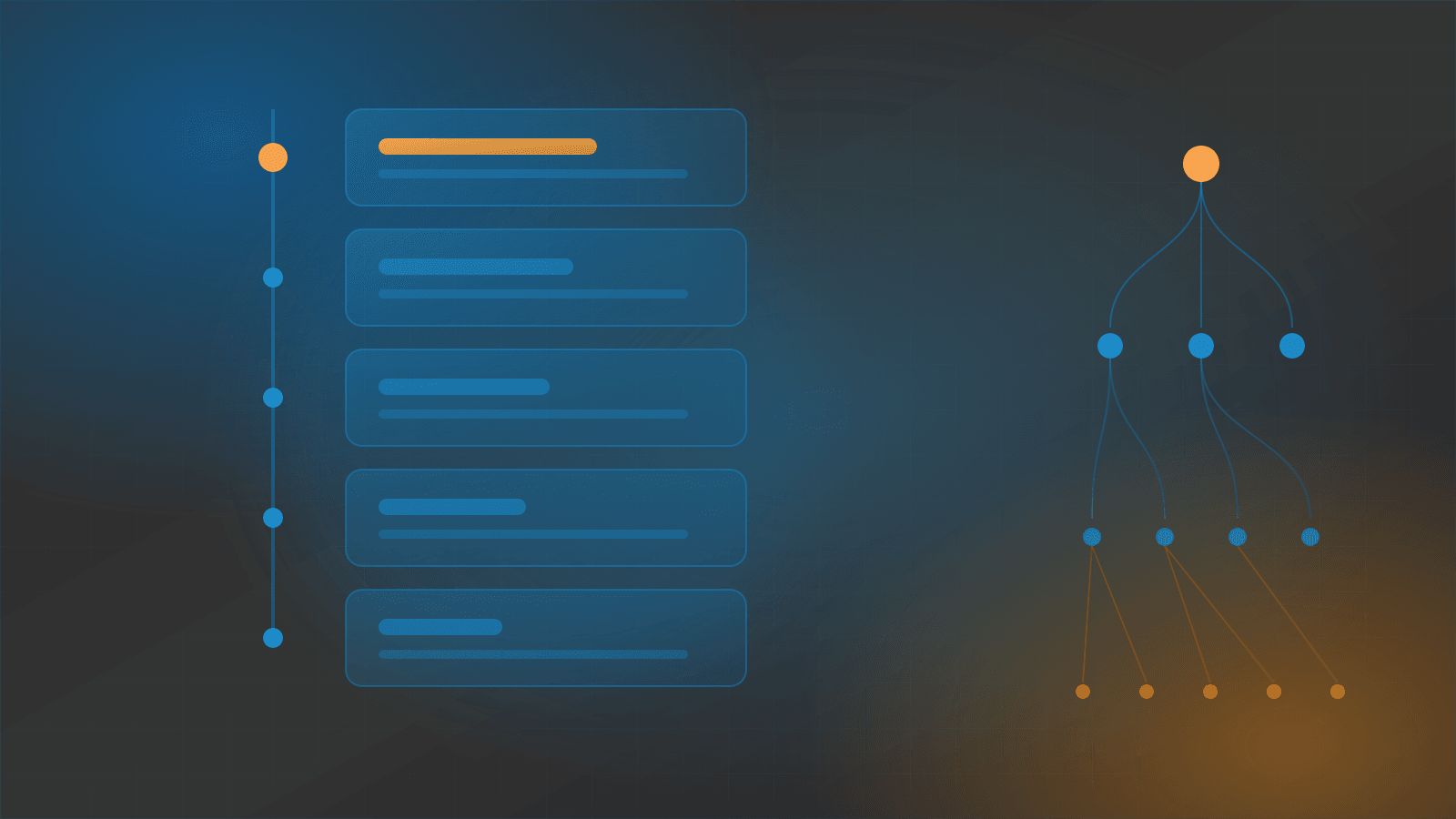
The most effective pattern we deploy keeps the single page feel on the surface while building real structure underneath. The homepage remains a scrolling narrative that introduces the brand and drives conversions. Each section that covers a searchable topic gets a paired detail page, linked with a clear read more route, that targets its own keyword cluster with its own title, H1, and depth. Locations get individual pages with genuinely local content rather than a swapped town name. A blog or resource hub handles informational demand. Internal links then connect the whole system so authority flows from your strongest pages to the ones you want to grow. You keep the design you love and gain the URL inventory search requires.
Think Beyond Rankings
One more consideration: the way people discover businesses is diversifying across search, social, maps, marketplaces, and AI answer engines. Content depth and clear structure help across all of them, because extractable, well-organised information is what gets cited and summarised. A coordinated digital marketing approach makes the case for structure even stronger, since each channel benefits from having a specific page to point at.
Verdict
One page navigation does affect SEO, and the effect is limiting rather than penalising. If organic search is not a priority, or your scope is genuinely narrow, a single page is fine. If you need to compete for multiple keywords, services, or locations, you need multiple pages. The hybrid approach lets you have both.
Want to publish a guest post on aamax.co?
Place an order for a guest post or link insertion today.
Place an Order