

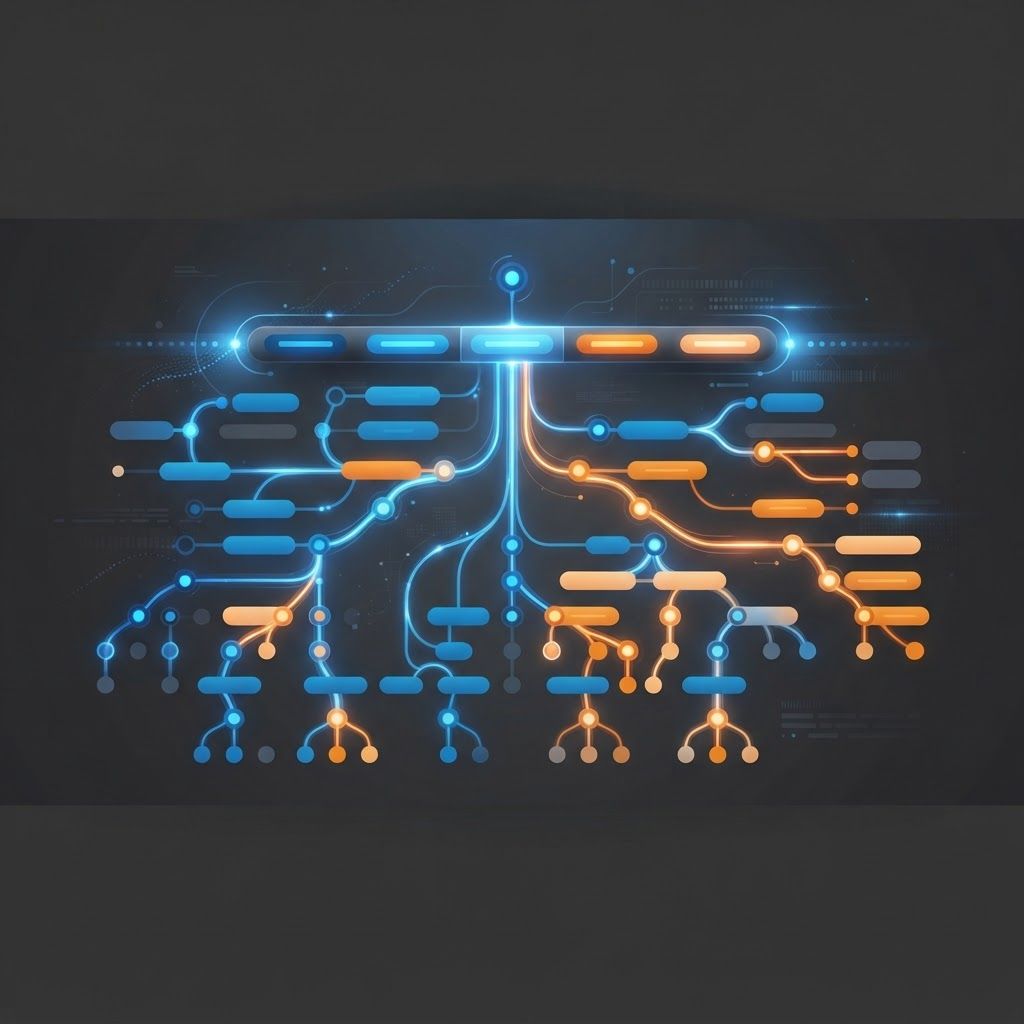
Does Including Pages in Your Navigation Menu Improve SEO
Navigation menus are often treated as a purely practical element, a way to help visitors move from one section of a website to another. In truth, your menu is one of the most influential structural signals on your entire site, and where you place pages within it can have a real effect on how search engines discover, understand, and prioritize your content. Including an important page in your main navigation is not a magic ranking trick, but it does meaningfully support that page's visibility for reasons rooted in how search engines crawl and evaluate websites.
To understand why, it helps to think about your navigation as a map that communicates hierarchy and importance. Both people and search engines use that map to decide what matters most on your site.
How AAMAX.CO Builds Navigation That Serves People and Search
At AAMAX.CO, we treat site architecture as a foundation rather than an afterthought. As a full service digital marketing company delivering web development, digital marketing, and SEO services worldwide, we design navigation structures that guide visitors intuitively while signaling importance to search engines. When you hire us for search engine optimization, we make sure your most valuable pages are positioned to be found, crawled, and ranked. If your menu feels cluttered or your key pages are buried, we can help you fix it.
How Search Engines Read Your Navigation
When a search engine crawls your website, it follows links to discover pages and to understand how they relate to one another. Your main navigation is typically present on every page, which means the links it contains are encountered constantly and treated as significant. Pages linked directly from the main menu are generally easier to discover, crawled more frequently, and understood as central to your site's purpose. Pages buried several clicks deep, by contrast, may be crawled less often and perceived as less important.
The Concept of Click Depth
One of the most useful ideas here is click depth, which refers to how many clicks it takes to reach a page from the homepage. A page linked in the main navigation usually has a shallow click depth, often just one click away. Research and long-standing practice suggest that pages closer to the homepage tend to perform better because they are easier to find and receive more internal authority. Including a page in your navigation is one of the simplest ways to reduce its click depth and improve its standing.
How Authority Flows Through Your Menu
Internal links pass authority throughout your site. Your homepage typically holds the most authority because it attracts the most external links and visits, and it distributes some of that value to the pages it links to. Since your navigation appears across the site, pages included in it receive internal links from every page, concentrating authority on them. This is a major reason why menu placement matters so much. It is one of the clearest ways to tell search engines, and visitors, which pages you consider most important.
Balancing SEO With Usability
It can be tempting to stuff your navigation with every page you want to rank, but that approach backfires. A cluttered menu overwhelms visitors and dilutes the signal of importance, because when everything is prioritized, nothing is. The most effective menus are focused, containing your genuinely most important pages and grouping related content logically. Good digital marketing always respects the visitor first, and a clean, intuitive menu keeps people engaged while still sending strong signals to search engines.
Best Practices for SEO-Friendly Navigation
To make your menu work for both people and search engines, keep a few principles in mind. Prioritize your most important pages and give them prominent, easy-to-reach positions. Use clear, descriptive labels that reflect what each page is about, since vague labels help no one. Organize related pages under logical groupings so the structure is easy to understand. Keep the overall menu focused rather than exhaustive, and use supporting internal links within your content to connect deeper pages that do not belong in the main menu. Ensure the navigation works well on mobile devices, because a menu that is hard to use on a phone frustrates a large share of your audience.
When a Page Should Not Be in the Main Menu
Not every page belongs in your primary navigation. Support pages, legal notices, and highly specific content often live better in a footer or within contextual links inside relevant articles. The goal is to reserve prime menu real estate for the pages that drive your business and that you most want to rank. Deeper pages can still be well optimized and discoverable through thoughtful internal linking, even without a spot in the top menu.
The Bigger Picture of Site Structure
Your navigation is part of a larger architecture that determines how easily search engines can crawl and understand your site. A logical hierarchy, clean internal linking, and a focused menu together create a structure that supports strong performance. When your most important pages are prominent, closely linked, and clearly labeled, you make it easy for search engines to reward them and for visitors to find them.
Conclusion
So, does including pages in your navigation menu improve SEO? Yes, in a meaningful and practical way. Placing a page in your main menu reduces its click depth, increases how often it is crawled, and channels internal authority toward it, all of which support better visibility. The key is to stay focused, prioritizing the pages that truly matter rather than overloading the menu. If you want a navigation structure engineered to serve both your visitors and your rankings, we at AAMAX.CO are here to help.
Want to publish a guest post on aamax.co?
Place an order for a guest post or link insertion today.
Place an Order