

Color Theory for Web Design
What Is Color Theory and Why It Matters Online
Color theory is the set of principles that explain how colors interact, combine, and influence perception. Rooted in centuries of study by painters, scientists, and designers, it gives modern web designers a reliable framework for building visually harmonious interfaces. At AAMAX.CO we rely on color theory to move beyond guesswork and create palettes that are both beautiful and functional.
Without color theory, palettes often feel accidental. Colors clash, accents compete with content, and brand identity becomes muddled. With color theory, designers can make confident decisions backed by visual logic, ensuring that every screen supports the user journey.
The Color Wheel as a Design Foundation
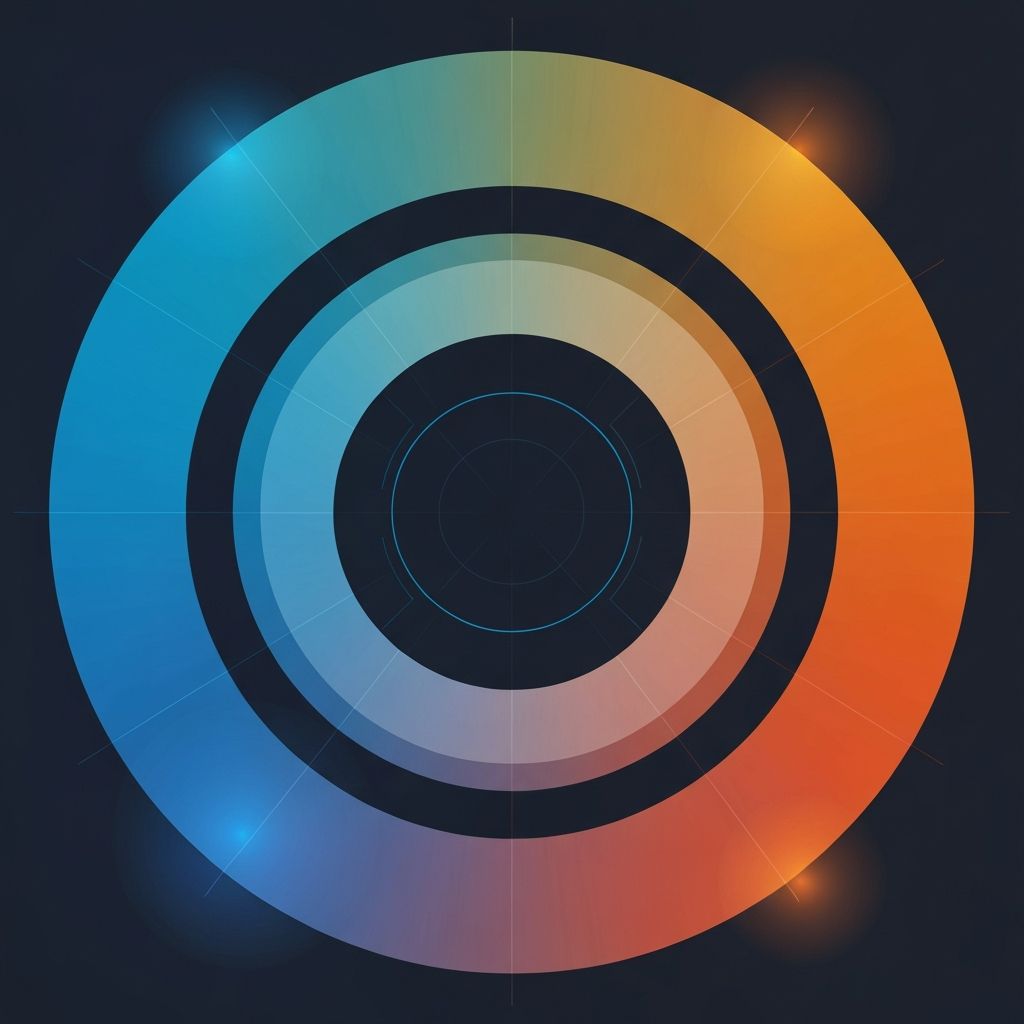
The color wheel organizes hues into a circular structure that reveals their relationships. Primary colors (red, yellow, blue) combine to form secondary colors (orange, green, purple), which in turn combine with primaries to form tertiary colors. Understanding this structure is the first step toward building harmonious palettes.
Modern web designers often use digital color models such as RGB and HSL, but the traditional color wheel still underpins the relationships they manipulate. Tools like Adobe Color, Coolors, and Figma plugins visualize these relationships, making it easier to explore palettes quickly while remaining grounded in theory.
Color Harmonies That Work Online
Several classic color harmonies translate beautifully to the web. Complementary palettes pair colors from opposite sides of the wheel, producing high contrast that grabs attention. Analogous palettes use neighboring colors to create calm, cohesive interfaces. Triadic palettes balance three evenly spaced hues, offering vibrancy without chaos. Split-complementary and tetradic palettes add nuance for more complex brands.
For most websites, analogous palettes with a complementary accent strike an excellent balance between harmony and emphasis. The analogous colors unify the interface, while the complementary accent draws attention to calls to action. Our Website Design team applies these harmonies daily to craft palettes that feel intentional.
Hue, Saturation, and Value
Color theory is not only about choosing the right hues. Saturation and value are equally important. Saturation refers to the intensity of a color, while value refers to its lightness or darkness. Changing saturation and value allows designers to build entire palettes from just a few base hues, producing tonal ranges that feel rich without becoming noisy.
In web design, saturated colors should usually be reserved for small, meaningful elements such as buttons and badges. Large areas benefit from desaturated, lower-saturation shades that remain comfortable to look at over time. This is especially critical for dashboards, reading-heavy pages, and applications that users interact with for extended periods.
Warm Versus Cool Colors
Warm colors (reds, oranges, yellows) tend to advance visually and evoke energy. Cool colors (blues, greens, purples) tend to recede and evoke calm. Skilled designers use this contrast to create depth and direct attention. A cool background with a warm call to action is a time-tested recipe for conversion because the warm element naturally pops.
Contrast and Accessibility
Contrast is the foundation of readable, accessible web design. The WCAG guidelines define minimum contrast ratios for text and interactive elements, ensuring that users with low vision or color blindness can perceive content clearly. Designers should check contrast early and often rather than treating it as a final compliance task.
Beyond compliance, strong contrast improves usability for everyone. Clear hierarchies, readable body text, and unmistakable buttons reduce cognitive load and help users complete tasks faster. Our ReactJs Web Development team integrates accessibility checks directly into component libraries so that accessible contrast becomes the default, not an afterthought.
Using Color to Create Visual Hierarchy
Color theory also informs visual hierarchy. Primary actions use the strongest, most saturated color. Secondary actions use muted or outlined variants. Informational elements use neutral tones. Destructive actions use reserved, meaningful colors such as red. This consistent hierarchy trains users to understand the interface quickly and confidently.
Designers should also consider semantic colors, such as green for success, yellow for warning, and red for error. These conventions are widely understood and should be respected to reduce the learning curve for new users.
Color Systems and Design Tokens
Modern web design relies on color systems rather than one-off choices. A color system defines primary, secondary, neutral, semantic, and accent colors, each with multiple shades. These are stored as design tokens that developers can implement in code, ensuring consistency across pages and platforms.
A well-documented color system accelerates development, simplifies maintenance, and scales gracefully as the product grows. It also supports theming, dark mode, and white-label variants without requiring a full redesign every time a new variation is needed.
Tools and Resources for Color Theory in Practice
Figma, Adobe Color, Coolors, Khroma, and Leonardo are excellent tools for exploring and validating palettes. Browser developer tools allow real-time color testing, and accessibility plugins ensure compliance. Combining these tools with a clear understanding of color theory produces professional results faster than any single tool alone.
Common Color Theory Mistakes
Designers frequently overuse saturated colors, rely on color alone to convey meaning, or select palettes without considering dark mode. Others chase trends without evaluating how a trend fits the brand. Grounding every decision in theory and testing against real user scenarios prevents these pitfalls.
Let AAMAX.CO Apply Color Theory to Your Next Website
Color theory is most powerful when paired with strategic thinking, strong engineering, and brand expertise. AAMAX.CO combines these disciplines to deliver websites that feel cohesive and perform strongly. If you want a palette that is as functional as it is beautiful, partner with AAMAX.CO for your next web design and development project.
Our team is ready to build color systems and digital experiences that elevate your brand while driving measurable results.
Want to publish a guest post on aamax.co?
Place an order for a guest post or link insertion today.
Place an Order