

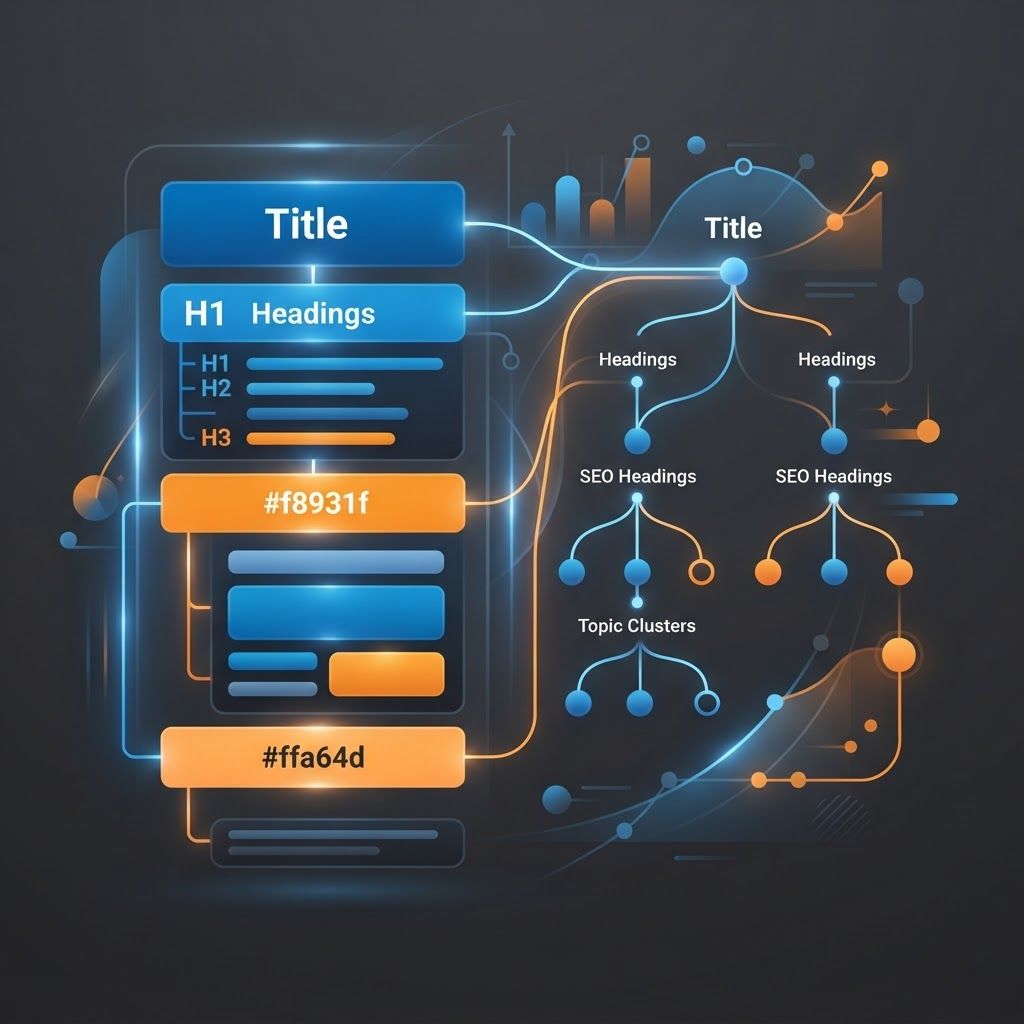
Are Section Labels More Important Than Story Titles in SEO
Every well-optimized page depends on a hierarchy of signals that tell search engines what the content is about and how it is organized. Two of the most discussed elements are story titles, often the main headline of a page, and section labels, the subheadings that break content into digestible parts. Marketers frequently ask which one matters more for SEO. The honest answer is that they serve different purposes, and the strongest pages treat them as partners rather than competitors.
In this article we unpack the distinct roles of titles and section labels, examine how search engines interpret each, and show how to structure content so both work in your favor.
How We Optimize Content Structure for You
At AAMAX we build content architecture that search engines and readers both love. As a full-service digital marketing company offering web development, digital marketing, and SEO worldwide, we know that rankings depend not only on what you say but on how clearly you organize it. Our SEO services include auditing heading structures, refining titles, and mapping subheadings to search intent so every page communicates its meaning efficiently. When your content is structured with intention, users find answers faster and search engines reward that clarity with better visibility.
Understanding the Role of the Story Title
The story title is usually the first and most prominent piece of text a reader sees, and it is closely tied to the page title that appears in search results. It sets expectations, communicates the core topic, and heavily influences whether someone clicks. From an SEO standpoint, the title carries significant weight because it summarizes the entire page and often contains the primary keyword.
Titles also shape click-through rates, which indirectly affect performance. A compelling, accurate title that matches what a searcher wants encourages clicks and keeps bounce rates low. However, a title alone cannot explain the full depth of a long article. That is where section labels take over.
What Section Labels Actually Do
Section labels, expressed through subheadings, divide content into logical parts and describe what each part covers. Search engines use these labels to understand the structure and scope of a page, identifying subtopics and gauging how thoroughly a subject is addressed. This structural understanding helps a page qualify for a wider range of related queries and can support enhanced search features that pull specific sections into results.
For readers, section labels make content scannable. Most people do not read every word; they skim for the part that answers their question. Clear, descriptive subheadings guide them to the right place, improving engagement signals that search engines observe, such as time on page and reduced pogo-sticking back to results.
Why the Comparison Is the Wrong Question
Asking whether section labels are more important than titles assumes the two compete for the same job, but they do not. The title answers what the whole page is about, while section labels answer what each part covers. A great title with no meaningful subheadings produces a wall of text that frustrates readers and hides subtopics from search engines. Strong subheadings with a weak or misleading title fail to earn the click in the first place.
The most effective approach treats them as a single system. The title establishes the promise, and the section labels fulfill it in an organized way. When both align with genuine search intent, the page becomes easier to rank, easier to read, and more likely to satisfy the visitor.
Best Practices for Titles and Subheadings
Craft titles that are accurate, specific, and naturally include your primary keyword near the front. Avoid clickbait that overpromises, because a mismatch between the title and the content increases bounce rates and undermines trust. Keep titles concise enough to display fully in search results while still conveying value.
For section labels, use a clear hierarchy that reflects the logical flow of your content. Each subheading should describe its section in plain language, ideally addressing a question or subtopic a reader might search for. Incorporate related terms and variations naturally so the page signals topical depth without forcing keywords where they do not belong. Consistent, descriptive subheadings also improve accessibility, helping screen readers and all users navigate the page.
Structuring for Featured Results
Well-labeled sections increase your chances of appearing in enhanced search features that highlight concise answers. When a subheading poses a question and the following paragraph answers it directly, search engines can more easily extract that snippet. This makes thoughtful section labels a practical tool for capturing prominent placement, especially for informational queries where users want quick, authoritative answers.
This does not diminish the title's importance; rather, it shows how the two layers cooperate. The title earns the page its overall relevance, and the section labels unlock specific opportunities within that relevance.
Conclusion
Section labels are not more important than story titles, nor are titles more important than section labels. They are complementary layers of a single structure, one defining the whole and the other clarifying the parts. Pages that respect both consistently outperform those that neglect either. If you want expert help structuring your content so titles and subheadings work together to boost rankings and readability, our team is ready to refine every layer of your pages.
Want to publish a guest post on aamax.co?
Place an order for a guest post or link insertion today.
Place an Order