

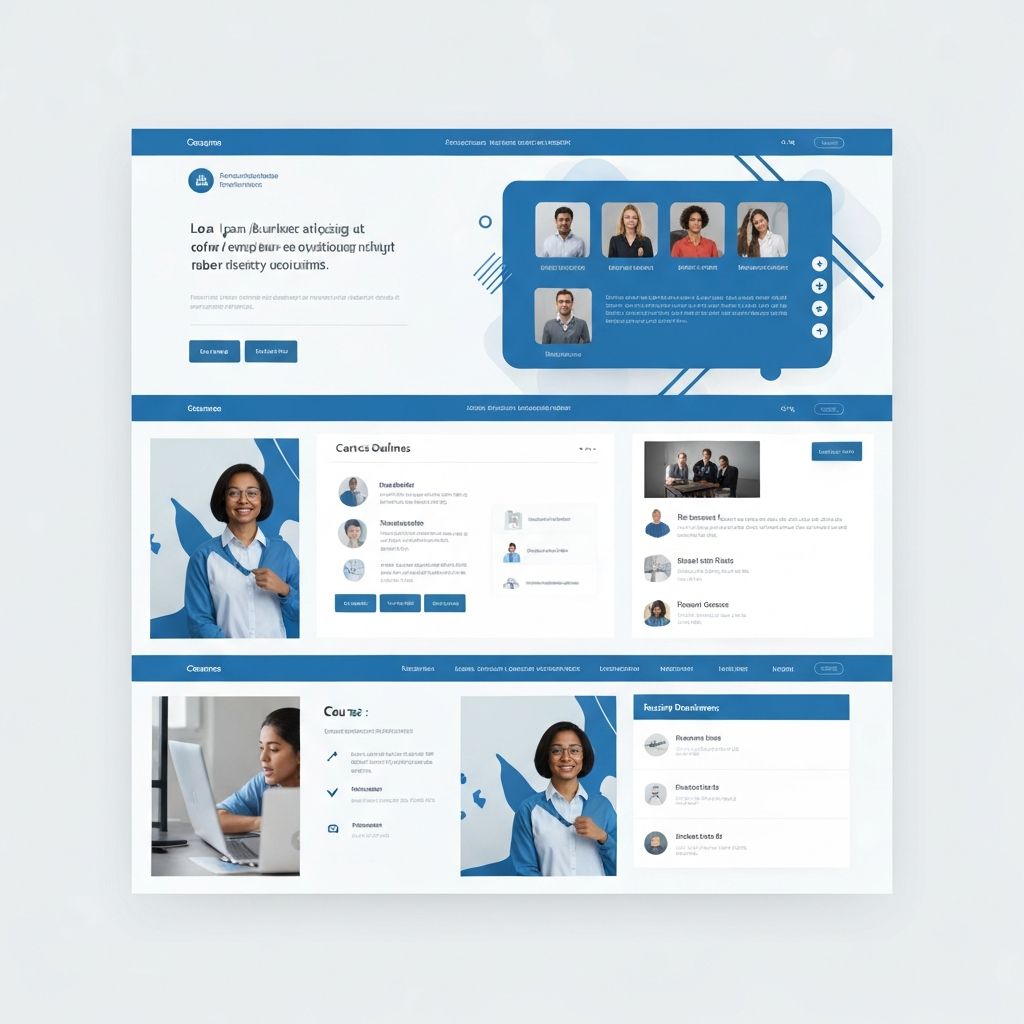
Academic Web Page Design
Designing Effective Academic Web Pages
Academic web page design focuses on creating individual pages that serve specific functions within broader institutional websites. While overall site architecture establishes structure, individual page design determines whether users successfully complete their tasks. Effective academic page design balances information density with usability, institutional requirements with user needs, and scholarly authority with accessibility. Understanding these dynamics enables website design that serves academic communities effectively.
Course and Program Pages
Course description pages represent critical touchpoints for prospective students evaluating academic options. These pages must communicate curriculum content, learning outcomes, career applications, and practical details like schedules and prerequisites. Organizing this information logically helps students make informed decisions.
Program overview pages serve similar purposes at broader scopes, presenting degree requirements, faculty expertise, research opportunities, and distinguishing characteristics. Comparison tools helping students evaluate program options can improve decision-making when multiple programs address similar interests.
Curriculum displays require careful information design. Semester-by-semester course sequences, prerequisite chains, and elective options present complex information that benefits from visual organization through timelines, flowcharts, or interactive explorers.
Faculty listings within program pages introduce students to potential mentors and instructors. Profile summaries including research interests, teaching areas, and contact information help students understand who guides their educational journey.
Faculty Profile Pages
Faculty profile pages serve multiple audiences with different information needs. Students seek teaching schedules, office hours, and research supervision availability. Peers evaluate scholarly credentials, research areas, and collaboration potential. Administrators track accomplishments for reporting and promotion decisions.
Publication listings present scholarly output in formats meeting academic conventions. Citation formats, links to full text when available, and metrics like citation counts serve researcher expectations while demonstrating institutional research strength.
Research descriptions accessible to general audiences broaden impact beyond academic specialists. Plain-language summaries of complex research help prospective students, journalists, and community members understand scholarly contributions.
Teaching information including courses taught, student testimonials, and pedagogical approaches helps students select instructors and programs. This information also supports faculty in demonstrating teaching effectiveness for career advancement.
Department and College Pages
Department homepages function as portals to program information, faculty profiles, research centers, and departmental resources. Clear navigation organizing these elements helps diverse visitors find relevant content efficiently.
News and announcement sections keep communities informed about achievements, events, deadlines, and opportunities. Content governance ensures timely updates and appropriate archiving of outdated information.
Research center pages within departments highlight collaborative initiatives, funding sources, and scholarly output. These pages serve both internal community building and external visibility for attracting collaborators and funding.
Student resource sections consolidate advising information, forms, policies, and support services. Making these resources easily discoverable reduces administrative burden while improving student success.
Library and Research Resource Pages
Library web pages face unique challenges providing access to vast digital and physical collections. Search interfaces, database guides, and research support services require intuitive design serving users with varying research experience levels.
Database access pages must balance comprehensive coverage with usability. Subject guides curating relevant databases for specific disciplines help users navigate overwhelming options. Our web application development expertise enables sophisticated search and filtering capabilities that improve research resource discovery.
Digital collection pages present archival materials, institutional repositories, and special collections. High-quality digitization, rich metadata, and flexible browsing options maximize collection utility and visibility.
Research guides created by librarians provide curated pathways through information landscapes. These guides benefit from clear organization, visual hierarchy, and regular updating as resources evolve.
Student Services Pages
Financial aid pages address high-stakes decisions requiring clear, accurate information. Application procedures, deadline calendars, scholarship opportunities, and cost calculators help students and families navigate complex financial landscapes.
Registration and records pages must communicate processes clearly while linking to appropriate systems. Step-by-step guides reduce confusion during stressful registration periods while minimizing support requests.
Career services pages connect students with employment resources, internship opportunities, and professional development programming. Job board integration, event calendars, and resume resources serve students at various career preparation stages.
Health and counseling service pages require sensitivity balancing information provision with privacy considerations. Clear descriptions of available services, appointment procedures, and crisis resources serve student wellbeing.
Admissions and Recruitment Pages
Admissions pages must persuade prospective students while providing practical application information. Balancing emotional appeal through imagery and testimonials with factual content about requirements and deadlines requires thoughtful design.
Virtual tour pages provide immersive campus experiences for prospects unable to visit in person. Video content, 360-degree photography, and interactive maps create engagement that influences enrollment decisions.
Application status portals keep applicants informed throughout review processes. Clear status indicators, deadline reminders, and next-step guidance reduce anxiety while minimizing inquiry volumes.
International student pages address unique concerns including visa requirements, English proficiency expectations, housing options, and cultural adjustment resources. These pages may require translation or multilingual support.
Event and Calendar Pages
Academic event pages promote lectures, performances, conferences, and campus activities. Registration functionality, accessibility information, and sharing options increase participation while simplifying logistics.
Calendar aggregation presents institutional activities comprehensively while enabling filtering by audience, topic, or date range. Integration with personal calendars improves event adoption and attendance.
Conference and symposium pages for academic gatherings require specialized features including paper submission systems, speaker profiles, schedule builders, and registration management. These temporary but complex sites demand careful planning.
Design Principles for Academic Pages
Scannability improves task completion when users seek specific information within content-rich pages. Clear headings, bulleted lists, highlighted keywords, and strategic use of white space help users locate relevant content quickly.
Consistency across institutional pages builds familiarity that improves usability. Template-based approaches ensure navigation, branding, and common elements remain consistent while allowing appropriate content variation.
Mobile responsiveness serves students accessing information between classes, at campus events, or from home. Essential content must remain accessible and usable regardless of device or screen size.
Accessibility compliance ensures all users can access institutional resources. Proper heading structures, image alternatives, link text, and color contrast benefit users with disabilities while improving overall usability.
Content Strategy for Academic Pages
User-centered content prioritizes audience needs over institutional convenience. Writing from user perspectives, answering real questions, and organizing around tasks rather than departments improves content effectiveness.
Plain language makes academic content accessible to diverse audiences including first-generation students, international visitors, and community members. Avoiding jargon and explaining necessary technical terms improves comprehension.
Regular content auditing identifies outdated information, broken links, and improvement opportunities. Establishing review schedules and ownership ensures ongoing content quality.
Technical Implementation
Content management systems enable distributed content ownership while maintaining institutional standards. WordPress development with appropriate plugins supports academic content needs from simple pages to complex applications.
Template systems ensure consistency while providing flexibility for different page types. Well-designed templates guide content creators toward effective patterns while preventing brand violations.
Integration capabilities connect web pages with institutional systems including student information systems, learning management systems, and authentication services.
Working with Academic Institutions
At AAMAX.CO, we specialize in creating academic web pages that serve institutional missions effectively. Our website development expertise addresses the unique requirements of educational contexts while applying modern design principles.
From individual page redesigns to comprehensive site overhauls, we bring experience and understanding that helps academic institutions create digital experiences serving their communities effectively.
Conclusion
Academic web page design requires understanding diverse user needs, institutional contexts, and scholarly conventions while applying universal usability principles. Effective pages balance information density with accessibility, authority with approachability, and consistency with appropriate variation. When designed thoughtfully, academic web pages become valuable tools supporting teaching, research, and service missions while building institutional reputation and community engagement.
Want to publish a guest post on aamax.co?
Place an order for a guest post or link insertion today.
Place an Order