

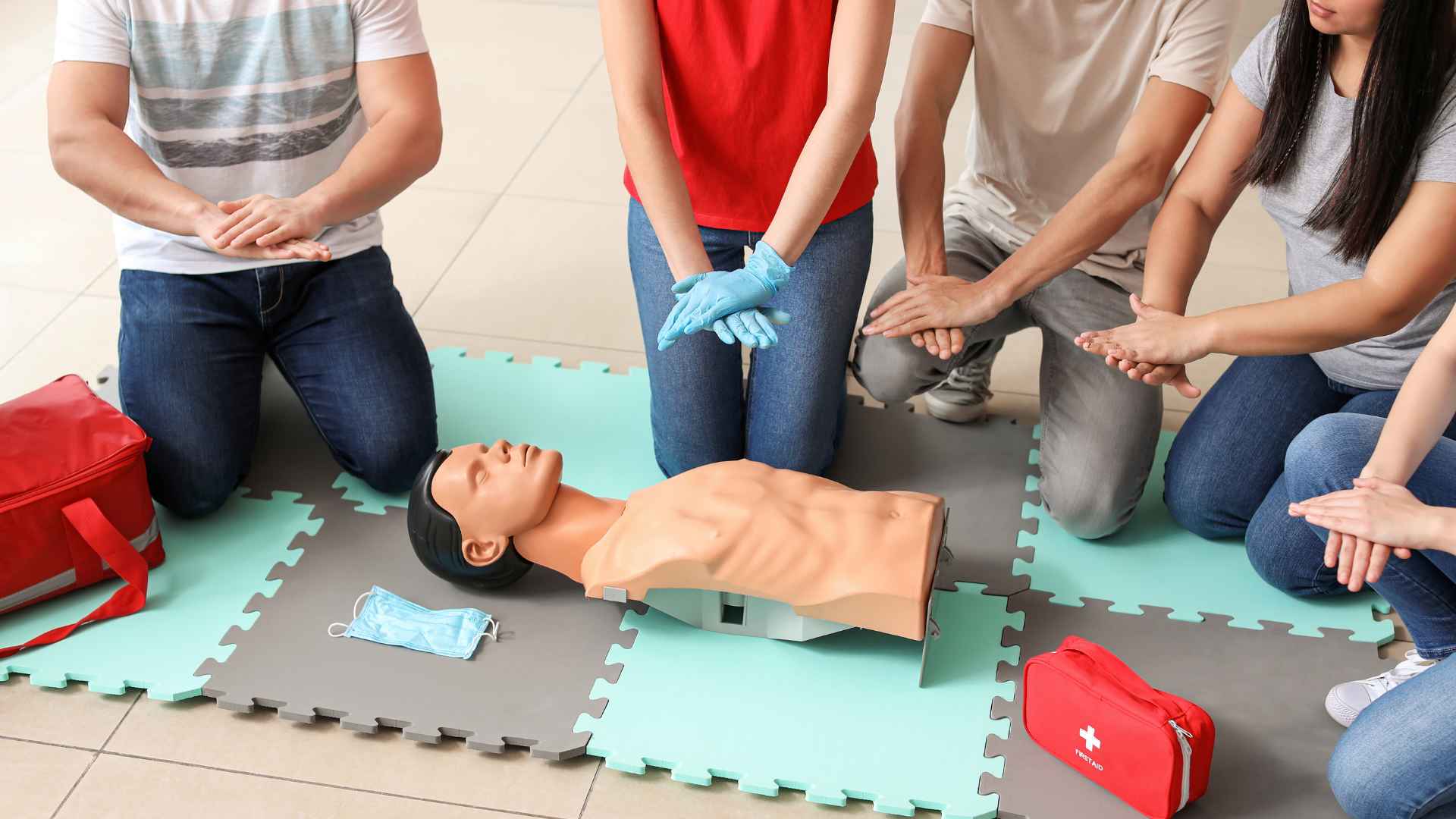
Why Prepared Employers Train With a Top 3 Canadian Red Cross Training Partner
A responsible small business does not wait for an emergency to discover who on the team can actually help. That readiness is a decision you make in advance, and it shows up in how confidently your staff respond when something goes wrong. Employers around Peterborough understand this, whether they run a shop off George Street downtown, operate a plant in the Ashburnham industrial area, or manage a lab near Trent University. Coast2Coast First Aid works with teams like these across Ontario. That’s the reasoning behind enroll in a Coast2Coast first responder course in Peterborough: local employers want people who can lead a scene, not just hold a card. Preparedness is a management responsibility, and it starts long before the ambulance arrives.
Key Takeaways
- Workplace readiness is an operational decision, not a compliance afterthought, and it is measured by how staff perform under pressure.
- Basic first aid teaches the essentials, while a first responder course builds the depth and composure needed to lead an emergency scene.
- A simple emergency readiness checklist helps any team audit gaps before an incident forces the question.
- Coast2Coast First Aid runs 100+ courses per week across 30+ locations in Canada and the US, so scheduling around a work calendar is realistic.
- Certificates expire, and a lapsed certification means starting the full course again, so tracking renewal dates is part of good planning.
What Does Workplace Readiness Actually Mean for a Small Team?
Workplace readiness means your team can recognize an emergency, act without hesitation, and keep acting until professional help takes over. It is not a binder on a shelf or a poster in the break room. For a small business, it comes down to whether the people on shift know what to do when a coworker collapses or a customer starts choking. That capability is built through training and practice, not intention.
The stakes rise as the environment gets more complex. A quiet office carries different risks than a warehouse with forklifts or a facility handling machinery. Ontario employers are expected to align first aid provisions with the nature of the workplace, which is why matching the course to the risk matters. Readiness is specific, and generic assumptions leave dangerous gaps.
Small teams also face a coverage problem. If only one person is trained and that person is on vacation, your readiness drops to zero on that day. Cross-training several staff members protects against the ordinary reality of sick days, turnover, and shift changes. Redundancy is not overkill here, it is basic planning.
How Is a First Responder Course Different From Basic First Aid?
A first responder course goes well beyond basic first aid by preparing someone to manage a scene, not just perform a single skill. Basic training such as “Basic/Emergency First Aid + CPR-C” (8h) covers essential life-saving actions and is the right starting point for many workplaces. Broader training such as “Intermediate/Standard First Aid + CPR-C” (16h) adds range and depth for higher-risk settings. Both have their place in a workplace plan.
The advanced tier changes the role a person can play. The “First Responder” program is a 4-day course, and the “Emergency Medical Responder” program is an 8-day course, and both build the assessment skills, patient handling, and decision-making that a longer emergency demands. A first responder learns to prioritize, communicate with arriving paramedics, and stay organized when a situation lasts more than a few minutes. That composure is the real product of advanced training.
For employers, the difference is leadership during a crisis. When something serious happens, someone has to take charge, direct bystanders, and keep the response coherent. Advanced training produces that person. It turns a helpful employee into a capable scene leader who steadies everyone around them.
What Should a Workplace Emergency Readiness Checklist Include?
A workplace emergency readiness checklist should confirm that people, equipment, and procedures are all in place and current. Run through the following items and treat any gap as an action item, not a footnote. This is the kind of audit that takes an afternoon and pays off in the moment that counts.
- Trained responders on every shift. Confirm at least one certified person is scheduled at all times, with a backup for absences.
- Current certifications. Verify that certifications are valid, since certificates are valid for 3 years and a lapsed certification means retaking the full course.
- Accessible, stocked first aid supplies. Check that kits match the workplace size and risk, and that nothing is expired or missing.
- A written emergency response plan. Document who does what, how to call for help, and where equipment lives, then make sure staff have read it.
- Clear communication and access routes. Confirm emergency numbers are posted and that responders can reach every area of the site quickly.
- A renewal and retraining schedule. Track expiry dates and book refreshers early so coverage never lapses between courses.
If any item on this list is uncertain, that is exactly where an incident will expose you. Fixing the gaps now is far cheaper than learning about them during a real emergency.
When Should an Employer Move Beyond the Minimum?
An employer should move beyond the minimum when the workplace risk, the response time, or the value of leadership on scene justifies it. A remote worksite where help is far away benefits enormously from a trained first responder who can manage a patient for a longer stretch. So does any environment with elevated hazards, heavy equipment, or public foot traffic. The minimum is a floor, not a target.
Growth is another trigger. As a team expands, the odds of an incident on any given day rise, and a single trained employee no longer provides reliable coverage. Investing in advanced training for a few key staff builds resilience into the organization. It also signals to employees that their safety is taken seriously, which matters for retention and culture.
There is also the simple matter of confidence. Staff who have trained thoroughly do not freeze, because they have practiced the actions until they feel automatic. That reliability is worth the additional days of training for many businesses. The question is not whether emergencies happen, but whether your people will be ready when one does.
How Coast2Coast First Aid Trains First Responders
Coast2Coast First Aid was shaped by a lesson its founder learned the hard way. Early on, the founder completed a rushed, lecture-heavy course, walked away holding a valid certificate, and then failed the hands-on evaluation that actually mattered. Attendance had been confirmed. Capability had not. The certificate proved someone had sat in a room, not that they could perform under pressure.
That gap became the foundation of a different teaching approach, one grounded in how the brain and body actually learn emergency skills. CPR and first aid performed under stress are muscle memory, not recalled facts. The brain under adrenaline does not flip through slides, it reaches for patterns it has physically rehearsed. So the training is built around repeated physical practice until the correct response becomes the default one.
This neuroscience-informed method means learners spend their time doing, not just watching. Compressions, airway management, patient assessment, and scene control are drilled until they hold up when the pressure is real. The goal is a responder whose hands know what to do before their conscious mind catches up. That is the difference between a certificate and genuine capability, and it is the standard every first responder course is designed to meet.
About Coast2Coast First Aid
Coast2Coast First Aid is a Canadian training organization founded in Toronto in 2014, offering first aid, CPR, and BLS training across more than 30 locations in Canada and the US. You can learn more about its programs and locations on the official training company website. The organization has been recognized as a Top 3 Canadian Red Cross Training Partner in 2023, 2024, and 2025, and it delivers 100+ courses per week to a wide range of workplaces and individuals.
The credential stack reflects a focus on standards that matter to employers. It is a Heart & Stroke accredited trainer, aligns its workplace offerings with WSIB (Ontario) requirements, and delivers training consistent with the CSA Z1210 first aid standard. Since 2014 it has trained more than 150,000 students, and it issues digital certificates within 48 hours of course completion, backed by a free 90-day retake policy. That combination of recognition, regulatory alignment, and practical support is why prepared employers keep coming back.
FAQs
How long does a first aid certification last?
Most workplace first aid and CPR certifications are valid for three years from the date of completion. If a certification lapses past its expiry, the full course must be retaken rather than a shorter renewal. Tracking expiry dates and booking refreshers early keeps your team continuously covered.
How quickly can staff receive proof of certification?
Turnaround varies by provider, though digital certificates can be issued within 48 hours of completing a course. That fast turnaround helps employers document compliance and onboard staff without waiting weeks for paperwork. Keeping copies of current certificates on file is a smart part of any readiness plan.
Which course is right for my workplace?
The right course depends on your workplace risk and size. Lower-risk settings often start with an 8-hour basic course, higher-risk environments benefit from a 16-hour standard course, and worksites that need scene leadership or longer patient care should consider first responder or emergency medical responder training. Matching the course to the actual hazards is the key decision.
Who is Coast2Coast First Aid?
Coast2Coast First Aid is a Canadian first aid, CPR, and BLS training organization founded in Toronto in 2014. It operates more than 30 locations across Canada and the US, runs 100+ courses per week, and has trained over 150,000 students since its founding.
This article is for general informational purposes only and does not constitute legal or medical advice. Employers should confirm current first aid requirements with WSIB and applicable Ontario Occupational Health and Safety (OHS) regulations for their specific workplace.
Want to publish a guest post on aamax.co?
Place an order for a guest post or link insertion today.
Place an Order