

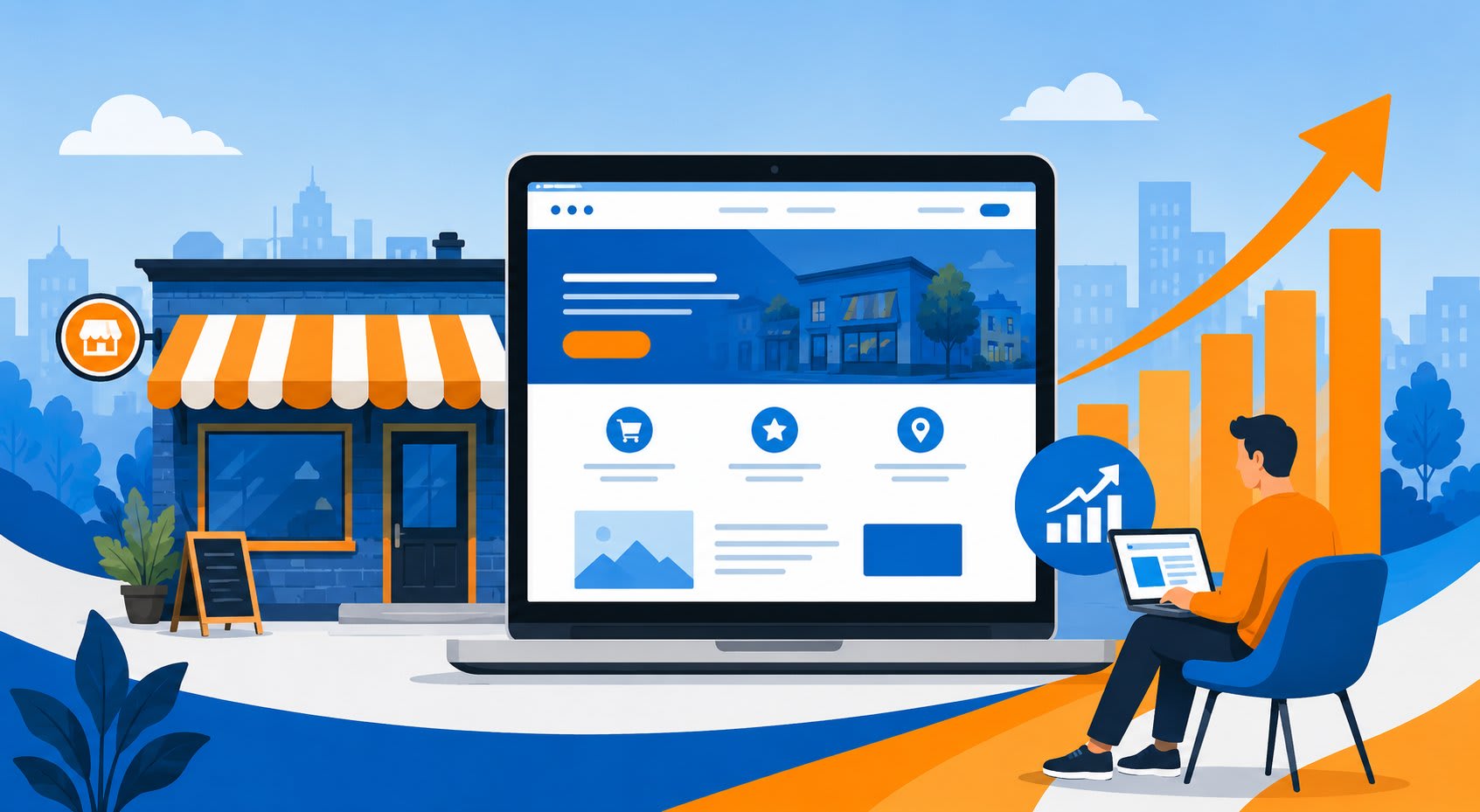
Why Local Businesses Are Investing More in Better Websites
Over the past few years, the way people choose local businesses has changed dramatically.
Where word-of-mouth and physical visibility once played the biggest role, today’s decisions usually begin online. Whether someone is searching for a service, comparing options, or checking reviews, their first interaction is often with a website—not a storefront.
This shift has made one thing clear: for local businesses, your website is now your most important first impression.
The Rise of Local Search Behaviour
Search engines have become increasingly sophisticated at delivering location-based results tailored to user intent.
When someone searches for a service, they’re not just looking for what they need—they’re looking for who nearby can provide it. This means businesses are now competing in highly specific localised search environments, where visibility depends on both relevance and user experience.
For example, a user searching for a service in their area is far more likely to engage with a business that has:
- A fast, mobile-friendly website
- Clear service descriptions
- Location-specific content
- Strong visual credibility
In this context, your website is no longer just supporting your business—it’s actively influencing whether you get chosen at all.
Why Generic Websites Fall Short
Despite this shift, many businesses still rely on outdated or template-based websites that don’t reflect modern user expectations.
While these sites may look acceptable at a glance, they often fail in areas that matter most:
- Slow loading speeds
- Poor mobile optimisation
- Confusing navigation
- Generic messaging that doesn’t speak to a local audience
The issue isn’t always obvious to the business owner—but it’s immediately noticeable to potential customers.
When users encounter friction, even in small ways, they tend to leave quickly and continue their search elsewhere.
The Shift Toward Location-Focused Design
As competition increases, businesses are starting to take a more intentional approach to how they present themselves online.
Rather than relying on broad, one-size-fits-all websites, they’re investing in location-focused strategies that align with how people actually search.
This includes:
- Creating pages tailored to specific service areas
- Using messaging that reflects local needs and expectations
- Highlighting regional credibility through testimonials or case studies
- Structuring content to match local search intent
It’s also why terms like professional web design in Liverpool are becoming more visible during the research phase—reflecting how businesses are actively looking for solutions that combine technical expertise with local understanding.
First Impressions Happen Fast
One of the most important—and often overlooked—realities of web design is how quickly users form opinions.
Visitors typically decide within seconds whether they trust a website. In that short window, they’re not reading every word—they’re scanning for signals.
They’re asking themselves:
- Is this business credible?
- Does this feel relevant to me?
- Can I trust what I’m seeing?
If the answer to any of these questions is unclear, the likelihood of them leaving increases significantly.
What High-Performing Local Websites Do Differently
Websites that consistently generate leads don’t rely on guesswork. They’re built with a clear understanding of user behaviour and designed to remove friction at every stage.
Some of the key characteristics they share include:
1. Clear, Immediate Messaging
Visitors should understand what the business offers within seconds of landing on the page.
2. Intuitive Navigation
Users shouldn’t have to think about where to click next.
3. Strong Calls-to-Action
The next step should always be obvious, whether it’s booking, calling, or enquiring.
4. Mobile-First Design
Most local searches happen on mobile devices, making responsiveness essential.
5. Trust Signals
Reviews, testimonials, certifications, and case studies help reduce hesitation.
When these elements come together, the result is a website that not only attracts visitors but converts them.
The Compounding Impact of Better Design
One of the reasons web design is so important is that its benefits build on each other.
For example:
- Faster load times improve user experience
- Better user experience increases engagement
- Higher engagement improves search rankings
- Improved rankings bring in more traffic
- Better structure converts that traffic into enquiries
Each improvement strengthens the next, creating a compounding effect that drives long-term growth.
The Role of Branding in Local Trust
Beyond structure and usability, branding plays a critical role in how users perceive a local business online.
A strong brand presence helps communicate:
- Professionalism
- Reliability
- Experience
- Authority within a local area
Even subtle elements like colour consistency, typography, tone of voice, and imagery can influence whether a visitor feels confident enough to take the next step.
In many cases, users won’t consciously analyse these details—but they will feel the difference between a cohesive brand and a disjointed one.
Why Ongoing Website Improvement Matters
Another common mistake businesses make is treating their website as a finished project.
In reality, websites should evolve continuously.
User expectations change. Search algorithms update. Competitors improve. Technology advances.
Regular improvements might include:
- Updating service pages for clarity
- Improving page speed
- Refining calls-to-action
- Adding new trust signals
- Expanding local content coverage
Businesses that treat their website as an ongoing asset—not a one-time task—tend to outperform those that don’t.
The Cost of Standing Still
While improving a website requires investment, failing to improve it often costs more in the long run.
An underperforming website can lead to:
- Lost enquiries and sales
- Lower visibility in search results
- Reduced trust from potential customers
- Higher marketing costs to compensate for poor conversion rates
In contrast, a well-optimised website continues to generate value over time, making it one of the most cost-effective business assets available.
Rethinking What “Good” Looks Like
A common misconception is that a “good” website is one that looks modern or visually impressive.
In reality, effectiveness matters far more than appearance.
A high-performing website is one that:
- Helps users find what they need quickly
- Makes the next step clear and easy
- Builds trust without overwhelming the visitor
- Works seamlessly across all devices
When these conditions are met, results tend to follow naturally.
Conclusion
Local competition is no longer limited to physical presence—it begins online, often before a customer ever makes contact.
Businesses that recognise this shift and invest in how they present themselves digitally are putting themselves in a clear position of advantage.
Because in today’s environment, it’s not just about being visible—it’s about being chosen.
Want to publish a guest post on aamax.co?
Place an order for a guest post or link insertion today.
Place an Order