

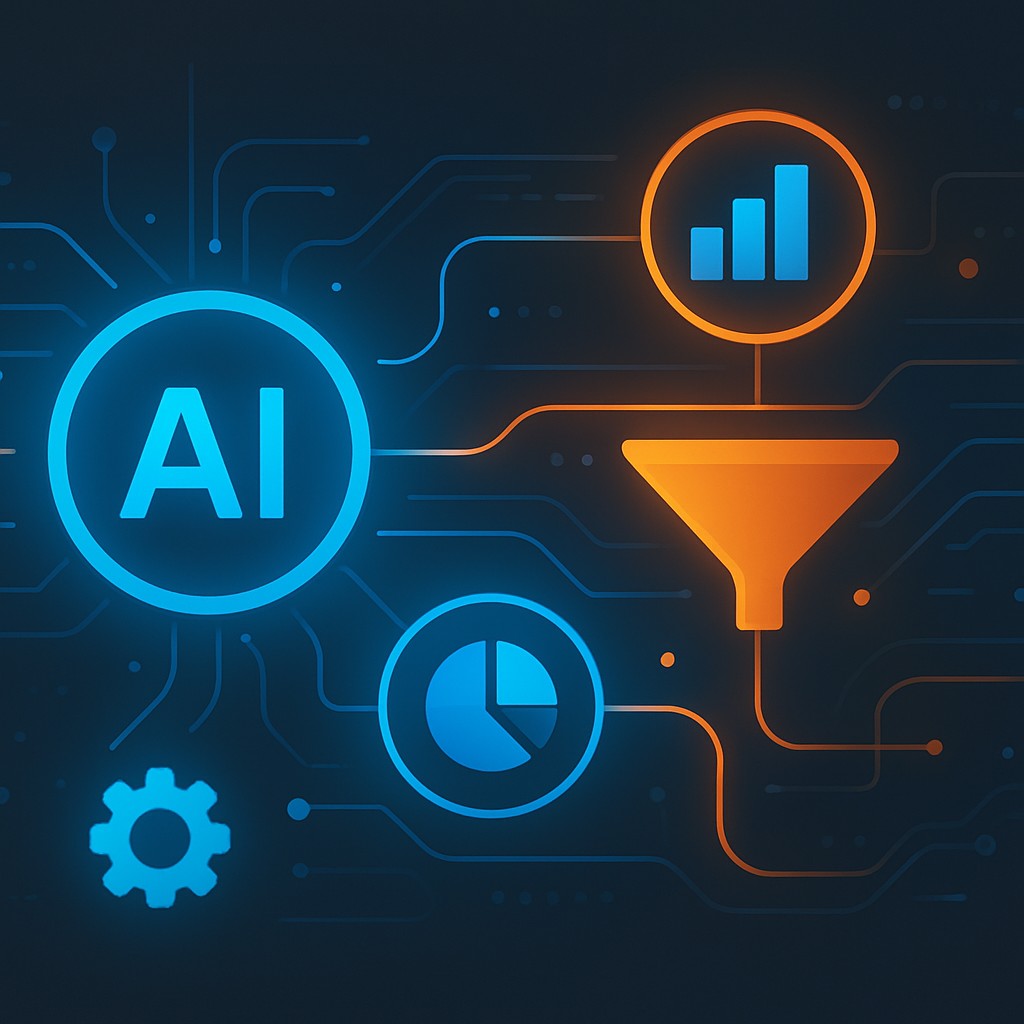
Where Does AI Fit in Marketing Workflows 2025 2026
As marketing teams move through 2025 and into 2026, the question is no longer whether to use artificial intelligence but where it fits most effectively. AI has matured from a set of experimental tools into a layer that touches nearly every stage of the marketing workflow. Understanding exactly where it adds value, and where human judgment remains essential, is the key to building an efficient, high-performing marketing operation.
AI in the Research and Planning Stage
The workflow begins with understanding the audience and the market. Here AI excels at processing large volumes of data: analyzing customer behavior, summarizing reviews and social conversations, clustering audiences into meaningful segments, and surfacing emerging trends. What once took analysts weeks now happens in hours, giving teams more time to interpret findings and shape strategy. The result is faster, more confident planning grounded in real signals rather than guesswork.
How We Embed AI Across Your Workflow
At AAMAX.CO, we help businesses worldwide integrate AI into every stage of their marketing operation rather than treating it as a bolt-on gadget. As a full-service digital marketing company, we design digital marketing systems where AI handles repetitive, data-heavy work while our strategists focus on creativity, positioning, and the human insight that machines cannot replicate. This balance is what separates teams that simply adopt AI from teams that genuinely benefit from it.
AI in Content Creation
Content is where most teams first feel AI's impact. AI assists with ideation, outlining, drafting, repurposing, and personalizing content across channels. It can adapt a single piece into dozens of formats tailored to different platforms and audiences. The crucial discipline is editorial oversight: AI generates the raw material quickly, but human experts must ensure accuracy, brand voice, and genuine value. The most effective teams use AI to expand capacity without diluting quality.
AI in Distribution and Personalization
Once content exists, AI optimizes how and when it reaches audiences. It powers send-time optimization, dynamic ad targeting, automated bidding, and real-time personalization of website and email experiences. These systems continuously learn from engagement data, improving performance over time. This is where AI delivers some of its clearest return on investment, because small, automated improvements compound across thousands of interactions.
AI in Measurement and Optimization
The final stage of the workflow is measurement, and AI has transformed it. Predictive analytics forecast outcomes, attribution models untangle complex customer journeys, and anomaly detection flags problems before they escalate. Instead of waiting for monthly reports, teams receive continuous, actionable feedback. This closes the loop, feeding insights back into research and planning so the entire workflow becomes a learning system rather than a linear process.
Where Humans Still Lead
Despite AI's reach, human judgment remains irreplaceable in several areas: brand strategy, emotional storytelling, ethical decision-making, relationship building, and creative risk-taking. The strongest marketing operations in 2025 and 2026 are not the most automated; they are the ones that deploy AI precisely where it excels while preserving human leadership where it matters most.
Conclusion
AI fits across the entire marketing workflow, from research and content creation to distribution and measurement, acting as an efficiency and intelligence layer rather than a replacement for human creativity. The organizations that win are those that integrate it thoughtfully and keep people in charge of strategy and storytelling. If you want to build a modern, AI-enhanced marketing workflow, our team is ready to design and implement it with you.
Want to publish a guest post on aamax.co?
Place an order for a guest post or link insertion today.
Place an Order