

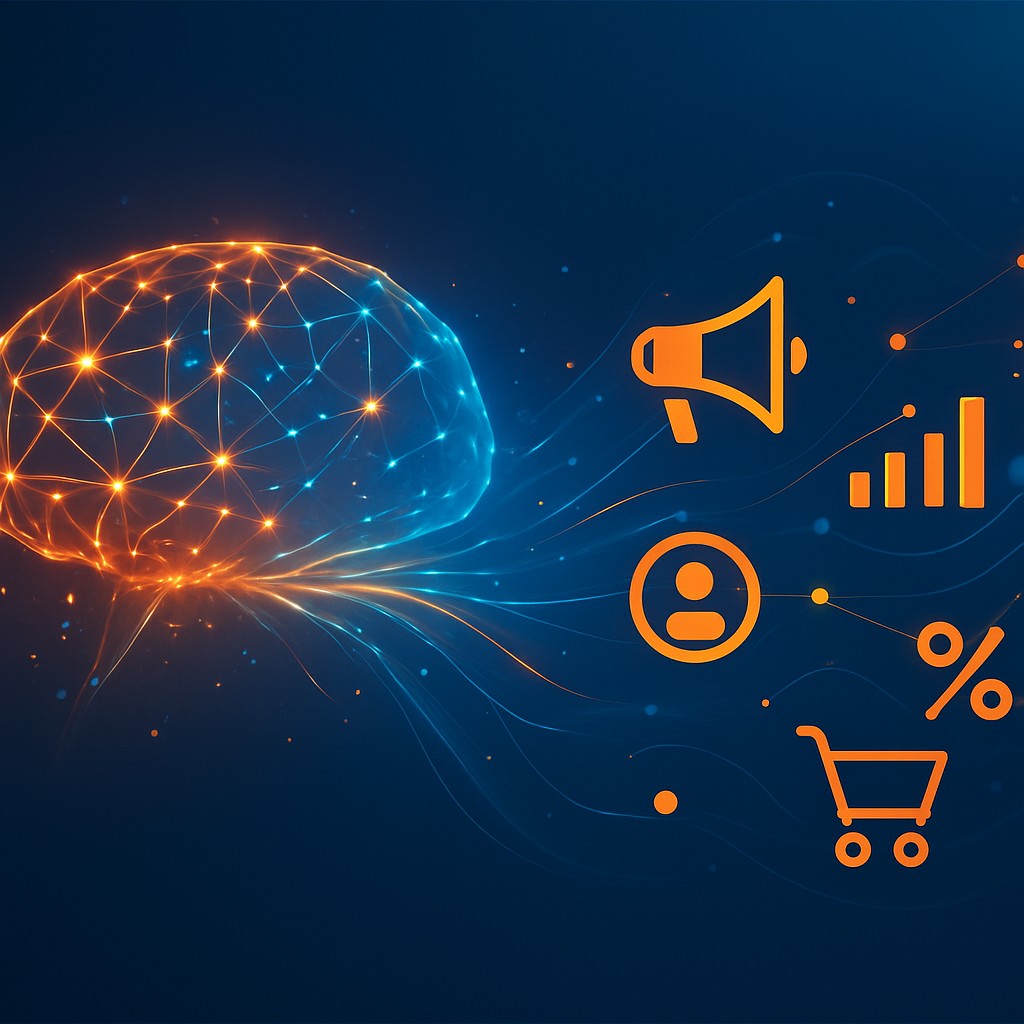
What Will Happen to Marketing in the Age of AI
The age of artificial intelligence has arrived, and few industries are being transformed as profoundly as marketing. Tasks that once consumed entire teams are now handled in seconds, content can be generated and personalized at massive scale, and decisions are increasingly guided by predictive data rather than intuition. Yet the question on every marketer's mind is not whether AI will change the field, but how. The answer is nuanced: AI will automate much of the routine work, elevate the importance of strategy and creativity, and raise the bar for customer experience across the board.
How We at AAMAX.CO Prepare You for the AI-Driven Future
At AAMAX.CO, we help brands around the world adapt to the rapidly changing marketing landscape. As a full-service digital marketing company, we combine emerging AI capabilities with proven strategy to keep our clients ahead of the curve. From generative engine optimization to performance marketing, we make sure your brand is visible, relevant, and competitive in the age of AI.
Automation of Routine Marketing Tasks
The most immediate change is the automation of repetitive work. Reporting, A/B testing, audience segmentation, ad bidding, and even first drafts of content can now be handled by AI. This does not eliminate marketing jobs so much as reshape them, freeing professionals from tedious tasks and allowing them to focus on higher-value activities like strategy, brand building, and creative direction. The marketers who thrive will be those who learn to direct AI rather than compete with it.
The Rise of Hyper-Personalization
In the AI age, generic mass messaging is becoming obsolete. AI enables hyper-personalization, delivering individualized content, offers, and experiences to each customer based on their behavior, preferences, and context. Customers will increasingly expect brands to understand their needs and anticipate them. This shift raises the standard for relevance, and companies that fail to personalize will struggle to compete with those that do.
A New Search and Discovery Landscape
Perhaps the biggest structural change is how people find information. AI-powered search and conversational assistants are changing the way consumers discover brands and products. Instead of scrolling through ten blue links, users get synthesized answers from AI models. This means marketers must optimize not just for traditional search engines but for AI-generated responses, ensuring their content is structured, authoritative, and citable by large language models.
Content Creation Becomes Faster and More Strategic
Generative AI can produce drafts, variations, and ideas at unprecedented speed. This abundance shifts the marketer's role from producing every word to curating, editing, and ensuring quality and brand alignment. As content becomes cheaper to produce, differentiation will come from originality, expertise, and authentic human perspective. The flood of generic AI content will make genuinely valuable, well-researched material stand out even more.
Data Becomes the Ultimate Competitive Advantage
AI is only as good as the data it learns from. Brands with rich, clean, first-party data will be able to train better models, personalize more effectively, and predict customer behavior with greater accuracy. As privacy regulations tighten and third-party cookies disappear, building direct relationships and collecting consented first-party data will become a critical strategic priority.
The Evolving Marketing Skill Set
The marketer of the future will need a hybrid skill set: creativity paired with data literacy, strategic thinking combined with technical fluency in AI tools. Prompt engineering, data interpretation, and AI tool management are joining the marketing toolkit alongside traditional skills like storytelling and brand strategy. Continuous learning will be essential as tools evolve rapidly.
Trust, Ethics, and Authenticity
As AI-generated content proliferates, consumer trust becomes a precious asset. Audiences will gravitate toward brands that are transparent, authentic, and human. Ethical use of AI, responsible data practices, and honest communication will differentiate trustworthy brands from those that exploit automation. The human touch will become a premium feature, not a relic.
What Marketers Should Do Now
Rather than fearing disruption, smart marketers are embracing AI as a force multiplier. Start by experimenting with AI tools in low-risk areas, invest in clean first-party data, and develop a clear point of view that no algorithm can replicate. Build optimization strategies for both traditional and AI-driven discovery channels. Marketing in the age of AI will reward those who combine the efficiency of machines with the empathy, creativity, and judgment that only humans provide. The future belongs not to AI alone, but to marketers who know how to wield it well.
Want to publish a guest post on aamax.co?
Place an order for a guest post or link insertion today.
Place an Order