

What Is the Difference Between AI Visibility and SEO
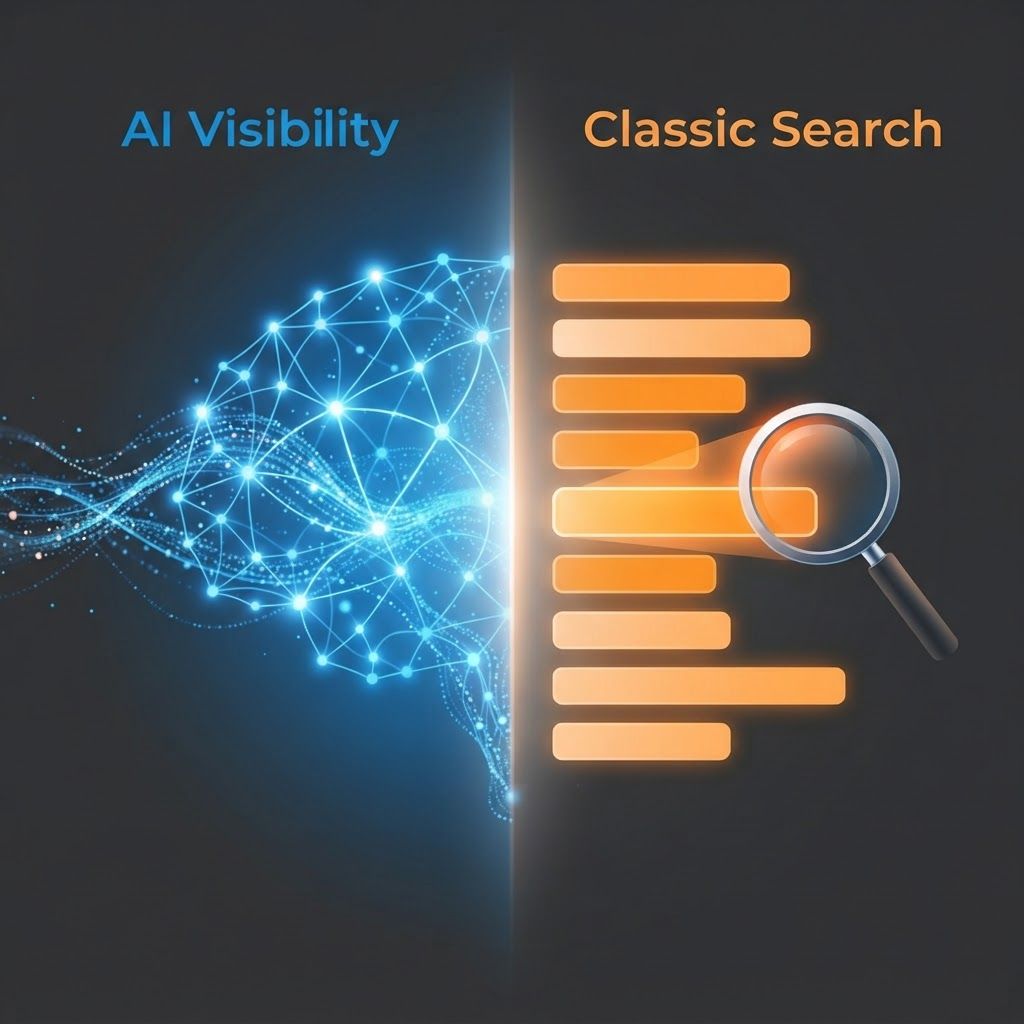
For two decades, being found online meant ranking on a page of ten blue links. That model is now sharing space with a different one, where an AI assistant reads multiple sources and returns a single synthesised answer, sometimes citing a few of them. The distinction matters because the two systems reward slightly different things. Traditional SEO optimises for a position in a ranked list that a human then clicks. AI visibility optimises for being selected, quoted and named inside a generated response the user may never click away from. They share foundations — crawlability, clarity, authority — but they diverge in how success is measured and in which content formats win. Understanding the difference prevents two expensive mistakes: assuming nothing has changed, and abandoning fundamentals that still drive most traffic.
How AAMAX.CO Helps You Win in Both Search and AI
You should not have to choose between ranking in search results and being cited by AI assistants, because the same underlying asset — genuinely authoritative, well-structured content on a technically sound site — powers both. At AAMAX.CO, we are a full service digital marketing company delivering web development, digital marketing and SEO services worldwide, and we build programmes that cover classic rankings and AI answer presence together. Our search engine optimization work secures the technical and content foundations, while our GEO services focus specifically on entity consistency, citable content structures and monitoring how AI systems describe your brand. If you are unsure whether your recent traffic changes are algorithmic or AI-related, we can diagnose it with data rather than speculation.
Different Mechanics, Shared Foundations
Classic search retrieves and ranks documents. Relevance signals, link-based authority, page experience and user behaviour combine to order results, and the user chooses which to open. Generative systems work in two stages: they retrieve candidate sources, often from a search index, then a language model reads and composes an answer, deciding which claims to include and which sources to attribute. That second stage introduces new variables. Content must be easy to extract as discrete, verifiable statements. Ambiguity, buried answers and marketing language that avoids specifics all reduce the chance of being quoted. Crucially, both stages still depend on the same prerequisites — your page must be crawlable, fast, indexable and credible — which is why AI visibility is an extension of SEO rather than a replacement for it.
How Success Is Measured
SEO measurement is mature: impressions, average position, clicks, click-through rate and conversions, all reported per query and page. AI visibility measurement is earlier in its development and inherently less deterministic, because answers vary between users, sessions and phrasing. Practical approaches include tracking how often your brand and URLs are cited for a defined set of prompts, monitoring the accuracy of how assistants describe your products and pricing, watching referral traffic from AI platforms in analytics, and measuring branded search volume, which often rises when assistants recommend you without linking. Expect noisier data and directional rather than precise conclusions. The right response is to track a consistent prompt set over time instead of chasing individual results.
Content Requirements Diverge
Content that ranks well is often long, comprehensive and structured to keep the reader engaged. Content that gets cited in AI answers needs those qualities plus something more: extractability. That means answering the core question in one or two clear sentences near the top, using headings that mirror real questions, stating facts with specifics rather than hedged claims, including dates, figures, methodology and sources where relevant, and organising comparisons into tables or clearly delineated sections. Original data, first-hand experience, expert commentary and clearly attributed authorship are disproportionately valuable because models favour sources that appear substantive and verifiable. Thin, derivative content still ranks occasionally in classic search; it almost never earns an AI citation.
Entities, Consistency and Brand Understanding
AI systems reason about entities — companies, people, products, locations — assembled from many sources across the web. If your business name, services, locations, founding details and positioning differ between your website, business listings, review platforms, social profiles and industry directories, models produce vague or inaccurate descriptions of you. Fixing this is unglamorous but high impact: standardise your naming and descriptions everywhere, publish clear organisation and product structured data, maintain a substantial about page with verifiable facts, and ensure third-party sources that describe your business are accurate. Entity clarity also benefits traditional search, particularly for local and brand queries, so this work pays twice.
Where Traffic Goes and Why Zero-Click Matters
The most discussed consequence of AI answers is fewer clicks for informational queries. When a user gets a satisfactory summary in place, they may not visit any source. This changes content strategy priorities rather than eliminating them. Informational content retains value as the mechanism by which you become the cited authority and enter consideration, but it should be measured partly on influence rather than sessions alone. Meanwhile, commercial, transactional and comparison queries continue to produce clicks because users want to evaluate, configure and buy — so ensuring your product, service, pricing and comparison pages are excellent becomes even more important. Practically, the strategy is to earn citations at the top of the funnel and convert clicks lower down.
Building One Programme That Serves Both
Rather than running two separate initiatives, integrate the requirements. Keep technical health strong so both crawlers and retrieval systems can access content, including serving meaningful HTML rather than relying entirely on client-side rendering. Structure every important page with a direct answer, descriptive headings and specific evidence. Invest in original research and genuine expertise, because that is what both links and citations reward. Maintain consistent entity data across the web. Track classic rankings and AI citations side by side, and review quarterly. Teams that do this find their AI visibility improves largely as a by-product of doing SEO exceptionally well, with a modest amount of format-specific adaptation on top.
Stay Visible Wherever People Search
AI visibility and SEO are complementary disciplines: one earns you a place in a ranked list, the other earns you a place inside the answer itself. Both depend on technical soundness, clear structure, verifiable substance and real authority, so the most reliable strategy is to strengthen those foundations and then optimise the presentation for each surface. If you would like a partner covering both, our digital marketing team can audit your current visibility across search engines and AI assistants and build a single roadmap. Contact us to find out how your brand is being represented today and what it would take to improve it.
Want to publish a guest post on aamax.co?
Place an order for a guest post or link insertion today.
Place an Order