

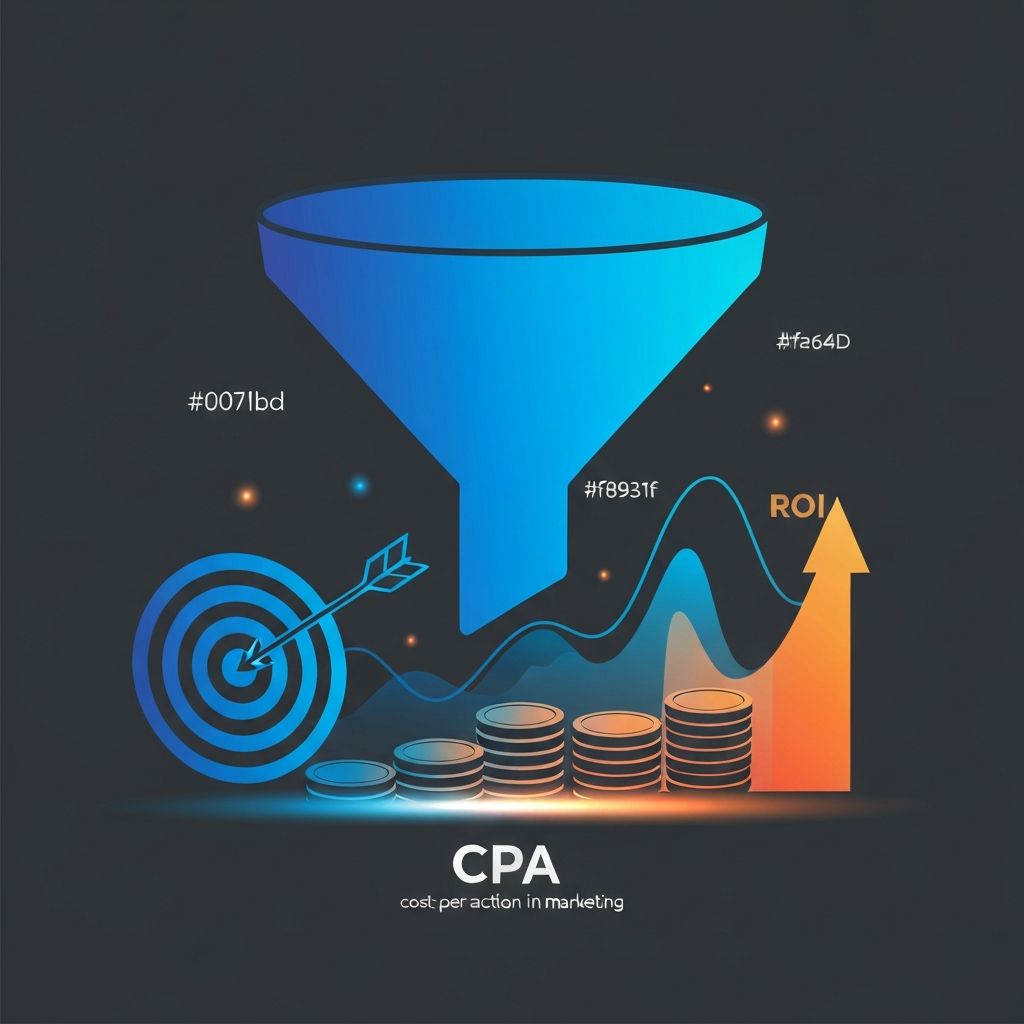
What Is CPA in Digital Marketing
What Does CPA Mean in Digital Marketing?
CPA stands for cost per acquisition, sometimes also called cost per action. It measures how much you spend, on average, to acquire one customer or complete one defined conversion. The action could be a purchase, a signup, a qualified lead, a booked demo, or any other event that has real business value. For any serious digital marketing program, CPA is one of the few metrics that ties spending directly to outcomes. At AAMAX, we use CPA as a north-star metric across most performance campaigns because it cuts through vanity numbers and forces clarity.
How CPA Is Calculated
The basic formula is simple. Divide total campaign spend by the number of acquisitions in that period. If you spent ten thousand dollars on ads and acquired two hundred customers, your CPA is fifty dollars. Where things get interesting is in how you define both spend and acquisition. Strong CPA models include not just media cost but also creative, agency fees, and any tooling required to run the campaign. Strong acquisition definitions match the moment a prospect becomes a real business outcome, not just a form fill.
CPA vs CPL vs CPC vs CPM
It is easy to confuse CPA with related metrics. Cost per click measures the cost of a single click. Cost per thousand impressions measures awareness reach. Cost per lead measures the cost of generating a top-of-funnel inquiry. CPA goes deeper, measuring the cost of an action that has clear business value. The further down the funnel your metric sits, the more meaningful it is for evaluating real performance.
Why CPA Matters
CPA matters because it tells you whether your marketing is profitable. If your average customer is worth three hundred dollars in lifetime value and your CPA is one hundred dollars, you are building a profitable engine. If your CPA is four hundred dollars, you are losing money on every acquisition. No amount of clicks, impressions, or social engagement can compensate for a broken CPA equation.
1. Tie CPA to Lifetime Value
CPA only makes sense in the context of customer lifetime value. The right CPA target is always a ratio of LTV. Many performance teams aim for an LTV to CPA ratio of three to one or higher, though the exact target depends on your margins and growth stage.
2. Improve Targeting
The fastest way to lower CPA is usually to sharpen targeting. That means tighter audiences, better keyword lists, and stricter exclusions. Skilled Google Ads management focuses heavily on this lever, ensuring spend goes only to the highest-intent prospects.
3. Strengthen Your Creative
Better creative drives higher click-through rates and conversion rates, which directly lowers CPA. Test multiple hooks, formats, and offers continuously. Static images, short videos, and user-generated content all deserve a place in your test calendar.
4. Optimize Landing Pages
A great ad sending traffic to a slow, confusing landing page will produce a high CPA every time. Faster pages, clearer headlines, simpler forms, and stronger social proof all drive conversion rates up and CPA down.
5. Layer in Organic Channels
Organic channels reduce blended CPA over time. A strong SEO services program brings in customers without per-click costs, and social media marketing builds the brand recognition that lifts conversion rates across every paid channel.
6. Embrace Generative Engine Optimization
As AI assistants influence more purchase decisions, brands that show up inside AI-generated answers acquire customers without paying for every click. Smart generative engine optimization is a powerful long-term lever for reducing blended CPA.
7. Improve Attribution
Many teams overpay for last-click conversions and ignore the channels that actually drove the customer earlier in the journey. Multi-touch attribution helps you allocate budget to the campaigns that genuinely lower CPA across the full funnel.
8. Retarget Smartly
Retargeting campaigns almost always produce lower CPA than top-of-funnel prospecting, but only if you avoid over-frequency and stale creative. Rotate offers and refresh creative every few weeks to keep retargeting profitable.
9. Build a Strong Customer Experience
Word of mouth, referrals, and reviews are essentially free acquisition. The better your product and post-purchase experience, the lower your future CPA across every channel.
10. Test, Measure, Repeat
CPA improvement is not a one-time project. The best teams run continuous experiments on audiences, creative, offers, and landing pages, compounding small wins into a dramatically lower CPA over time.
Common Pitfalls
Teams often optimize CPA without watching volume. Driving CPA to zero usually means driving acquisitions to zero too. The goal is profitable scale, not the lowest possible CPA. Another common mistake is defining acquisition too loosely. If your CPA counts unqualified leads, you will be celebrating numbers that never turn into revenue.
How We Help You Lower CPA
Our team builds full-funnel programs that combine paid media, SEO, GEO, content, and CRO into one connected system. We obsess over the metrics that drive profitability, not vanity. To see how we could improve your CPA, talk to our digital marketing consultancy experts.
Final Thoughts
CPA is more than a number on a dashboard. It is the clearest signal of whether your marketing is building a profitable business. Master it, and you unlock the ability to scale with confidence.
Want to publish a guest post on aamax.co?
Place an order for a guest post or link insertion today.
Place an Order