

Web Development vs Web Application Development Difference
Web Development vs Web Application Development: A Clear Breakdown
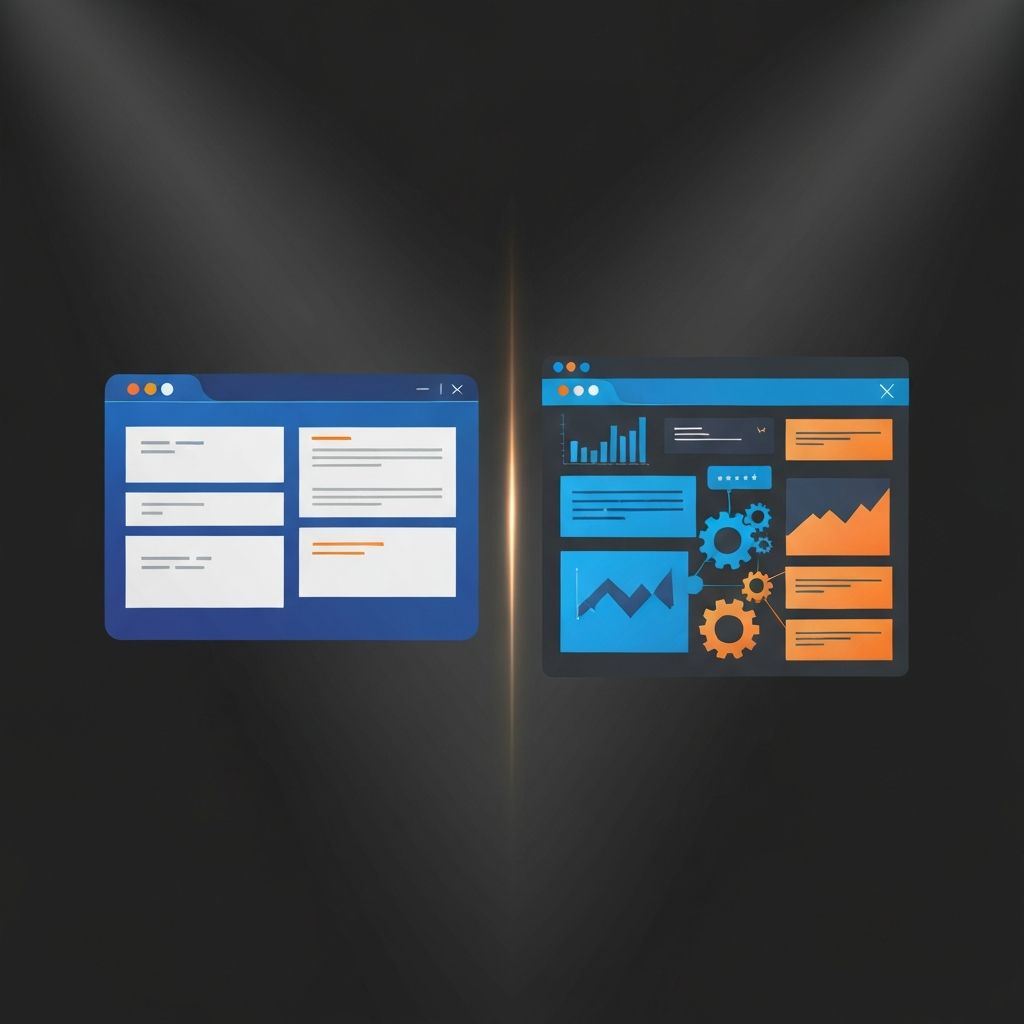
The terms “web development” and “web application development” are often used interchangeably, but they describe two distinctly different disciplines. While both involve writing code that runs in a browser, the goals, complexity, technology stacks, and end-user expectations differ dramatically. Choosing the wrong path can result in wasted budgets, missed deadlines, or a product that doesn’t match business needs. At AAMAX.CO, we help clients make this decision every week, and this article breaks down the differences clearly.
Defining Web Development
Web development typically refers to building informational or marketing-oriented websites that serve content to visitors. These websites focus on presenting information, building brand awareness, and converting visitors into leads or customers. Common examples include corporate websites, landing pages, blogs, portfolios, and small e-commerce stores.
The interaction model is mostly one-way: the website displays content; the visitor reads, browses, or fills out a contact form. Even with a CMS, the user’s primary role is consumption, not interaction. Our website development services typically fall into this category for many small to mid-sized businesses.
Defining Web Application Development
Web application development, by contrast, involves building interactive software that runs in a browser. Web apps allow users to perform tasks — create accounts, manage data, collaborate with others, process transactions, and produce outputs. Examples include CRMs, project management tools, online banking platforms, SaaS dashboards, social networks, and custom enterprise portals.
The interaction model is two-way and dynamic. Users actively input data, manipulate information, and receive personalized responses. Our web application development services serve clients who need this level of complexity and functionality.
Key Differences at a Glance
1. Purpose: Websites inform; web apps enable users to do something.
2. Interactivity: Websites are mostly static or content-driven; web apps are highly interactive.
3. Complexity: Web apps involve advanced logic, databases, and authentication; websites are simpler.
4. Technology Stack: Websites often use WordPress, static site generators, or simple CMS platforms; web apps use frameworks like React, Next.js, Node.js, MongoDB, or PostgreSQL.
5. Cost: Web apps are typically more expensive due to higher complexity and longer development cycles.
6. Maintenance: Web apps require ongoing maintenance, monitoring, and scaling. Websites are usually lower-maintenance.
7. Users: Websites target broad audiences; web apps often target authenticated users with specific roles.
Technology Stacks Compared
For websites, popular technology choices include:
- WordPress — ideal for blogs, business sites, and small e-commerce
- Webflow — visual development for designers
- Shopify — e-commerce focused
- Static site generators (Next.js, Astro, Gatsby) — performant and SEO-friendly
For web applications, technology stacks include:
- MERN stack development (MongoDB, Express, React, Node.js)
- MEAN stack (MongoDB, Express, Angular, Node.js)
- LAMP stack (Linux, Apache, MySQL, PHP)
- Python with Django or Flask
- Ruby on Rails
- Modern stacks like Next.js with serverless databases
Examples to Make It Concrete
Website Examples:
- A law firm’s informational website
- A restaurant’s menu and reservation site
- A photographer’s portfolio
- A startup’s landing page
- A small Shopify store
Web Application Examples:
- Gmail or Outlook in the browser
- Asana, Trello, or Notion
- Online banking dashboards
- Custom enterprise CRMs
- SaaS platforms like Slack or HubSpot
Development Process Differences
Building a website typically involves design, content creation, CMS setup, and SEO optimization — with timelines ranging from a few weeks to a few months. Building a web application involves much more: requirement gathering, system architecture, database design, API development, authentication, role management, testing, and deployment. Web app projects often span six months to multiple years.
SEO Considerations
Websites are designed primarily for search engines and human visitors, with SEO as a foundational discipline. Web apps, on the other hand, often live behind authentication walls and have minimal public-facing content. SEO plays a smaller role for the app itself but remains crucial for the marketing pages around it.
User Experience and Interface Design
UX design for websites focuses on storytelling, brand expression, and conversion optimization. Web app UX is far more functional — emphasizing efficiency, accessibility, error prevention, and information density. Designing dashboards, forms, and workflows requires different skills than designing marketing pages.
Security Considerations
Websites face standard security threats — spam, brute-force login attempts, malware injections. Web apps face significantly higher risks because they store and process sensitive data. We follow OWASP best practices, implement multi-factor authentication, encryption, and regular penetration testing for all web app projects.
Scalability and Performance
Websites need to handle traffic spikes during marketing campaigns. Web apps need to scale across users, data, and computational load. Architecting a scalable web app requires expertise in cloud infrastructure, caching layers, queue systems, and database optimization.
Cost Comparison
While costs vary widely, here are general ranges:
Websites: $2,000 – $30,000+ depending on complexity.
Web Applications: $20,000 – $500,000+ for substantial projects, with enterprise apps costing millions over their lifetime.
Choosing the Right Path
Choosing between a website and a web app depends on business goals. If you need to share information, attract leads, or drive sales, a website is ideal. If you need to provide users with software functionality — tools, dashboards, automations, or platforms — a web app is required.
We often start with web development consulting to help clients clarify their needs before any code is written. Sometimes the answer is both: a marketing website that connects to a separate web application.
Why Hire Us for Either Project
AAMAX.CO is unique in offering deep expertise across both disciplines. Whether you need a high-converting marketing website or a complex SaaS platform, we have the skills, processes, and team to deliver. Our developers excel in technologies like ReactJs, Next.js, back-end systems, and modern CMS platforms like Strapi.
Final Thoughts
Understanding the difference between web development and web application development empowers business owners to plan, budget, and execute digital projects more effectively. Each discipline has its place, and the best results come from choosing the right approach for the right goals. If you’re unsure which path you need, hire AAMAX.CO for expert guidance and execution that turns ideas into successful digital products.
Want to publish a guest post on aamax.co?
Place an order for a guest post or link insertion today.
Place an Order