

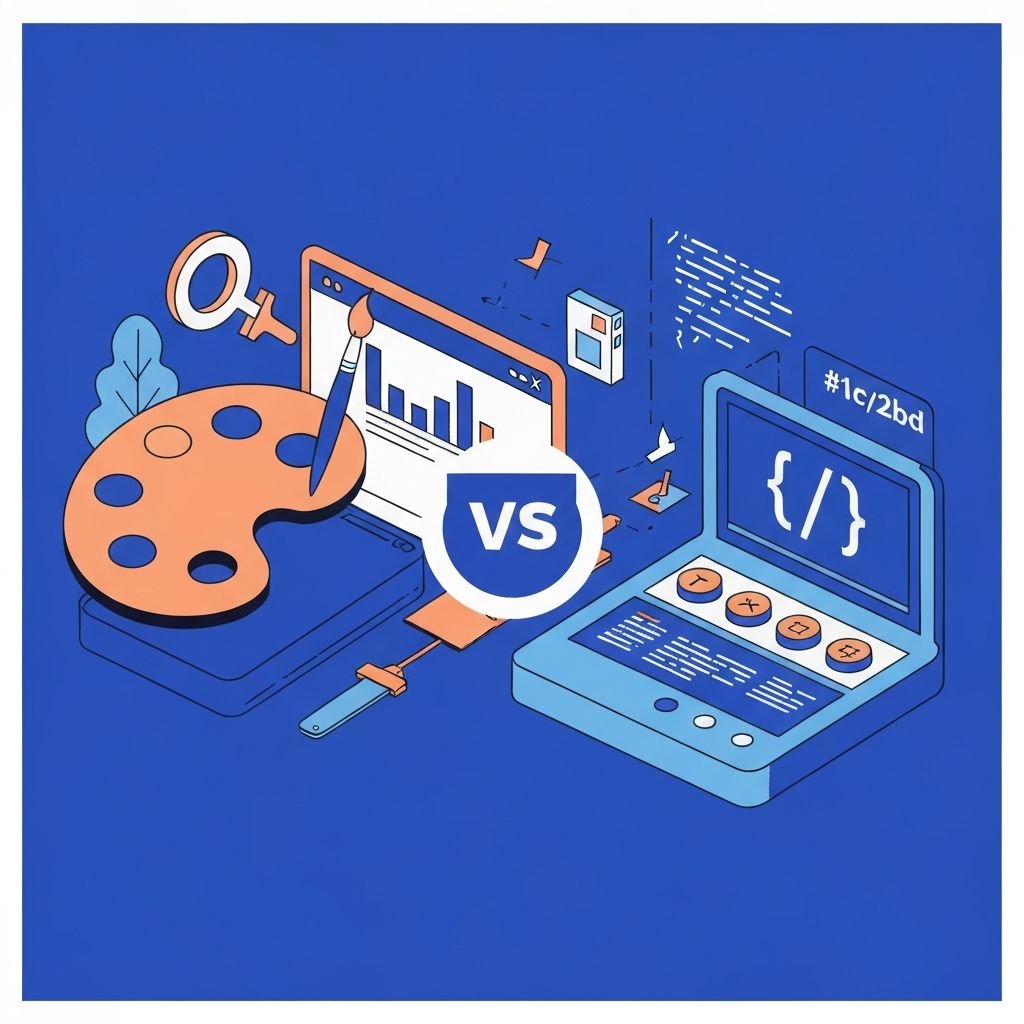
Web Designer vs Developer
Understanding the Distinction
The terms web designer and web developer are often used interchangeably, but they represent distinct roles with different skill sets, responsibilities, and contributions to web projects. Understanding these differences helps businesses make informed decisions about hiring, project planning, and team structure. At AAMAX.CO, we maintain clear distinctions between these roles while fostering the collaboration that produces exceptional results.
While there is certainly overlap between design and development, and some professionals excel at both, recognizing the unique value each role brings leads to better project outcomes. This understanding also helps aspiring web professionals choose the career path that best matches their interests and abilities.
The Web Designer's Focus
Web designers concentrate on the visual and experiential aspects of websites. Their primary concern is how a website looks and feels to users. This involves decisions about layout, color schemes, typography, imagery, and overall aesthetic direction that aligns with brand identity.
User experience is central to modern web design. Designers consider how users will navigate the site, where they will look first, what emotions the design will evoke, and how the interface will guide them toward desired actions. This psychological and behavioral understanding distinguishes professional website design from amateur efforts.
Web designers typically deliver their work as visual mockups, prototypes, and specifications that guide development. They use tools like Figma, Adobe XD, and Sketch to create these deliverables. While they understand how websites are built, their expertise lies in determining what should be built from a visual and experiential perspective.
The Web Developer's Focus
Web developers concentrate on the technical implementation of websites. They write the code that brings designs to life, ensures functionality works correctly, and maintains performance and security. Development requires logical thinking, problem-solving abilities, and deep technical knowledge.
Front-end web development involves building the user interface using HTML, CSS, and JavaScript. Front-end developers implement the designs created by web designers, ensuring that visual elements appear correctly across browsers and devices while adding interactivity and responsiveness.
Back-end web development handles server-side logic, databases, and application architecture. Back-end developers create the systems that power dynamic features, manage user data, process transactions, and integrate with external services. This work is invisible to users but essential for functionality.
Educational Backgrounds
Web designers often come from art, graphic design, or visual communication backgrounds. Many hold degrees in design disciplines, though self-taught designers with strong portfolios are equally competitive. Art and design education develops the aesthetic sensibility and creative thinking essential for design work.
Web developers frequently have backgrounds in computer science, software engineering, or related technical fields. Coding bootcamps have also produced many successful developers, offering intensive training focused specifically on web technologies. The logical and mathematical thinking developed through technical education supports development work.
Increasingly, both roles benefit from cross-disciplinary education. Designers who understand development basics create more implementable designs, while developers with design appreciation build more polished interfaces. This cross-training trend reflects the interconnected nature of modern web work.
Day-to-Day Activities
A typical day for a web designer might include client meetings to understand requirements, sketching layout concepts, refining mockups based on feedback, collaborating with developers on implementation questions, and researching design trends or user behavior patterns.
Web developers spend their days writing and debugging code, reviewing pull requests from team members, troubleshooting issues, implementing new features, and staying current with evolving technologies. They often work closely with designers to clarify specifications and resolve technical constraints.
Both roles involve significant communication with stakeholders, clients, and team members. While the nature of the work differs, the need for clear communication and collaborative problem-solving is consistent across both positions.
Tools of the Trade
Web designers primarily use visual design software. Figma has become the industry standard for interface design due to its collaborative features. Adobe Creative Suite remains important for image editing and illustration. Prototyping tools allow designers to simulate interactive experiences without coding.
Web developers work in code editors and integrated development environments. Visual Studio Code is currently the most popular choice. They use version control systems like Git to manage code changes and collaborate with team members. Terminal/command line proficiency is essential for many development tasks.
Both roles use project management and communication tools. Platforms like Jira, Asana, or Trello track tasks and progress. Slack, Microsoft Teams, or similar tools facilitate team communication. These shared tools help bridge the gap between design and development workflows.
Career Trajectories
Web designers may advance to senior designer, lead designer, or creative director positions. Some transition into UX research, product design, or design management. Others build freelance practices or join design agencies. The career path depends on individual interests in management versus continued hands-on design work.
Web developers can progress to senior developer, technical lead, or architect roles. Some move into engineering management, overseeing development teams. Others specialize in areas like security, performance optimization, or specific technologies. The tech industry offers numerous advancement opportunities for skilled developers.
Both roles can lead to entrepreneurship, with experienced professionals starting their own agencies, product companies, or consulting practices. The foundational skills learned in either role provide a solid base for building web-related businesses.
Salary Considerations
Compensation varies significantly based on location, experience, specialization, and company type. Generally, web developers command slightly higher salaries due to the technical complexity of their work and strong demand for development skills. However, senior designers, particularly those with UX expertise, can earn comparable compensation.
Specialization affects earning potential in both fields. Designers focusing on UX strategy or working in high-demand industries may earn more than generalist designers. Developers specializing in sought-after technologies like ReactJS web development or Next.js web development often command premium rates.
Freelance rates can exceed full-time salaries for experienced professionals with strong client bases. However, freelancing requires managing business operations alongside billable work, and income can be less predictable than salaried positions.
When to Hire a Designer vs Developer
Businesses need designers when they require visual identity creation, user experience improvements, or interface design from scratch. If you have no clear vision for how your website should look and feel, starting with design makes sense. Designers also help with rebranding or significant visual overhauls.
Developers are needed when you have approved designs ready for implementation, need custom functionality built, or require technical maintenance and updates. If your website needs to do something specific, like process payments or integrate with other systems, development expertise is essential.
Most comprehensive web projects require both roles. Starting with design ensures development work has clear direction. Development then implements and may refine the design based on technical realities. Ongoing projects benefit from having both capabilities available.
Collaboration Between Roles
The best web projects emerge from close collaboration between designers and developers. Designers benefit from developer input on technical feasibility, while developers benefit from designer input on implementation accuracy. This collaboration reduces rework and improves outcomes.
Design handoffs are critical moments in this collaboration. Comprehensive specifications that include responsive behavior, interaction states, and edge cases help developers implement designs accurately. Tools that facilitate this handoff, like Figma's developer mode, streamline the process.
Ongoing communication throughout development catches issues early. Developers may encounter constraints that require design modifications, while designers reviewing implementation may notice discrepancies. Regular check-ins keep everyone aligned and problems manageable.
Hybrid Roles and Generalists
Some professionals develop strong skills in both design and development, often called designer-developers or full-stack designers. These individuals can take projects from concept to completion independently, making them valuable for smaller projects or startups.
However, deep expertise in either discipline typically requires focused specialization. Complex design systems or challenging technical problems benefit from specialists who have invested years in their craft. The choice between specialists and generalists depends on project needs and budget.
Understanding both disciplines, even without mastering both, makes professionals more effective in either role. Designers who can code prototypes communicate more effectively with developers. Developers who understand design principles make better implementation decisions.
Conclusion
Web designers and developers bring complementary skills essential for creating successful websites. Designers shape the visual experience and user journey, while developers build the technical foundation that makes it all work. Neither role is more important; they are partners in creating digital experiences.
We bring together talented designers and developers who collaborate seamlessly to deliver exceptional results. Whether your project needs website design, website development, or comprehensive services spanning both, our team has the expertise to deliver. Contact us today to discuss your web project and discover the difference professional design and development make.
Want to publish a guest post on aamax.co?
Place an order for a guest post or link insertion today.
Place an Order