

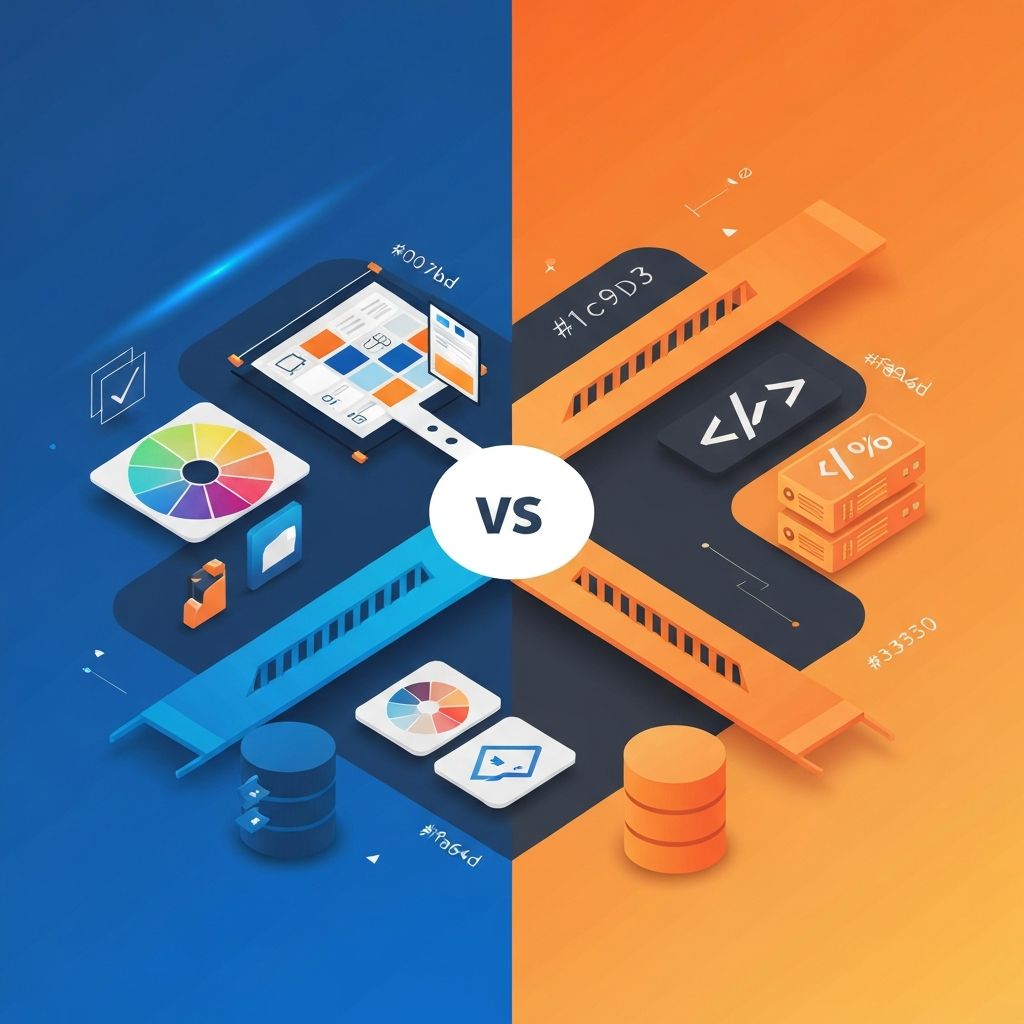
Web Design vs Web Development
Clarifying the Confusion: Design vs Development
The terms "web design" and "web development" are often used interchangeably, but they represent distinct disciplines with different skills, tools, and focuses. Understanding the difference helps businesses make better decisions about their web projects and ensure they're engaging the right expertise for their needs.
At AAMAX.CO, we provide both web design and web development services, understanding that most successful projects require expertise in both areas. Our integrated approach ensures seamless collaboration between designers and developers, producing websites that look exceptional and function flawlessly.
What Is Web Design?
Web design focuses on the visual aspects and user experience of websites. Designers determine how a website looks – colors, typography, imagery, layout, and overall aesthetic. They also consider how users interact with the site, designing intuitive navigation, clear information hierarchy, and engaging interfaces.
Web designers think about the end user's experience throughout their process. They consider what visitors want to accomplish, how they'll navigate through content, and what emotions the design should evoke. This user-centered approach ensures websites serve both business objectives and user needs.
Design tools include programs like Figma, Adobe XD, and Sketch, which allow designers to create visual mockups and interactive prototypes. These tools enable design exploration and client feedback before any coding begins, saving time and ensuring alignment on visual direction.
What Is Web Development?
Web development focuses on building the actual functionality of websites. Developers write the code that makes designs come to life in web browsers. They handle everything from basic HTML structure to complex database interactions and server configurations.
Development divides broadly into front-end and back-end specializations. Front-end developers work on the client-side – what users see and interact with directly. They translate designs into working HTML, CSS, and JavaScript. Back-end developers handle server-side functionality – databases, authentication, APIs, and business logic.
Our front-end web development and back-end web development teams bring specialized expertise to each aspect of development, ensuring excellence across the full stack.
Key Differences in Skills and Tools
Web designers need strong visual and creative skills. They must understand color theory, typography, composition, and visual hierarchy. Empathy for users helps them create intuitive experiences. Knowledge of design trends keeps their work contemporary and competitive.
Web developers need technical and logical skills. They must understand programming languages, algorithms, and software architecture. Problem-solving abilities help them overcome technical challenges. Familiarity with development frameworks and tools enables efficient coding.
The tools each discipline uses reflect these different focuses. Designers work in visual applications that emphasize manipulation of shapes, colors, and layout. Developers work in code editors and terminal applications, writing and testing programmatic instructions.
Where Design and Development Overlap
Despite their differences, design and development significantly overlap. Front-end developers must understand design principles to implement layouts accurately. Designers benefit from understanding development constraints to create feasible designs. The best professionals in each field have working knowledge of the other.
CSS has evolved to blur these lines further. Modern CSS enables animations, transitions, and responsive behaviors that once required JavaScript. Developers implementing these features make design decisions, while designers specifying them need to understand CSS capabilities.
Design systems and component libraries represent another convergence point. These shared resources define how visual elements translate into code, requiring collaboration between designers who define patterns and developers who implement them.
Front-End: The Bridge Between Disciplines
Front-end development serves as the primary bridge between design and development. Front-end developers take designer mockups and create the actual user interfaces users interact with. This translation requires understanding both design intent and technical implementation.
Modern front-end development has become increasingly sophisticated. Frameworks like React, Vue, and Angular enable complex interactive experiences. Our ReactJS web development and Next.js web development services leverage these powerful tools to build dynamic, performant websites.
Responsive design implementation falls primarily to front-end developers. Taking designs that may be created for specific screen sizes and ensuring they work beautifully across all devices requires both technical skill and design sensibility.
Back-End: The Hidden Foundation
Back-end development handles functionality users don't directly see but absolutely depend upon. Databases store information. Servers process requests. APIs connect systems. Authentication protects access. All this infrastructure makes modern web applications possible.
Full-stack developers combine front-end and back-end skills, capable of handling projects end-to-end. Our MERN stack development services exemplify this full-stack approach, using MongoDB, Express, React, and Node.js to build complete applications.
Back-end development has less obvious connection to design, but still impacts user experience. API response times affect perceived performance. Database structure determines what information can be displayed. Server architecture influences reliability and speed.
When You Need Design vs Development
Different project phases emphasize different skills. New website projects typically begin with design – defining visual direction and user experience before development begins. Redesigns similarly start with design exploration before implementing changes.
Technical projects like adding new functionality, integrating systems, or improving performance are development-focused. These projects may not require design work if the visual presentation remains unchanged.
Many projects require both disciplines working together. A new e-commerce site needs designed product pages and developed shopping cart functionality. A web application needs intuitive interface design and robust back-end systems.
The Importance of Collaboration
Siloed design and development teams often produce suboptimal results. Designers who create without development input may design impossible or impractical features. Developers who build without design guidance may implement clunky, unattractive interfaces.
Collaborative processes produce better outcomes. Design reviews with developers catch implementation issues early. Developer input during design helps identify technical opportunities and constraints. Regular communication keeps both disciplines aligned.
At AAMAX.CO, our designers and developers work closely throughout every project. This collaboration is built into our process, ensuring that design vision and technical implementation reinforce each other from start to finish.
Choosing the Right Services
Understanding your project needs helps you engage the right services. If your existing site functions well but looks dated, you primarily need design help. If your site looks fine but lacks needed functionality, development is your focus. Most significant projects benefit from both.
Agency selection should consider capabilities in both areas. Agencies with integrated design and development teams can handle projects holistically. Those specializing in only one discipline may need to partner with others, potentially introducing coordination challenges.
Our comprehensive website design and website development services provide complete capability under one roof, ensuring seamless project execution regardless of where your needs fall.
The Full-Service Advantage
Full-service agencies like AAMAX.CO offer significant advantages for comprehensive web projects. Single-vendor accountability eliminates finger-pointing between separate design and development providers. Integrated processes ensure efficient handoffs and consistent quality. Combined expertise enables holistic problem-solving.
Cost efficiencies often accompany this integration. Shared understanding reduces revision cycles. Coordinated timelines eliminate waiting for external dependencies. Streamlined communication saves management overhead.
Emerging Trends Affecting Both Disciplines
Several trends are reshaping both web design and development. AI tools are beginning to automate routine tasks in both fields. No-code and low-code platforms enable some design-to-deployment without traditional development. Performance expectations continue rising, demanding optimization from both disciplines.
Accessibility has become increasingly important for both designers and developers. Inclusive design ensures interfaces work for users with disabilities. Accessible development implements these designs with proper semantic HTML and ARIA attributes. Both disciplines must prioritize accessibility.
Conclusion
Web design and web development are distinct but complementary disciplines. Design focuses on visual appeal and user experience; development builds functional reality from these visions. The most successful web projects leverage expertise in both areas, with close collaboration ensuring that beautiful designs become perfectly functioning websites.
Understanding this distinction helps businesses communicate effectively with web professionals and make informed decisions about their digital investments. Whether you need design, development, or both, clarity about your requirements leads to better outcomes and more productive partnerships.
Want to publish a guest post on aamax.co?
Place an order for a guest post or link insertion today.
Place an Order