

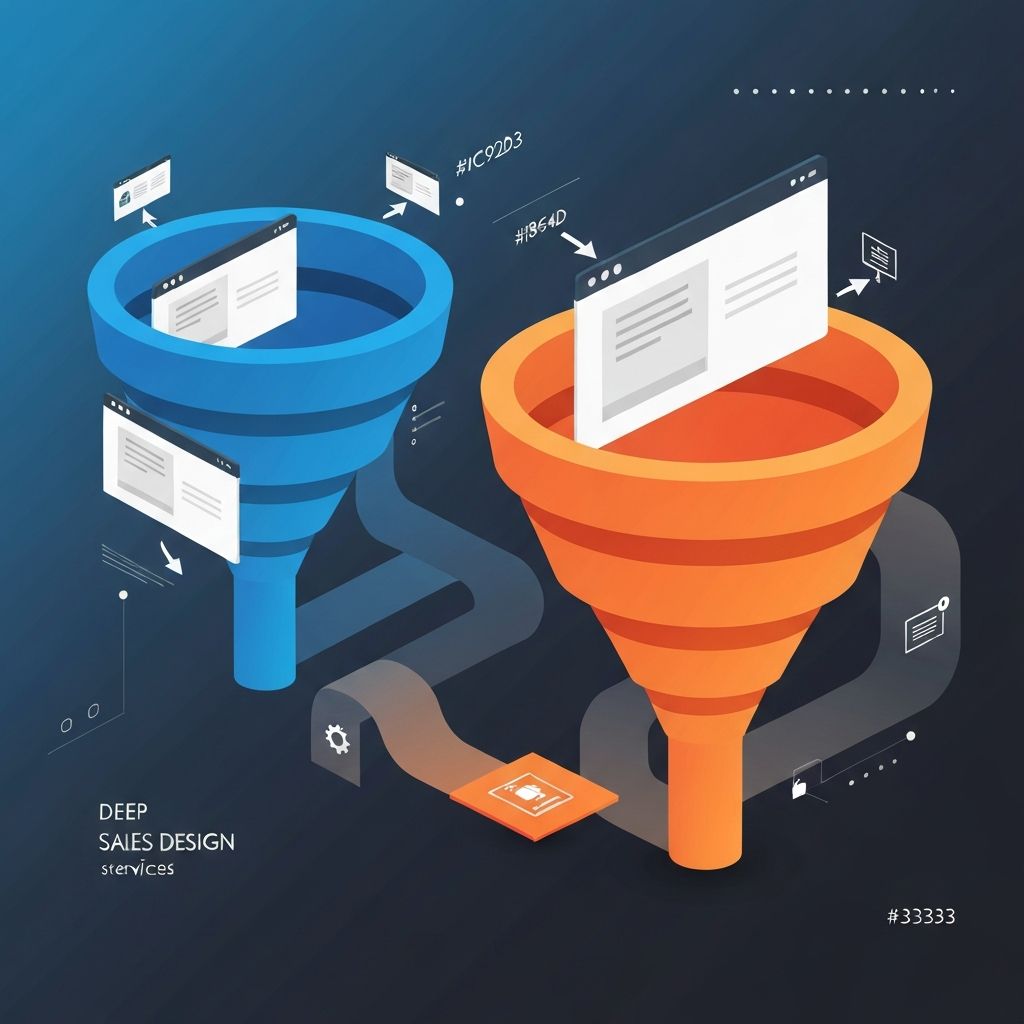
Web Design Sales Funnel
The Intersection of Web Design and Sales Funnels
Sales funnels represent the strategic journey customers take from initial awareness to final purchase, and web design serves as the architecture that guides this journey. When design elements align with funnel stages, websites transform from digital brochures into revenue-generating machines. At AAMAX.CO, we understand that every pixel, button, and content block should serve the greater purpose of moving visitors toward conversion.
The most effective web design sales funnels combine psychological principles with technical excellence. Understanding how users consume information, make decisions, and overcome objections enables designers to create experiences that feel natural while strategically advancing business objectives. This synthesis of art and science distinguishes high-converting websites from those that merely look attractive.
Understanding Sales Funnel Stages
The awareness stage represents the top of your funnel where potential customers first encounter your brand. Web design at this stage must capture attention quickly while communicating core value propositions. Landing pages, blog content, and social media entry points all serve as awareness touchpoints that require specific design considerations to maximize impact.
Interest and consideration stages demand deeper engagement mechanisms. Visitors exploring your offerings need comprehensive information presented in digestible formats. Product pages, comparison tools, case studies, and detailed service descriptions support informed decision-making. Design must facilitate exploration without overwhelming users with choices.
The decision and action stages require friction reduction and trust reinforcement. Checkout processes, contact forms, and call-to-action elements must minimize obstacles while providing reassurance. Security indicators, testimonials, and guarantee statements strategically placed near conversion points address final hesitations and encourage commitment.
Designing for Awareness Stage
First impressions form within milliseconds, making above-the-fold design crucial for awareness stage success. Headlines must communicate value immediately while visual elements establish credibility and relevance. Our Website Design approach prioritizes clarity and impact in these critical first moments of visitor engagement.
Content hierarchy guides attention toward key messages while supporting progressive disclosure of detailed information. Visitors should understand what you offer, who you serve, and why you matter within seconds of landing. Strategic use of whitespace, typography weight, and color contrast directs eyes toward priority messages.
Entry point diversity acknowledges that visitors arrive through various channels with different intentions. Blog readers have different needs than ad clickers or social media followers. Designing multiple awareness pathways with consistent brand experience but contextually relevant content maximizes funnel entry effectiveness.
Building Interest Through Design
Once attention is captured, design must facilitate exploration that builds genuine interest. Navigation systems should anticipate user questions and provide intuitive pathways to answers. Information architecture that mirrors customer thinking processes reduces cognitive load and encourages deeper engagement.
Visual storytelling engages emotions while conveying information. Images, videos, and interactive elements transform abstract benefits into tangible understanding. Showing your solutions in action through case studies, demonstrations, and customer success stories builds interest more effectively than feature lists alone.
Social proof elements strategically woven throughout the interest stage reinforce value propositions. Testimonials, client logos, awards, and usage statistics provide external validation that influences consideration. Design placement of these elements should feel natural rather than forced, building credibility without appearing desperate for approval.
Consideration Stage Optimization
Visitors in the consideration stage actively compare options and evaluate fit. Design must support this comparative analysis while positioning your offerings favorably. Pricing pages, feature comparisons, and detailed specifications serve practical evaluation needs while design influences perception of value.
Addressing objections proactively through design prevents abandonment during consideration. FAQ sections, guarantee explanations, and process transparency anticipate concerns and provide reassurance. Thoughtful content placement ensures answers appear when questions arise, maintaining momentum toward conversion.
Personalization capabilities enhance consideration stage relevance. Dynamic content that adapts to visitor behavior, industry, or expressed preferences demonstrates understanding and increases engagement. Our Web Application Development expertise enables sophisticated personalization that treats each visitor as an individual rather than a statistic.
Converting Through Strategic Design
Conversion elements require meticulous design attention as they represent the culmination of funnel efforts. Call-to-action buttons must stand out visually while feeling integrated within the overall design. Color, size, placement, and surrounding whitespace all influence click probability and deserve systematic testing.
Form design directly impacts conversion rates. Every field adds friction that reduces completion rates. Request only essential information initially, using progressive profiling to gather additional data over time. Error handling should guide users toward success rather than frustrating them with generic validation messages.
Trust signals near conversion points address final purchase hesitations. Payment security badges, money-back guarantees, privacy assurances, and contact information provide the confidence boost that tips undecided visitors toward action. Placement testing reveals which signals resonate most strongly with your specific audience.
Mobile Funnel Considerations
Mobile users navigate sales funnels differently than desktop visitors, requiring design adaptation beyond responsive layouts. Thumb-friendly tap targets, simplified navigation, and accelerated loading times address mobile-specific usability requirements. Ignoring mobile experience means abandoning a majority of potential customers.
Mobile conversion paths often span multiple sessions and devices. Design should facilitate cross-device continuity through saved carts, account syncing, and email capture that enables return visit nurturing. Understanding that mobile might be awareness touchpoint while desktop serves conversion needs influences design priorities across devices.
Touch interactions enable gesture-based navigation that desktop can't replicate. Swipeable galleries, pull-to-refresh patterns, and progressive disclosure through tap expansion create native-feeling experiences that mobile users expect. Our Front-end Web Development team implements mobile-optimized interactions that enhance funnel progression.
Landing Page Design Principles
Landing pages serve as concentrated funnel entry points requiring focused design strategies. Message match between traffic source and landing page content maintains visitor trust and reduces bounce rates. If ads promise specific benefits, landing pages must deliver on those promises immediately.
Single-focus design eliminates distractions that dilute conversion effectiveness. Unlike homepage design that serves multiple visitor needs, landing pages should guide all visitors toward one specific action. Navigation removal, limited linking, and visual hierarchy all reinforce singular purpose.
Above-the-fold content density requires balance between comprehensive messaging and visual breathing room. Essential elements include compelling headline, value proposition, primary call-to-action, and trust indicator. Testing reveals optimal arrangements for specific audiences and offers.
Lead Generation Funnel Design
Service-based businesses often require lead generation funnels that capture prospect information for sales follow-up. Design must communicate expertise and trustworthiness while offering sufficient value to justify contact information exchange. Lead magnets, consultations, and assessments serve as value exchanges that initiate relationships.
Progressive engagement design recognizes that leads require nurturing before sales readiness. Initial capture mechanisms should request minimal information while follow-up touchpoints gather additional qualification data. Each interaction should deliver value while advancing understanding of prospect needs and fit.
Lead quality indicators help design decisions that attract right-fit prospects while filtering poor matches. Qualification questions, industry selection, and budget indicators pre-sort leads for sales team efficiency. Design presentation of these qualifiers should feel natural rather than interrogational.
E-commerce Funnel Optimization
E-commerce funnels face unique design challenges including product discovery, cart management, and checkout optimization. Category navigation, search functionality, and filtering tools enable efficient product finding within potentially vast inventories. Design must scale gracefully as product catalogs grow.
Product page design directly influences purchase decisions. Image galleries, detailed descriptions, specification tables, and review integrations provide information shoppers need. Cross-selling and upselling elements expand order values when presented helpfully rather than aggressively.
Checkout abandonment represents e-commerce's greatest funnel leak. Design interventions include guest checkout options, progress indicators, payment flexibility, and shipping transparency. Each field and step deserves scrutiny for necessity and friction contribution. Our Website Development solutions implement checkout experiences optimized for completion rates.
Analytics and Funnel Measurement
Funnel visualization through analytics reveals where visitors drop off and which paths convert most effectively. Design decisions should respond to data showing actual user behavior rather than assumptions about ideal journeys. Regular analysis identifies optimization opportunities throughout the funnel.
Conversion rate tracking by funnel stage enables targeted improvements. Awareness-stage metrics include traffic, bounce rates, and engagement depth. Consideration metrics track page progression, content consumption, and return visits. Conversion metrics measure final action completion and associated values.
Cohort analysis reveals how different visitor segments progress through funnels. Design variations might serve different cohorts based on traffic source, device type, or behavioral patterns. Understanding segment-specific funnel performance guides personalization and targeting strategies.
Testing and Continuous Improvement
A/B testing provides scientific validation for design decisions affecting funnel performance. Hypothesis-driven testing isolates variables to understand their true impact. Statistical significance requirements ensure changes reflect genuine improvements rather than random variation.
Multivariate testing examines interaction effects between multiple elements simultaneously. While more complex to implement and analyze, multivariate approaches reveal optimization opportunities that sequential A/B tests might miss. Testing tools and traffic volumes determine appropriate methodology selection.
Continuous optimization treats funnel design as ongoing process rather than one-time project. Regular testing cycles, performance monitoring, and competitive analysis maintain funnel effectiveness as markets evolve. Design systems that facilitate rapid iteration enable sustained optimization momentum.
Psychology in Funnel Design
Cognitive biases influence decision-making throughout the funnel. Anchoring effects make initial price presentations influential on value perception. Scarcity and urgency messaging, when genuine, accelerates purchase timelines. Social proof leverages conformity tendencies to build confidence. Ethical application of psychological principles enhances user experience while improving conversions.
Emotional design considerations recognize that purchases involve feelings as much as logic. Color psychology, imagery selection, and language tone all influence emotional states that affect buying decisions. Balancing emotional appeal with rational justification addresses different decision-making styles.
Choice architecture guides decisions through option presentation and default settings. The paradox of choice means that excessive options can paralyze rather than empower. Thoughtful curation, recommendation systems, and clear comparisons help visitors reach confident decisions.
Partner With Conversion-Focused Designers
Effective web design sales funnels require integration of strategic thinking with technical execution. Every design decision either advances or hinders the journey from awareness to action. Understanding these dynamics and continuously optimizing based on performance data distinguishes high-converting websites from digital dead ends.
We specialize in creating web experiences that drive business results through strategic funnel design. Our approach combines ReactJs Web Development capabilities with conversion psychology to build websites that look exceptional and perform even better. Whether you're launching new products, generating leads, or optimizing existing funnels, our team brings the expertise to transform your web presence into a revenue engine. Discover how strategic web design can accelerate your business growth.
Want to publish a guest post on aamax.co?
Place an order for a guest post or link insertion today.
Place an Order