

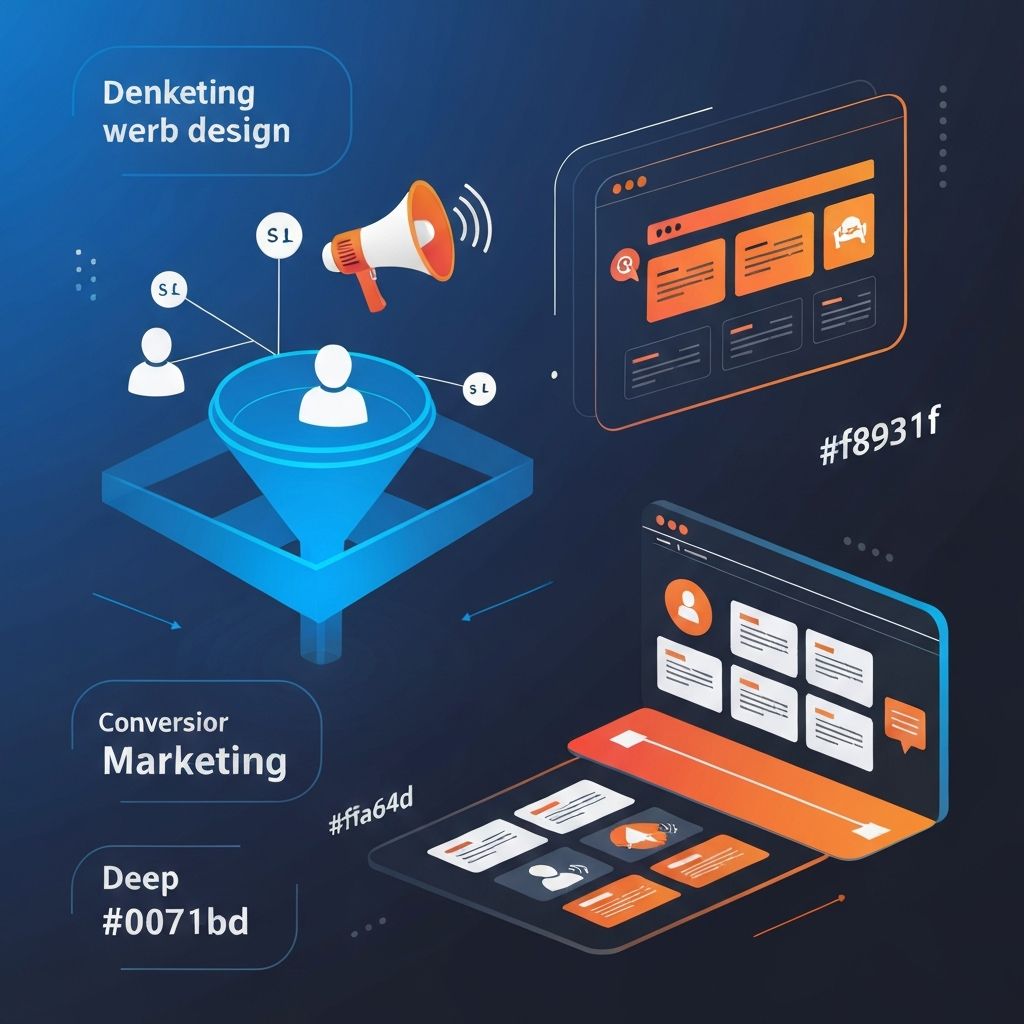
Web Design Marketing
The Intersection of Web Design and Marketing
Web design and marketing are increasingly inseparable disciplines. A beautifully designed website that no one visits serves little purpose, while aggressive marketing driving traffic to a poorly designed site wastes budget and damages brand perception. The most effective digital strategies integrate design and marketing from the outset.
At AAMAX.CO, we embrace this integration fully. As a full-service digital marketing company offering both web development and digital marketing services, we understand how these disciplines reinforce each other. Our unified approach ensures that every design decision supports marketing objectives and every marketing initiative leverages design excellence.
Design as Marketing Foundation
Your website is the hub of your digital marketing ecosystem. Every marketing channel – from paid advertising to social media to email campaigns – ultimately drives traffic back to your site. The design quality and user experience visitors find there determines whether marketing investment translates into business results.
Conversion-focused design ensures marketing traffic doesn't leak away through poor user experience. Clear calls-to-action guide visitors toward desired outcomes. Intuitive navigation helps users find what they're seeking. Trust elements overcome objections and encourage engagement. These design elements directly impact marketing ROI.
Landing page design particularly bridges design and marketing concerns. Campaign-specific landing pages must visually align with ad creative while optimizing for conversion. Message match – consistency between ad promise and landing page delivery – requires careful attention to both design and copywriting elements.
SEO-Driven Web Design
Search engine optimization represents perhaps the clearest intersection of design and marketing. Design decisions directly impact SEO performance, while SEO requirements shape design possibilities. Successful websites navigate these considerations skillfully.
Technical SEO factors like page speed, mobile responsiveness, and site architecture are fundamentally design decisions with major marketing implications. Our front-end web development practices prioritize these factors, ensuring sites perform well in search while delivering excellent user experiences.
Content presentation affects both user engagement and search visibility. Proper heading hierarchy, readable formatting, and strategic internal linking support SEO while improving content consumption. Design that facilitates content discovery helps both users and search engines.
User Experience as Marketing Advantage
Exceptional user experience differentiates brands in crowded markets. When competitors offer similar products or services at comparable prices, the quality of digital experience becomes a deciding factor. Investing in UX design is investing in competitive advantage.
User research informs both design and marketing decisions. Understanding how target audiences think, what they value, and how they behave online shapes effective websites and campaigns. This research should inform both disciplines simultaneously rather than operating in isolation.
Reducing friction throughout the customer journey – from initial awareness through conversion and beyond – requires coordinated design and marketing effort. Each touchpoint should seamlessly connect to the next, creating cohesive experiences that build trust and encourage action.
Brand Consistency Across Channels
Marketing effectiveness depends partly on brand recognition and consistency. When prospects encounter your brand across multiple channels – website, social media, advertising, email – consistent visual identity reinforces familiarity and trust. Design systems ensure this consistency.
Style guides defining colors, typography, imagery styles, and design patterns provide the foundation for consistent execution across channels. These guidelines help marketing teams produce on-brand materials efficiently while maintaining quality standards.
Our website design process includes developing brand guidelines that extend beyond the website to support all marketing activities.
Content Marketing Design
Content marketing relies heavily on design for effectiveness. Blog posts need readable layouts that encourage engagement. Infographics distill complex information into shareable visual formats. Video content requires thoughtful production design. Each content type presents unique design considerations.
Resource design – ebooks, whitepapers, guides, and reports – plays crucial roles in lead generation marketing. These gated assets need professional design that reinforces their perceived value. Poorly designed resources undermine both conversion rates and brand perception.
Social media content increasingly demands design sophistication. Static images, carousel posts, stories, and video all require visual excellence to capture attention in crowded feeds. Design capabilities directly impact social marketing effectiveness.
Conversion Rate Optimization
CRO sits squarely at the intersection of design and marketing. Improving conversion rates requires understanding both user psychology (marketing) and interface design (development). Testing hypotheses through A/B experiments reveals which design changes actually improve results.
Data-driven design decisions replace guesswork with evidence. Analytics reveal how users actually interact with websites, identifying friction points and opportunities. This information guides iterative improvements that compound over time.
Testing culture must span both design and marketing teams. Hypotheses may originate from either discipline, and implementation typically requires collaboration. Organizations that test rigorously consistently outperform those relying on assumptions.
Paid Media and Design Alignment
Paid advertising campaigns live or die partly on design quality. Ad creative must capture attention in fractions of a second while communicating compelling messages. Poor design wastes ad spend; excellent design amplifies investment returns.
Landing page quality scores directly impact paid search costs. Google rewards advertisers whose landing pages provide good user experiences with lower costs per click. This creates direct financial incentive for design excellence in paid search campaigns.
Retargeting campaigns require design assets that maintain brand presence across the web. Display ads must work across various sizes and placements while maintaining visual impact. Video retargeting requires production capabilities many organizations lack internally.
Email Marketing Design
Email remains one of marketing's highest-ROI channels, and design significantly impacts email effectiveness. Templates must render correctly across email clients, present content compellingly, and drive action through clear CTAs.
Responsive email design ensures messages display properly on mobile devices where most email is now read. Complex designs that work beautifully in desktop preview can become illegible on phones. Mobile-first email design addresses this reality.
Email design systems enable marketing teams to produce on-brand campaigns efficiently. Modular template systems provide flexibility while ensuring consistency. Design that facilitates rather than constrains marketing execution enables more effective programs.
Marketing Technology Stack Integration
Modern marketing requires numerous technology platforms – CRM, marketing automation, analytics, advertising platforms, and more. Websites must integrate with this stack to enable data flow and coordinated customer experiences.
Our website development expertise includes integrating sites with marketing technology ecosystems. Proper integration enables personalization, attribution tracking, lead scoring, and other advanced marketing capabilities.
Measuring Design's Marketing Impact
Demonstrating design's contribution to marketing results requires appropriate measurement frameworks. Engagement metrics like time on site and pages per session indicate design effectiveness. Conversion rates reveal whether design supports marketing objectives. These measurements make the case for design investment.
Attribution modeling helps understand how design improvements impact downstream business outcomes. When landing page redesigns increase conversions, that improvement cascades through to closed deals and revenue. Connecting these dots demonstrates design's business value.
The AAMAX.CO Integrated Approach
As a full-service digital marketing company, we bring together design and marketing expertise under one roof. This integration eliminates the gaps that occur when separate agencies handle each discipline. Our designers understand marketing; our marketers understand design.
This unified approach produces better results through seamless collaboration. Strategy informs design from the beginning. Design supports marketing execution throughout. The result is digital presence that looks exceptional and performs exceptionally.
Conclusion
Web design marketing isn't a niche – it's the recognition that design and marketing are fundamentally interconnected. Organizations that treat these disciplines as separate often struggle with misalignment, inefficiency, and suboptimal results. Those that integrate them effectively gain significant competitive advantages.
Whether you're building new digital presence or optimizing existing assets, considering design and marketing together produces superior outcomes. The investment in integrated approaches pays dividends through improved efficiency, better user experiences, and stronger business results.
Want to publish a guest post on aamax.co?
Place an order for a guest post or link insertion today.
Place an Order