

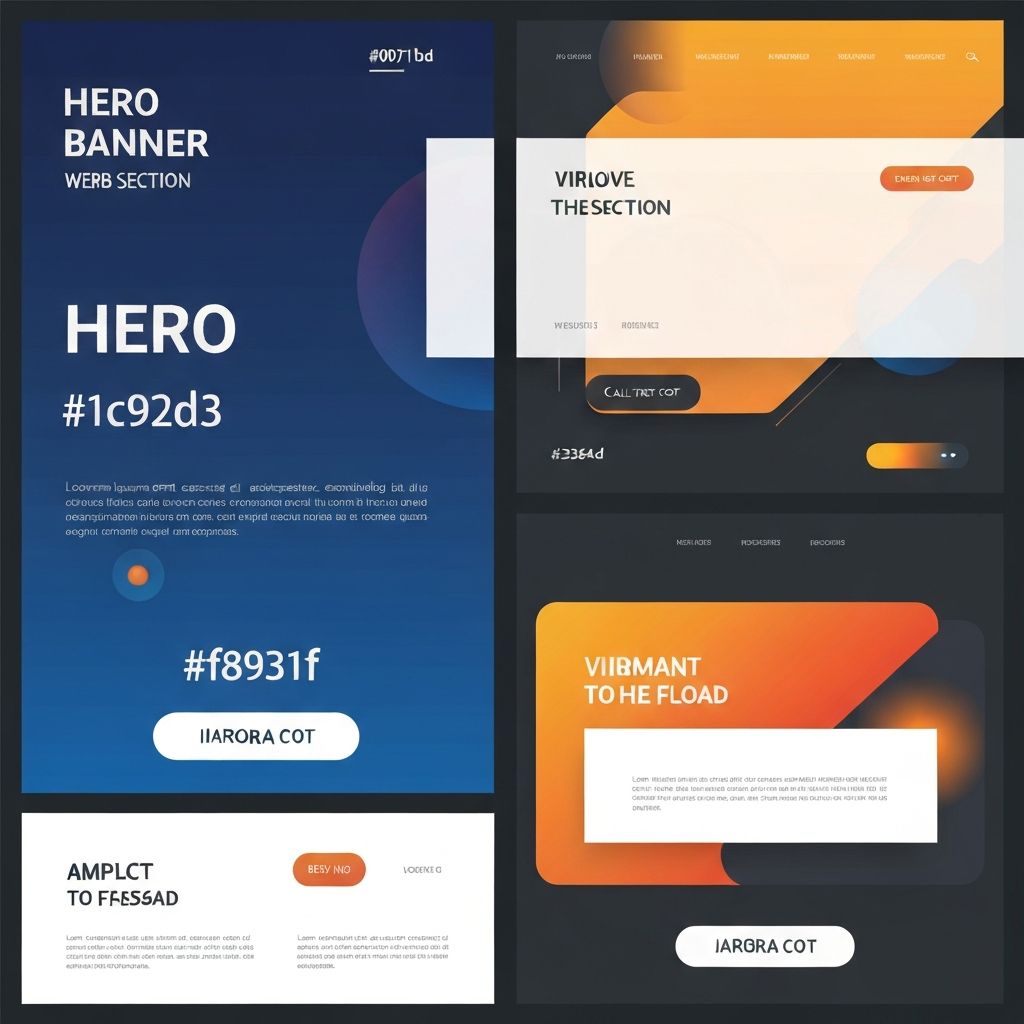
Web Design Hero
The Power of First Impressions: Understanding Hero Sections
The hero section—that prominent area visitors see before scrolling—carries enormous weight in determining website success. Within seconds of arriving, visitors form impressions that influence whether they engage further or bounce away. A compelling hero section captures attention, communicates value, and motivates action. A weak hero section loses potential customers before they discover what you offer.
Hero design has evolved significantly from the early days of web design. Modern heroes must perform across devices, load quickly, accommodate various content types, and support conversion goals—all while creating visual impact. At AAMAX.CO, we craft hero sections that balance these requirements to deliver exceptional first impressions.
Essential Components of Effective Hero Sections
Successful hero sections combine several key elements working in harmony. The headline must immediately communicate your core value proposition in clear, compelling language. This isn't the place for clever wordplay that obscures meaning—visitors should instantly understand what you offer and why it matters.
Supporting text expands on the headline with additional context, benefits, or differentiation. Keep this concise—one to three sentences typically suffice. Visitors scan rather than read at this stage, so every word must earn its place.
The call-to-action represents the hero's conversion mechanism. Whether "Get Started," "Learn More," "Shop Now," or "Request Quote," the CTA should be visually prominent and clearly indicate the next step. Button design, placement, and copy all influence click-through rates.
Visual elements—whether photography, illustration, video, or abstract graphics—create emotional impact and support messaging. The visual should complement rather than compete with text content, maintaining hierarchy while adding interest.
Typography in Hero Design
Hero typography demands particular attention given its prominence. Headlines must be large enough to command attention while remaining readable across devices. Font choice should align with brand personality—strong and bold for impactful statements, elegant and refined for premium positioning.
Contrast between text and background determines readability. Light text on dark backgrounds or dark text on light backgrounds provide the contrast needed for easy reading. Text overlaid on images requires careful attention to ensure sufficient contrast across the entire text area.
Hierarchy within the hero guides visitors through information in intended sequence. The headline should be the most prominent element, followed by supporting text, then the CTA. Size, weight, and color variations establish this hierarchy clearly.
Visual Strategies for Hero Sections
Photography in hero sections can create immediate emotional connection when relevant images are used thoughtfully. Authentic imagery—real team members, actual products, genuine customer interactions—outperforms generic stock photography. If using stock photos, select images that feel authentic rather than staged.
Video backgrounds add dynamic interest but require careful implementation. Videos should enhance rather than distract from primary content. Performance considerations matter—large video files slow page loading. Subtlety usually works better than dramatic action.
Illustration and abstract graphics offer creative freedom while avoiding the authenticity challenges of stock photography. Custom illustrations can convey complex concepts, establish unique brand personality, and create memorable visual impressions.
Our website design services include hero visual development that aligns with your brand and resonates with your audience.
Responsive Hero Design Challenges
Hero sections face unique responsive design challenges. A hero that looks stunning on large desktop monitors must also work on mobile phones with a fraction of the screen real estate. This requires more than simple scaling—it often demands fundamentally different approaches for different devices.
Text that's appropriately sized for desktop may be too large for mobile, while images that work well on wide screens may crop poorly in portrait orientation. Mobile-first design approaches start with the constrained environment and enhance for larger screens, ensuring essential content works everywhere.
Our front-end web development team implements responsive heroes that maintain impact and functionality across all devices, testing thoroughly to ensure consistent quality experiences.
Performance Considerations
Hero sections significantly impact page load performance. Large images, video backgrounds, and complex animations add weight that slows initial rendering. Given that heroes are the first content visitors see, optimization is crucial—slow heroes mean slow first impressions.
Image optimization techniques include proper sizing, compression, and modern formats like WebP. Lazy loading isn't typically appropriate for hero images since they're visible immediately, but responsive images that serve appropriately-sized versions based on device reduce unnecessary data transfer.
Video backgrounds should use efficient codecs, appropriate compression, and consider serving static images on slower connections. Animation should be purposeful and performant, with CSS animations generally preferred over JavaScript for better performance.
Conversion Optimization in Hero Sections
Hero sections are prime real estate for conversion optimization. The CTA button represents the most important conversion element, and small changes can significantly impact click-through rates. A/B testing different button colors, sizes, copy variations, and placements identifies what works best for your specific audience.
Social proof elements—customer counts, testimonial snippets, trust badges—can boost conversion by addressing hesitations early. However, cluttering the hero reduces impact, so include only the most compelling proof points.
Urgency and scarcity, when authentic, can motivate action. Limited-time offers or availability indicators encourage immediate engagement rather than postponed decisions. However, fabricated urgency damages trust—use these techniques only when genuinely applicable.
Hero Section Patterns and Trends
Hero design follows evolving trends while certain patterns prove consistently effective. Split layouts divide the hero into content and visual sections, providing clear hierarchy. Full-bleed imagery with overlaid text creates immersive experiences. Minimalist approaches focus attention on essential elements without distraction.
Interactive heroes engage visitors through animations, parallax effects, or interactive elements. These can be highly effective when purposefully implemented but risk becoming gimmicky or distracting when overused. Function should drive interaction design, not novelty.
Current trends favor authenticity, simplicity, and bold statements. Heavy gradients and complex visual effects have given way to cleaner approaches that prioritize content. However, trends should inform rather than dictate—what works depends on your brand, audience, and objectives.
Testing and Iteration
Hero optimization should be data-driven rather than opinion-based. Analytics reveal how visitors interact with your hero—time on page, scroll depth, CTA click rates, and bounce rates all provide insights. Heat mapping shows where visitors focus attention and click.
A/B testing compares different hero variations to identify what performs best. Test one element at a time—headline variations, different CTAs, alternative images—to isolate what's driving differences. Statistical significance requires adequate sample sizes before drawing conclusions.
Iteration based on data continuously improves hero performance over time. Even small improvements in conversion rates compound into significant business impact. Our website maintenance and support services include ongoing optimization support.
Industry-Specific Hero Considerations
Different industries benefit from different hero approaches. E-commerce heroes often feature products prominently with clear shopping CTAs. Service businesses emphasize value propositions and inquiry mechanisms. Content sites might highlight featured articles or search functionality.
B2B heroes typically focus on business problems and solutions with demo or contact CTAs. B2C heroes often leverage emotional appeal and immediate action opportunities. Understanding your audience and their motivations shapes effective hero strategy.
Crafting Your Perfect Hero Section
The hero section sets the stage for everything that follows on your website. Investing in hero excellence pays dividends through improved engagement, lower bounce rates, and higher conversions. Every element should be purposeful, from headline word choice to button color.
We specialize in creating hero sections that make powerful first impressions while driving business results. Our team combines strategic thinking with design expertise to craft heroes that capture attention and motivate action. Whether you're launching a new website or optimizing an existing one, hero improvement offers high-impact opportunity.
Ready to transform your website's first impression? Contact us today to discuss how we can help you create a hero section that truly represents your brand and converts visitors into customers.
Want to publish a guest post on aamax.co?
Place an order for a guest post or link insertion today.
Place an Order